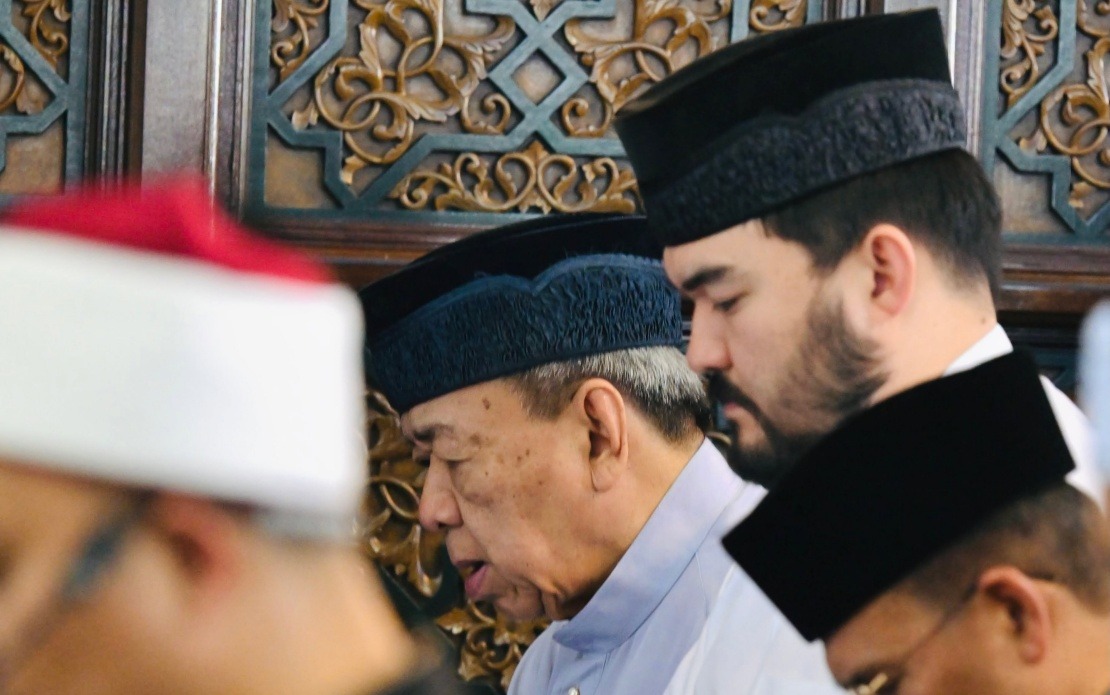
Sultan Sharafuddin Idris Shah has issued a compelling call for Malaysian Muslims to embrace compassion towards animals in their daily lives, framing animal welfare as a core Islamic principle. Speaking through a Friday sermon distributed across Selangor's mosques under the theme 'Ihsan Terhadap Mahkluk Allah SWT' (compassion towards Allah SWT's creatures), the Selangor ruler encouraged believers to reflect deeply on their relationship with the animal kingdom, from domestic strays to wild fauna. His message arrives at a time when animal welfare remains an underdeveloped policy area across Malaysia, despite growing public awareness of neglect and mistreatment.
The Sultan's position grounds animal welfare within an Islamic theological framework that regional audiences will recognise. Rather than treating compassion towards animals as a modern, secular concern, he positioned it as an authentic Islamic value rooted in Prophet Muhammad's teachings. This framing matters significantly in Malaysia's context, where religious authority carries weight in shaping public behaviour and policy discussions. By connecting animal welfare to divine stewardship rather than Western animal rights discourse, the Sultan made the argument locally legible and spiritually urgent for his Muslim subjects.
Central to his message is the concept of human custodianship over creation. Sultan Sharafuddin emphasised that as inhabitants of Earth, humans bear profound responsibility not only for animals but for the entire ecosystem—plants, mountains, seas, and rivers. This comprehensive environmental stewardship goes beyond narrow animal protection to encompass ecological sustainability, a perspective that resonates with growing concerns about Malaysia's environmental challenges including deforestation and water pollution. The Sultan's framing suggests that animal cruelty and environmental destruction both stem from a failure of moral stewardship.
The Selangor ruler drew explicit connection to Islamic jurisprudence, noting that Prophet Muhammad attached great importance to how believers treat animals. He outlined specific Islamic obligations: providing animals with adequate food and water, and at minimum, refraining from cruelty. This practical articulation of compassion gives Malaysian Muslims clear behavioural guidelines grounded in religious authority rather than abstract ethical principles. The emphasis on meeting basic needs—sustenance and safety—establishes a threshold for acceptable animal treatment that extends beyond merely avoiding deliberate harm.
A particularly nuanced aspect of the Sultan's statement addresses the tension between animal welfare and human safety, a distinction often overlooked in regional discourse. He acknowledged that circumstances exist where wildlife poses genuine threats to public safety or causes property damage, requiring intervention. Rather than presenting this as a contradiction to Islamic compassion, the Sultan framed protective action as consistent with Maqasid Syariah—the broader objectives of Islamic law that prioritise protecting life and property. This reasoning prevents the animal welfare argument from becoming absolutist or impractical, recognising that human interests sometimes necessarily take precedence.
This balanced approach holds particular relevance for Malaysia, where human-wildlife conflict remains a persistent challenge. Communities in Selangor and other states periodically report incidents involving wild boars, crocodiles, and elephants that damage crops or threaten safety. Rather than condemning necessary protective measures, the Sultan's formulation allows for their legitimacy while maintaining that the underlying Islamic principle remains compassion, exercised responsibly. The message essentially invites Muslims to distinguish between needless cruelty and necessary intervention—a distinction often lost in simplistic discussions of animal rights.
The Sultan's intervention suggests growing elite recognition that animal welfare requires attention in Malaysian governance and society. While animal protection laws exist—including the Animal Act 1953—enforcement remains inconsistent and public awareness limited. Religious leaders amplifying animal welfare concerns through theological language may prove more effective at shifting societal attitudes than legislative measures alone. The fact that a reigning monarch devoted a Friday sermon to this topic signals that animal compassion warrants serious consideration alongside more traditionally highlighted religious obligations.
The sermon's distribution across Selangor's mosques represents an institutional endorsement of animal welfare principles that could ripple through Muslim communities. Imams delivering this message weekly provide repeated reinforcement of the compassion theme, potentially influencing household attitudes towards strays, livestock, and wildlife. In Malaysian neighbourhoods where street dogs and cats suffer neglect, and where animal abuse incidents periodically surface, this consistent messaging from religious pulpits could prove transformative. The mechanism operates through spiritual authority rather than regulatory enforcement, potentially reaching populations less responsive to animal welfare campaigns.
For Southeast Asia more broadly, the Sultan's statement reflects a regional trend toward integrating environmental and animal welfare concerns into religious discourse. Countries across the region increasingly recognise that secular environmental arguments prove less persuasive than appeals grounded in religious tradition. The Selangor case demonstrates how Islamic principles can authentically support animal protection without importing Western frameworks, an approach potentially replicable across Muslim-majority societies struggling with similar welfare and ecological challenges. This localisation of animal welfare within religious traditions rather than transplanting foreign advocacy models may prove more durable.
The Sultan's emphasis on Islam's compatibility with animal compassion also counters potential mischaracterisation of Islamic practice as indifferent to animal suffering. Media coverage of slaughter practices or wildlife trade sometimes presents Islam as permissive of animal cruelty, an inaccurate stereotype the Sultan's statement helps correct. By centering Prophet Muhammad's recorded concern for animals and positioning compassion as an Islamic virtue, the message reclaims moral high ground within Islamic tradition for animal welfare advocates.
Moving forward, the statement invites Malaysian policymakers to consider whether existing animal protection frameworks adequately reflect the religious values the Sultan articulated. Questions arise about enforcement of the Animal Act, penalties for neglect and abuse, and whether religious institutions might partner with government in animal welfare promotion. The Sultan's framing provides moral cover for strengthened animal protection policies by grounding them in Islamic principle rather than foreign influence.
Ultimately, Sultan Sharafuddin's message represents an important convergence of religious authority, environmental awareness, and practical compassion. By positioning animal welfare as fundamentally Islamic rather than contradictory to it, the Sultan created space for Malaysian Muslims to embrace protection of creatures as a spiritual obligation. Whether this rhetorical moment translates into sustained behavioural change and policy development remains to be seen, but the intervention signals that animal welfare is increasingly difficult to ignore across Malaysia's social and political landscape.

