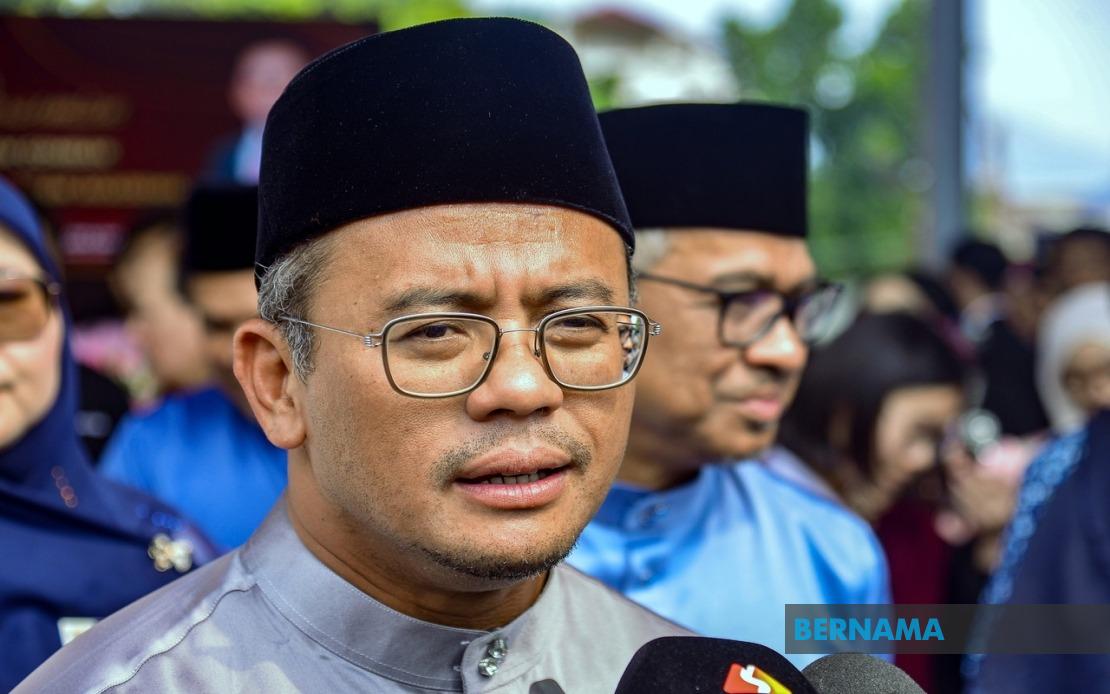
Selangor's incoming state budget will make education a cornerstone of development, with the government committing to bolster its support systems for students while dramatically scaling up participation in science and technology fields. Menteri Besar Datuk Seri Amirudin Shari outlined the priorities after attending events in Gombak, signalling that the prosperous state recognises the direct link between youth educational outcomes and broader economic competitiveness in an increasingly knowledge-driven region.
The scale of Selangor's education sector underscores why this investment matters beyond the state's borders. With approximately one million students across its schools, improvements in academic performance and technical skills development carry implications far exceeding local boundaries. A generation of Selangor students equipped with strong STEM foundations would influence Malaysia's capacity to compete in high-value industries and contribute meaningfully to Southeast Asia's technological advancement. The state government's reasoning reflects growing awareness that educational excellence directly translates into societal benefits and national economic resilience.
Amirudin framed the 2027 budget allocation as a comprehensive approach rather than isolated spending. Beyond basic academic achievement targets, the government intends to create multiple pathways for students to engage with STEM disciplines while simultaneously encouraging community service and civic participation. This integrated strategy suggests recognition that technical competence alone proves insufficient; students must also develop social responsibility and understand how scientific knowledge serves practical community needs.
The infrastructure modernisation component remains under active development, with state officials currently conducting detailed assessments of school facilities across Selangor. Rather than rushing allocations, the government has adopted a methodical approach, timing finalisation discussions for September or October. This deliberate pace indicates awareness that effective infrastructure investment requires granular understanding of current conditions across hundreds of institutions, from aging facilities requiring comprehensive renovation to newer schools needing specific technological upgrades.
One particularly noteworthy initiative is the Himpunan Pelajar Tingkatan Enam Selangor (HIPSTERS) platform, which has evolved significantly since its inception. Originally designed to support university-bound students, the programme has expanded downward to encompass Form Six cohorts, recognising that preparation for higher education begins earlier than tertiary entry. The provision of book vouchers and free internet data addresses both information access and digital equity—persistent challenges in Malaysian education where socioeconomic disparities can constrain opportunity regardless of student aptitude.
The scaling trajectory of HIPSTERS illustrates measured ambition. In 2026, ten thousand Form Six students received book vouchers, a figure representing substantial expansion from the university-focused model. Yet Amirudin's cautious language about further expansion—contingent on "current needs and demand"—suggests the government prefers evidence-based growth over ambitious projections. This approach, while prudent, also reflects budget constraints that likely prevent simultaneous maximisation of all educational initiatives.
For Malaysia's educational landscape, Selangor's emphasis on STEM participation carries strategic importance. The state accounts for significant portions of the nation's economic output and serves as a talent incubator for other regions. Investment in STEM education here potentially influences migration patterns, with skilled graduates distributed across the country or remaining concentrated in Selangor's industrial corridors. Regional competition for technical talent means that states investing seriously in STEM pipeline development gain competitive advantages in attracting advanced manufacturing, research facilities, and technology companies.
The timing of this budget announcement reflects broader regional trends in Southeast Asia, where governments increasingly recognise that traditional manufacturing-dependent economies must transition toward higher-value-added sectors. Thailand, Vietnam, and Indonesia have all articulated similar STEM education ambitions. Selangor's approach, grounded in concrete programmes and realistic fiscal timelines, potentially offers lessons for peer jurisdictions attempting comparable educational transformation.
However, the success of these initiatives depends heavily on implementation quality and teacher capacity. Expanding STEM participation requires educators qualified to teach these disciplines at sophisticated levels, and Malaysia has faced chronic shortages in mathematics and science specialists. The 2027 budget announcement, while encouraging on policy direction, remains silent on whether corresponding investments in teacher training and recruitment accompany the student-facing initiatives. Sustainable STEM education expansion demands attention to this supply-side constraint.
The emphasis on academic excellence alongside community contribution also signals evolving thinking about education's purpose in Selangor. Rather than viewing schooling primarily as credentialing for individual advancement, the framing connects educational achievement to collective social benefit. This perspective aligns with emerging discussions across Southeast Asia about education's role in addressing shared challenges from environmental sustainability to healthcare innovation, where technical knowledge serves public good rather than private gain alone.
For parents and students in Selangor, the 2027 budget framework provides useful strategic signalling. Clear government commitment to STEM reinforces the market value of these qualifications, potentially encouraging families to support children's choices in science and technology pathways. The expansion of support programmes like HIPSTERS simultaneously reduces financial barriers that historically deterred talented students from disadvantaged backgrounds from pursuing demanding technical subjects.
Looking forward, Selangor's educational investments will intersect with broader Malaysian policy conversations about skills development, industrial transformation, and regional positioning. As the state finalises its budget allocations through September and October, administrators will determine whether rhetorical commitment to STEM translates into sufficient funding for meaningful expansion. The success or struggle of these initiatives over coming years will offer important data points for other Malaysian states considering similar educational transformation, particularly as competition for technical talent intensifies across Southeast Asia.

