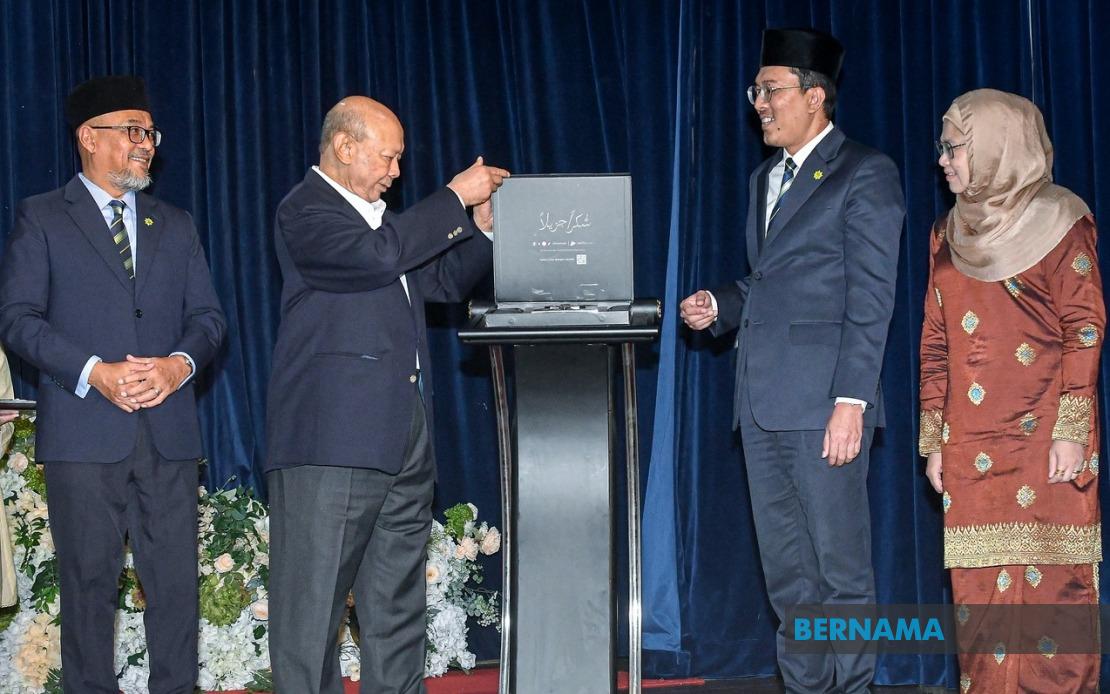
The Selangor Zakat Board formally introduced the Muzakki Zakat Selangor Recognition Initiative (IKTIRAF) on July 7, marking a significant institutional development in Malaysia's approach to corporate Islamic financing. As the nation's first official certification system dedicated to recognising companies and organisations that maintain consistent adherence to business zakat payments, IKTIRAF represents a strategic pivot towards incentivising voluntary compliance rather than relying solely on regulatory frameworks.
CEO Mohd Khaidzir Shahari articulated the initiative's dual purpose: strengthening corporate awareness of zakat obligations while integrating Islamic financial principles into broader governance structures. The programme reflects growing recognition among Islamic financial institutions that consumer and stakeholder pressure can effectively drive corporate religious observance when coupled with visible recognition mechanisms. By creating a transparent, verifiable certification system, Zakat Selangor seeks to establish zakat compliance as a market differentiator that influences business-to-consumer relationships and investor decision-making.
The mechanics of IKTIRAF employ modern verification technology and branding tools designed for contemporary commercial environments. Participating companies receive both digital and physical credentials—an e-Certificate, e-Label featuring unique serial numbers, and a branded IKTIRAF logo—enabling widespread display across product packaging, office premises, and marketing collateral. Crucially, the system incorporates public verification through QR code technology, allowing consumers and stakeholders to authenticate a company's zakat status independently. This transparency mechanism addresses a fundamental challenge in Islamic finance: establishing credible, observable compliance that builds consumer confidence.
Mohd Khaidzir drew an explicit parallel between IKTIRAF and Malaysia's established halal certification framework, a comparison laden with strategic implications. The halal certification model transformed Malaysian consumer behaviour and international market positioning across decades; positioning zakat compliance alongside this successful precedent signals institutional ambitions for IKTIRAF's long-term influence. Just as halal labelling became a purchasing criterion for Muslim consumers and a competitive advantage for businesses, zakat certification could fundamentally reshape corporate decision-making within Muslim-majority markets. This framing helps companies understand zakat compliance not as purely religious obligation but as commercially advantageous differentiation.
The initiative's first-year target of recognising approximately one thousand existing business zakat payers reflects measured institutional expectations tempered by pragmatic philosophy. Zakat Selangor leadership explicitly rejected aggressive numerical expansion strategies, recognising that sustainable compliance stems from understanding rather than coercion. This philosophical stance distinguishes IKTIRAF from conventional regulatory compliance programmes; the initiative prioritises engagement with corporate boards and shareholders to cultivate intrinsic motivation for consistent zakat payment. This approach acknowledges that businesses treating zakat as regulatory burden rather than value proposition tend toward minimal, episodic contributions rather than systematic institutional practice.
Mohd Khaidzir's statement that "zakat cannot be implemented through enforcement" encapsulates the programme's theoretical foundation. This principle reflects Islamic jurisprudence emphasizing sincere intention (niyyah) as integral to zakat's spiritual and social validity, while accommodating modern corporate structures where board-level commitment proves essential for sustained compliance. By focusing on shareholder and directorial education, IKTIRAF targets decision-makers whose institutional choices cascade through entire organisations. This represents a more sophisticated understanding of corporate behaviour than traditional compliance approaches, recognising that genuine integration of Islamic principles requires top-level commitment rather than administrative checkbox-ticking.
The scheme encompasses multiple corporate participation pathways, initially categorising contributors through Business Zakat and Salary Deduction Scheme classifications. This segmented approach acknowledges diverse corporate structures and operational capacities, allowing small enterprises, multinational corporations, and organisations with employee pension contributions to engage through appropriate mechanisms. The differentiated framework demonstrates institutional flexibility in recognising that compliance pathways must accommodate Malaysia's varied business landscape, from family enterprises to publicly listed companies with complex stakeholder structures.
For Malaysian policymakers and Islamic finance practitioners, IKTIRAF's launch signals potential institutional momentum toward incentive-based Islamic financial governance. Rather than purely mandating compliance through taxation or regulatory frameworks, the scheme employs consumer awareness and brand value as compliance drivers. This market-based approach potentially generates superior outcomes compared to enforcement-heavy models, particularly within Muslim-majority societies where religious identity intersects with consumer preference. If successful, IKTIRAF could establish replicable institutional templates for other Islamic financial obligations across Malaysia and potentially throughout Southeast Asia's Muslim communities.
The ceremony at the Gemerlapan Rakan Strategik Zakat Selangor (GRASIAZ) 2026 event and presentation of recognition plaques to eligible contributors underscored the initiative's public dimension. By formally celebrating corporate zakat compliance through ceremonial recognition, Zakat Selangor elevated business zakat payment from administrative obligation to recognised achievement warranting public acknowledgement. This ceremonial aspect, combined with the IKTIRAF branding infrastructure, creates positive reinforcement mechanisms that encourage broader corporate participation beyond the initial thousand companies.
For Malaysian businesses seeking competitive differentiation, IKTIRAF certification offers tangible advantages within Muslim consumer markets and among ethically-conscious investors increasingly scrutinising corporate social responsibility practices. Companies bearing the IKTIRAF designation can credibly communicate Islamic financial commitment to relevant stakeholder groups, potentially influencing purchasing decisions, investment flows, and corporate partnerships. This market-mediated incentive structure may prove more effective than regulatory mandates in driving sustained corporate zakat compliance across diverse business sectors.
The initiative also reflects Selangor's institutional leadership within Malaysia's zakat ecosystem, positioning the state's religious authority as an innovator in Islamic financial governance. By pioneering certification approaches adapted to contemporary corporate environments, Zakat Selangor establishes precedents potentially influencing zakat boards across other Malaysian states and Islamic finance institutions throughout Southeast Asia. The scheme demonstrates how traditional Islamic obligations can integrate with modern commercial incentive structures, creating pathways for religious compliance that operate through market mechanisms rather than coercion alone.

