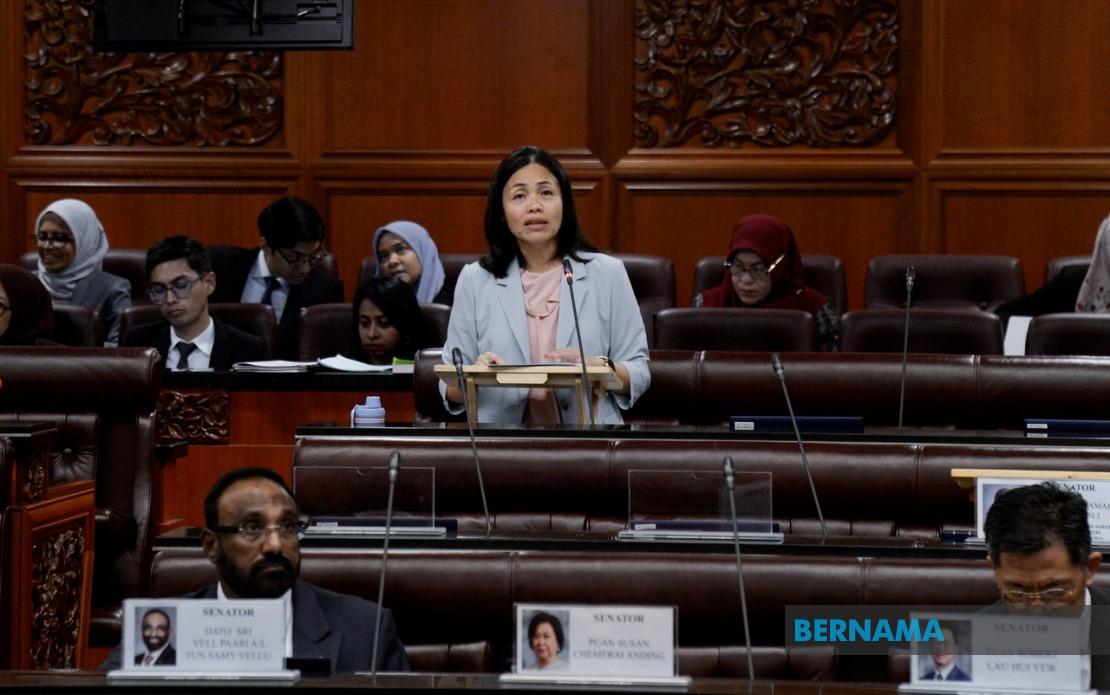
The Malaysian Senate has endorsed significant reforms to the country's communications watchdog through passage of the Communications and Multimedia Commission (Amendment) Bill 2026, marking a legislative milestone in strengthening regulatory independence and digital enforcement. The measure received approval following deliberation among 11 senators who examined the proposal on its merits, with lawmakers from different political perspectives converging on the need for institutional strengthening in an increasingly complex digital landscape.
The amendment represents a deliberate effort to ring-fence the Malaysian Communications and Multimedia Commission from partisan influence, particularly through provisions that prohibit current or former legislators from serving as commission chairman. This structural change reflects growing recognition across Malaysia's political establishment that communications regulation has transcended narrow sectoral concerns to become integral to national security and economic resilience. Deputy Minister of Communications Teo Nie Ching emphasized during the final debate that the reforms seek to ensure appointees possess genuine expertise and independence rather than political loyalty, a distinction the government appears committed to embedding in law rather than relying on administrative discretion alone.
The enforcement data presented during the debate illustrates why such regulatory strengthening has gained traction. The MCMC has substantially ramped up its digital enforcement activities, particularly against illegal gambling content which represents a persistent challenge for Malaysian authorities. Within the first seven months of 2026 alone, the commission documented removal of over 222,000 instances of online gambling material, demonstrating acceleration in what Teo described as increasingly aggressive enforcement operations. The trajectory reveals exponential growth in taken-down content, from a mere two instances in 2022 to 18,814 in 2023, climbing to 189,484 by 2024 and reaching 289,486 throughout 2025.
The scale of website blocking operations provides additional context for the regulatory expansion. Since 2022 through July 31 of this year, Malaysian authorities have blocked a cumulative total of 6,982 gambling websites, illustrating the persistent nature of the challenge and the resource intensity required for effective digital enforcement. These figures underscore why legislators viewed expanded powers and clearer operational mandates as necessary, particularly given that illegal gambling remains a significant enforcement priority across multiple government agencies including the Royal Malaysia Police.
The jurisdictional framework clarifies that while gambling enforcement primarily falls to the police as a law enforcement matter, the MCMC's contribution remains technically specialized yet consequential. The commission provides digital forensic analysis, handles platform technical standards, and executes blocking directives upon formal request from law enforcement partners. This division of labour has proven effective in practice, though the amended legislation seeks to formalize and strengthen MCMC's capacity to operate within its defined sphere without requiring constant political validation for routine technical decisions.
Senator Datuk Abdul Halim Suleiman articulated the underlying rationale for reform by framing communications infrastructure as a matter of strategic national importance rather than merely an economic sector requiring light-touch regulation. This reconceptualization carries implications for how Malaysian policymakers approach broadband expansion, platform governance, and cybersecurity resilience. The senator's emphasis on professional, transparent, and effective implementation highlighted that legal powers mean little without institutional capacity and accountability mechanisms to match.
Senator Muhammad Hasbie Muda introduced a complementary concern regarding merit and expertise in the appointment process, warning that expanding MCMC's mandate without simultaneously ensuring transparent, competent implementation could produce counterproductive outcomes. His intervention reflects broader anxieties across Southeast Asia about regulatory bodies becoming either politically captured or technically inadequate for the pace of technological change. The senator advocated for reform that emphasizes institutional accountability alongside expanded powers, recognizing that the public interest ultimately depends on execution quality rather than legal text alone.
The bill had earlier secured passage in the Dewan Rakyat on July 15, providing lower house endorsement before the Senate deliberations. Its seventeen clauses introduce substantive changes including clarification of MCMC's functions regarding digital infrastructure development and platform standard-setting under Section 16 of the relevant act. These provisions essentially formalize responsibilities that the commission has operated within informally, providing clearer legal grounding and presumably reducing scope for legal challenges to enforcement actions.
For Malaysian stakeholders in telecommunications, broadcasting, and digital services, the amendment carries practical implications beyond governance symbolism. Clearer standards for digital platform operations could influence how Malaysian and international companies structure their local presence, particularly regarding content moderation and user data protection. Enhanced MCMC capacity also signals stronger future expectations for compliance with Malaysian regulatory requirements, potentially elevating the cost and complexity of market entry for international platforms historically accustomed to light regulation in the region.
The Southeast Asian context adds further dimension to Malaysia's regulatory reform. As regional governments grapple with platform governance, data localisation, and content moderation, Malaysia's legislative approach may establish precedent or serve as cautionary example depending on implementation outcomes. The emphasis on depoliticizing regulatory appointments also reflects broader democratic concerns about institutional independence that resonate across the region, particularly as governments seek to manage both legitimate public interests and risks of authoritarian drift through regulatory capture.
Looking forward, the amendment's success will depend on whether appointing bodies genuinely prioritize merit and independence when selecting commission leadership, and whether the MCMC translates expanded formal powers into effective, equitable enforcement. The senators' focus on accountability and transparency suggests legislative intent to establish meaningful constraints on discretionary power rather than simply empowering an agency without limits. This approach may provide a model for other regional regulators seeking independence without creating governance vacuums.

