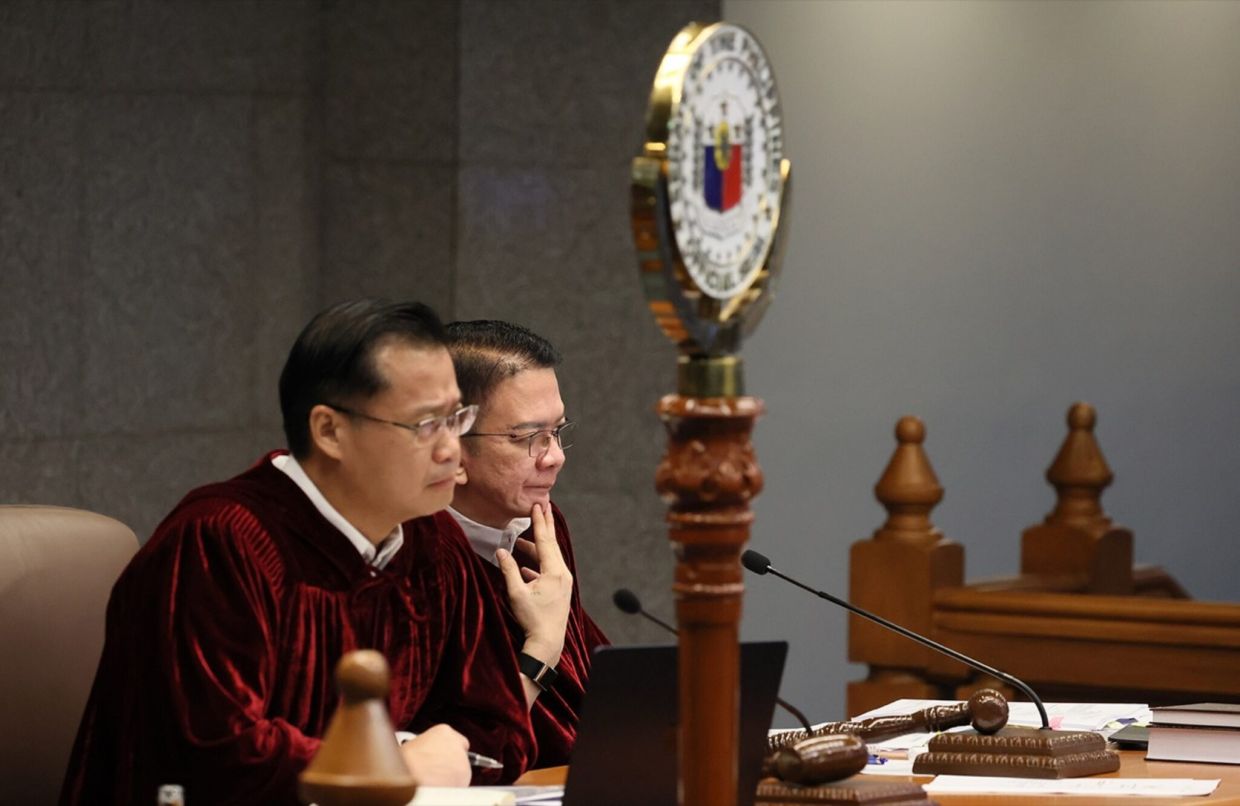
The Philippine Senate's impeachment court faces a pivotal procedural decision this week on whether to compel Vice President Sara Duterte to reveal her financial records, a ruling that prosecutors argue will prove central to determining if she accumulated wealth disproportionate to her official income. The vote, scheduled for Monday afternoon, represents one of the trial's most significant moments as it enters its second week, with House prosecutors confident that judges will side with their request to subpoena the vice president's bank accounts, tax filings and records from the Anti-Money Laundering Council, as well as those belonging to her husband, lawyer Manases Carpio.
Prosecutors have staked their case substantially on access to these documents, maintaining that financial transparency forms an essential pillar of their allegations under Article II of the four impeachment charges Duterte faces. Prosecution spokesperson Benjamin Tolosa Jr. expressed confidence the Senate would grant the request, noting that constitutional law and precedent strongly support compelling disclosure in impeachment proceedings despite normal confidentiality protections. The prosecutors point to the 2012 impeachment trial of former Chief Justice Renato Corona, when the Senate successfully ordered the production of bank records notwithstanding bank secrecy laws, as evidence that such rulings are both constitutional and established practice.
The legal foundation for the subpoena rests on Republic Act No. 1405, which establishes bank secrecy protections but explicitly exempts impeachment proceedings from confidentiality requirements. Tolosa emphasised that this exception is unambiguous in the law's text, stating that disclosure in impeachment cases is clearly permitted. The prosecution has not built its case entirely on financial documentation, however, and officials indicated they possess multiple evidentiary paths to establish their claims, though they intend to vigorously defend their request for these records.
Prosecutor Chel Diokno developed the substantive argument for disclosure during Wednesday's oral arguments before the Senate, contending that access to Duterte's financial information is necessary to establish whether she used her positions to accumulate prohibited wealth or engage in constitutionally banned business interests. He argued that the Senate, acting as an impeachment court, derives authority directly from the Philippine Constitution to compel production of otherwise confidential records. Diokno further noted that the Data Privacy Act similarly permits disclosure when a valid subpoena is issued, providing an additional legal justification for the financial disclosures being sought.
Crucially, prosecutors have requested financial records spanning Duterte's entire tenure in public service, reaching back to her time as Davao City vice mayor and extending through her mayoralty, arguing this lengthy timeline is relevant because the impeachment complaint alleges she systematically accumulated unexplained wealth throughout her public career. An Anti-Money Laundering Council report cited by prosecutors documented that Duterte's financial activity exceeded 3 billion Philippine pesos between 2007 and 2013 alone, a figure prosecutors suggest warrants serious scrutiny regarding its sources and legitimacy.
The defence has mounted a vigorous counter-argument, with lead counsel Michael Poa contending that the subpoena request constitutes an impermissible fishing expedition conducted only after the House had already filed impeachment complaints. Poa characterised the prosecution's request as excessively broad, noting that it seeks records covering nearly twenty years, including periods when Duterte held positions not subject to impeachment under Philippine law. He invoked a 2025 Supreme Court ruling establishing that impeachable offences must occur while a person occupies an impeachable office, suggesting therefore that her service as Davao vice mayor falls outside the scope of legitimate inquiry.
Defence arguments further distinguished between the bank secrecy law's impeachment exception and other statutes governing financial disclosure. Poa maintained that while the bank secrecy law recognises impeachment as an exception requiring disclosure, the Anti-Money Laundering Act and National Internal Revenue Code contain no such impeachment carve-out for their respective records, meaning AMLC reports and tax documents might retain confidentiality protection even in impeachment proceedings. The defence additionally objected to including Carpio's financial records, asserting that because he is not an impeachable official, his documents should remain confidential and irrelevant to the trial.
Civil society organisations have actively pressed senator-judges to approve the subpoena, employing historical and contemporary arguments about accountability and democratic legitimacy. The August Twenty-One Movement warned against repeating the controversial "second envelope" vote that characterised former President Joseph Estrada's 2001 impeachment trial, when the Senate withheld crucial evidence in a decision that ultimately provoked public outrage and contributed to Estrada's political downfall. This historical parallel carries weight in Philippine political culture, where the Estrada impeachment remains a cautionary tale about institutional legitimacy and public trust.
Faith-based groups including Kingdom Keepers have similarly urged approval, arguing that public officials bear heightened accountability regarding their financial affairs and cannot shield themselves behind privacy claims. The coalition, which includes activist priest Fr. Robert Reyes and social anthropologist Dr Melba Padilla Maggay, framed the issue fundamentally as one of governmental accountability, asserting that if Duterte accumulated no ill-gotten wealth during her years as vice mayor or mayor, she should welcome disclosure as vindication rather than resist it as an invasion of privacy. This argument inverts the burden of transparency, suggesting that innocent officials benefit from openness rather than suffer from it.
Duterte faces four impeachment articles alleging misuse of confidential funds, accumulation of unexplained wealth, and threatening President Ferdinand Marcos, First Lady Liza Araneta-Marcos and former Speaker Martin Romualdez. The charges carry severe consequences; conviction would require her removal from office and permanent disqualification from holding any future public position, making the trial consequential not merely for her political future but for Philippine governance broadly. The Senate's decision on financial disclosure will substantially shape the trial's trajectory and the public's perception of institutional integrity.
Meanwhile, prosecutors have indicated that National Bureau of Investigation Director Melvin Matibag will testify on Tuesday regarding the agency's investigation into Duterte's alleged threats against the President. According to prosecutors, the NBI investigation will establish that Duterte's remarks were not spontaneous utterances but part of what they characterise as a deliberate strategic plan. The NBI director's testimony is expected to provide technical detail about the investigation's scope and conclusions, potentially influencing how senator-judges evaluate the threats charge.
The impeachment proceedings carry significance extending beyond Duterte's individual fate, touching fundamental questions about transparency, accountability and the balance between public officials' privacy rights and democratic oversight. The Senate's procedural rulings in coming weeks will establish precedents governing future impeachment trials and signal whether the institution prioritises institutional confidentiality or public accountability. For Malaysia and the broader Southeast Asian region, the trial demonstrates how different democracies navigate conflicts between privacy protections and governmental accountability, offering insights into how courts and legislatures manage transparency in executive impeachment proceedings.

