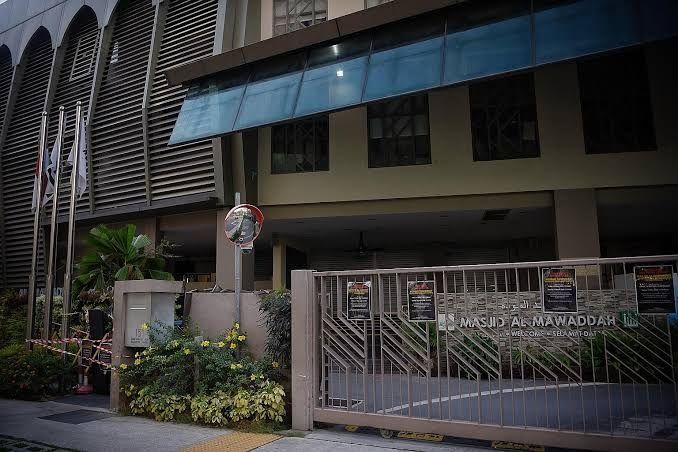
A 42-year-old senior finance executive at the Al-Mawaddah Mosque in Compassvale Bow, Sengkang, has been formally charged with allegedly siphoning more than S$14,000 from the mosque's donation boxes in what authorities are treating as a serious breach of institutional trust. Mohamed Muhaimin Mohamed Sulaiman faced the charge on August 12, marking the conclusion of a police investigation that began when the religious institution discovered the discrepancy and reported it to law enforcement.
The alleged thefts span a concerning four-month window, with police identifying at least 15 separate instances of misappropriation occurring between February 6 and May 15. The systematic nature of the alleged offences suggests a pattern of repeated access to donation facilities rather than a single opportunistic incident. The religious institution's discovery of the irregularities prompted the filing of a formal police report on May 16, initiating the investigation that ultimately led to charges.
Muhaimin's position as a senior figure in the mosque's financial operations would have granted him legitimate access to donation collection areas and administrative systems, making the alleged misappropriation particularly significant from a governance perspective. Such roles typically carry considerable responsibility for safeguarding congregational funds, which are often earmarked for charitable purposes, community welfare programmes, and mosque maintenance. The breach of this trust is especially noteworthy given the cultural and religious significance of donations within Islamic communities, where zakat and other contributions represent binding spiritual obligations for worshippers.
The bail arrangement set at S$10,000 reflects the court's assessment of the matter's gravity while allowing Muhaimin to remain in the community pending further legal proceedings. His case will return to court on September 16 for the next mention, allowing time for legal representatives to prepare defence arguments and for the prosecution to consolidate evidence. The scheduled court appearance suggests the judicial process is proceeding through standard channels rather than through expedited procedures, indicating the complexity of the financial documentation likely involved.
The criminal breach of trust charge carries severe statutory penalties under Singapore law. Conviction would expose Muhaimin to imprisonment for up to 15 years, alongside potential financial penalties, underscoring the seriousness with which Singapore's legal system treats the violation of fiduciary responsibilities. Such penalties are deliberately substantial to deter similar conduct and to reflect the gravity of betraying institutional confidence, particularly within religious organisations where trust forms the foundation of community engagement.
The Al-Mawaddah Mosque incident resonates with ongoing concerns across faith-based organisations throughout Southeast Asia regarding internal financial controls and governance structures. Many religious institutions, while deeply trusted by their congregations, operate with relatively informal administrative procedures compared to corporate entities, creating potential vulnerabilities to misappropriation. This case underscores the importance of implementing robust segregation of duties, regular auditing practices, and transparent financial reporting mechanisms even in community-oriented settings.
The Islamic Religious Council of Singapore, which oversees mosque governance and administration across the island nation, faces questions about institutional oversight and whether additional safeguards should be implemented at participating mosques. The council is expected to review the circumstances surrounding the alleged theft and potentially strengthen financial protocols to prevent similar incidents. Such governance reviews often ripple across religious institutions regionally, as news of internal breaches prompts other organisations to audit their own practices and accountability measures.
For Malaysian readers and wider Southeast Asian observers, the incident illustrates how criminal vulnerability is not confined to commercial enterprises or public institutions but extends to religious organisations regardless of their communal standing. The case demonstrates that even trusted senior officials with established reputations can perpetrate substantial financial crimes, highlighting the universal necessity of institutional safeguards transcending sector boundaries. The reliance on individual integrity without corresponding structural controls represents a governance weakness applicable across organisational contexts.
The situation also raises broader questions about the balance between maintaining community trust through transparency and avoiding reputational damage that might discourage future donations. Religious institutions dependent on congregational contributions must navigate the difficult terrain of addressing internal wrongdoing while preserving the faith and confidence of their supporters. How organisations communicate about such breaches—whether proactively or reactively—significantly influences public perception and continued community engagement.
The investigation's relatively swift conclusion, from initial report in May to charging in August, suggests Singapore's law enforcement agencies prioritised the matter and that evidence collection proceeded efficiently. This pace contrasts with some regional precedents where institutional financial crimes undergo prolonged investigations. The systematic nature of the alleged offences—identified through 15 distinct instances—likely facilitated investigation as investigators could analyse transaction patterns and access records spanning the four-month period.
As the matter progresses through Singapore's courts, attention will focus on the defence case and whether additional circumstances surrounding the alleged misappropriation emerge. The court proceedings will establish whether Muhaimin acted alone or in coordination with others, and whether internal control failures at the mosque enabled the alleged conduct. Such details will be instructive for other religious and community organisations reviewing their own financial management practices.
Beyond the immediate criminal proceedings, the case prompts reflection on institutional resilience and the importance of maintaining rigorous governance standards in all organisations entrusted with community resources. The outcome will likely inform future guidelines and best practices across Singapore's religious sector and potentially influence governance discussions among faith-based institutions throughout Southeast Asia, where similar organisational structures and cultural contexts create comparable vulnerabilities.

