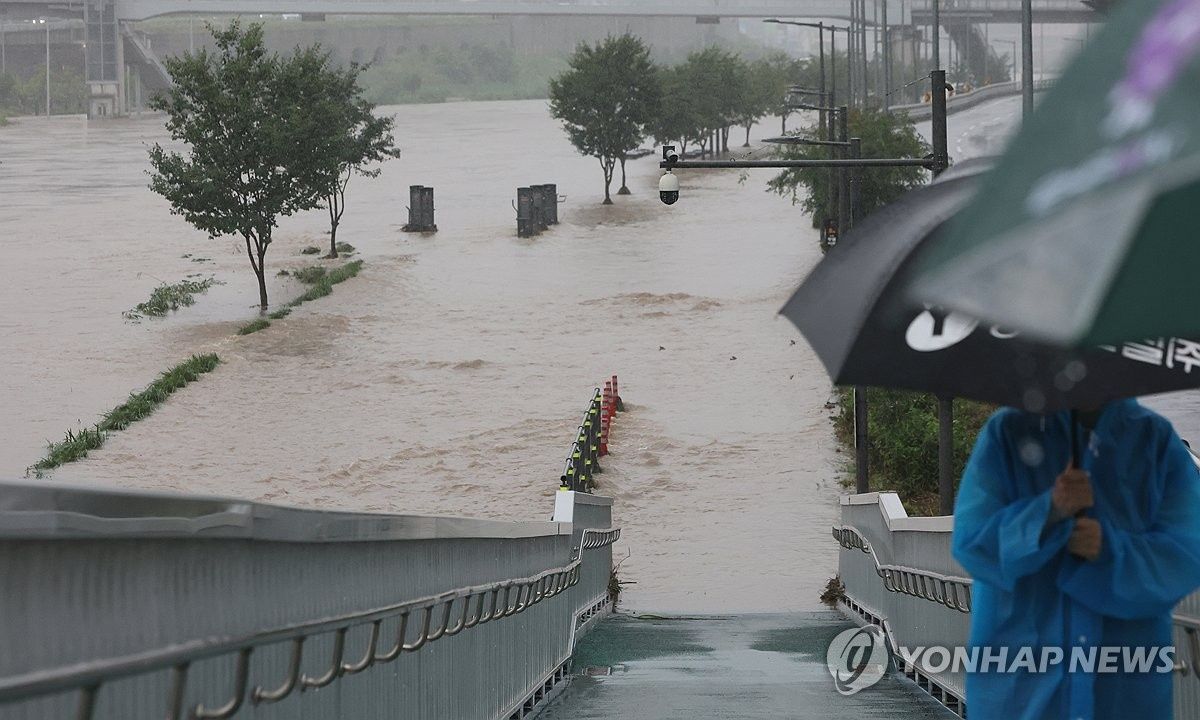
A deluge swept across South Korea's capital region and eastern territories on Saturday morning, unleashing torrential downpours that transformed streets into rivers and overwhelmed drainage systems across Seoul and Gangwon Province. The Central Disaster and Safety Countermeasure Headquarters confirmed that nearly 200 millimetres of rain fell within a ten-hour window beginning at midnight, creating one of the region's most significant weather emergencies in recent months. The precipitation totals painted a dramatic picture of the storm's intensity: Paju received 192.5 mm, Dongducheon 189.5 mm, Pocheon 179 mm, Gimpo 166.5 mm, and Cheorwon 159.5 mm, with rainfall rates approaching the threshold of extreme weather events.
The scale of property damage reflects the storm's ferocity across residential and commercial zones. Authorities tallied approximately 540 cases of material damage by Saturday morning, encompassing 148 instances of inundated homes and roadways alongside 392 reports of toppled trees and scattered debris blocking thoroughfares. These figures underscore how quickly heavy precipitation can overwhelm urban infrastructure in densely populated areas, particularly when rain concentrates within such a compressed timeframe. The flooding patterns spread across multiple districts, suggesting the system affected broad swathes of territory rather than localised pockets, complicating response efforts and stretching emergency services thin.
Alerts remained in place across ten regions of Gangwon Province as of mid-morning Saturday, with meteorological warnings highlighting continued danger from the ongoing weather system. A specific mudslide alert was maintained for Pocheon, indicating that saturated soil conditions posed acute risks for slope failures—a particular concern given mountainous terrain in the eastern province. Authorities recognised that whilst the heaviest precipitation had passed the Seoul metropolitan area, the weather pattern would persist throughout the remainder of the weekend, potentially bringing even more intense rainfall to central and northeastern territories later Saturday and into Sunday morning.
Amidst the widespread disruptions, disaster management officials emphasised that their primary concern—loss of life—had been avoided entirely. However, the human impact extended beyond fatality statistics. Ninety-five residents from forty-four households scattered across six municipalities required temporary evacuation as authorities implemented precautionary measures to protect people in high-risk zones. These evacuations represented a significant precaution born from experience with previous catastrophic flooding events, demonstrating how South Korea's emergency response protocols have evolved to prioritise preventive action and early movement of vulnerable populations before conditions deteriorate beyond control.
The storm's impact extended to natural attractions and transportation infrastructure that form the backbone of South Korea's tourism and logistics sectors. Authorities sealed access to ten national parks and blocked 275 designated hiking paths, including routes across Mount Bukhan, one of the most visited peaks in the Seoul region. This closure, though necessary for visitor safety, disrupted recreation plans for thousands of weekend hikers and families. Beyond terrestrial restrictions, maritime operations along the west coast ground to a halt as authorities suspended seven ferry routes, preventing water-borne transport and isolating island communities temporarily from mainland supply chains and services.
Meteorological forecasters issued warnings that conditions would deteriorate rather than improve, projecting rainfall rates that could reach 300 millimetres per hour in isolated areas as the system persisted through Sunday. Such intensities represent genuinely dangerous conditions—precipitation at that concentration overwhelms even modern urban drainage systems and can trigger flash flooding in low-lying areas and confined valleys within minutes. The forecast prompted officials to redirect attention toward central Chungcheong Province and Gangwon's mountain regions, where overnight and early-morning rain would test geological stability and potentially unleash additional secondary hazards beyond simple flooding.
Prime Minister Han Seong-sook convened an emergency response meeting Saturday morning to assess the situation and marshal governmental resources. During the session, she acknowledged that whilst fatalities had been avoided—a mercy that cannot be understated—the material consequences demanded urgent governmental action to support affected communities. Her instructions emphasised swift deployment of heavy equipment and personnel to clear debris, restore transportation routes, and assist in recovery operations across inundated zones. The Prime Minister's emphasis on preparedness for forthcoming rainfall in vulnerable provinces signalled that authorities viewed this weather system as an evolving rather than concluded emergency.
The disaster highlighted recurring vulnerabilities in South Korea's approach to extreme weather events, particularly the concentration of risk in densely urbanised areas where impervious surfaces accelerate runoff and overwhelm stormwater systems. Seoul's continued expansion and the density of population in the metropolitan region meant that rainfall intensity that previous generations might have weathered now created acute flooding risks affecting hundreds of thousands of people simultaneously. The national parks and hiking paths that drew millions of visitors annually became liabilities during severe weather, requiring closure and surveillance to prevent tourist fatalities on exposed terrain.
For Malaysia and Southeast Asia more broadly, South Korea's experience carries instructive lessons about climate variability and infrastructure resilience. Tropical nations in the region regularly confront monsoon rains and sudden cloudbursts of similar or greater intensity, yet often lack the comprehensive warning and response systems that South Korea has developed. The evacuation protocols, pre-positioned equipment, and coordinated governmental action that prevented casualties in Seoul represent best-practice emergency management that developing economies in Southeast Asia might study and adapt. Conversely, the sheer material damage despite advanced infrastructure and organised response demonstrates that no society has solved the fundamental challenge of managing extreme precipitation in built environments.

