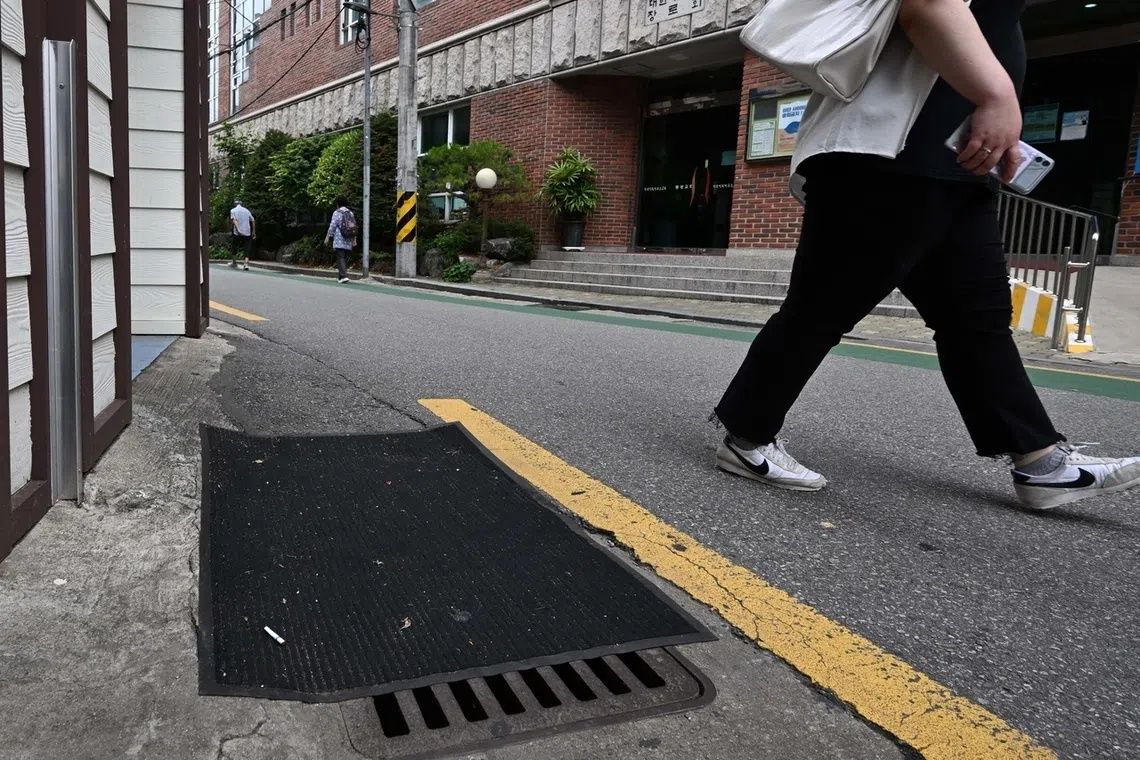
Pedestrians navigating Seoul's bustling sidewalks or waiting at bus stops occasionally find themselves caught in an unpleasant surprise: a sharp, unmistakable sewer stench that emerges without warning and vanishes just as quickly. While these odour episodes typically last only seconds, their cumulative impact has become a notable urban problem, with residents and international visitors regularly documenting complaints across Korean and global online forums. The frequency and consistency of these reports suggest that Seoul's celebrated modernity masks a persistent infrastructure challenge that the city has struggled to resolve.
According to research published by the Seoul Institute in 2025, sewer-related odours generate approximately half of all civil complaints the city receives concerning air quality and unpleasant smells. This striking proportion underscores how the issue extends beyond minor nuisance territory into significant urban livability concerns. The problem became especially visible following Seoul's introduction of sewer odour reduction measures in 2015, which initially produced measurable results. Complaint numbers dropped dramatically from 3,095 in 2015 to 1,660 by 2020, suggesting that targeted interventions could make a meaningful difference. However, this promising trajectory reversed course, with complaints climbing to 2,302 in 2024, indicating that whatever gains the city achieved have begun to erode.
The root cause of Seoul's sewer odour originates from hydrogen sulfide, a colourless gas that produces the characteristic rotten egg smell familiar to most people. This chemical compound emerges when organic matter present in sewage undergoes decomposition under anaerobic, or oxygen-depleted, conditions. Seoul's rapid and sustained urban expansion over recent decades has created a fundamental mismatch between infrastructure capacity and actual demand. Many residential and commercial buildings installed septic tanks as temporary solutions while awaiting connection to the city's underground sewer network. Although these tanks effectively remove solid waste, they cannot eliminate dissolved organic compounds, which continue flowing into the sewer system where they subsequently decompose and generate hydrogen sulfide gas.
Weather patterns play a surprisingly significant role in the severity of Seoul's odour problem. During periods of heavy rainfall, the increased volume of water flowing through sewers helps flush away accumulated gases and prevents their concentration in pipes. Conversely, during hot, dry seasons when rainfall is scarce, hydrogen sulfide can accumulate within the sewer network and eventually escape through structural openings such as storm drains, maintenance access holes, and other connection points. This seasonal variation means that residents experience the problem with different intensities throughout the year, making it difficult to maintain public awareness or political momentum for addressing the issue.
The underlying infrastructure design compounds Seoul's difficulties. The city operates what experts call a combined sewer system, in which wastewater from buildings and stormwater runoff from streets flow together through the same underground pipes. This nineteenth-century approach, while economically efficient in its initial conception, creates complex interactions between different water sources and contributes substantially to odour problems. Seoul recognised this limitation decades ago; since the early 1990s, the city has contemplated converting to a separate system in which domestic sewage and rainwater travel through distinct pipe networks. Such a conversion would address multiple problems simultaneously, including reduced odour generation and improved flood management. However, the project has advanced with frustrating slowness. As of 2025, only 20.4 per cent of Seoul's total sewer network had been successfully converted to the separate system, with the remaining 79.6 per cent still operating under the combined arrangement.
The reasons for this glacial pace of infrastructure transformation are simultaneously practical and financial. Replacing buried sewer networks throughout a metropolis of Seoul's size and density presents extraordinary technical challenges. Disrupting city streets to access underground pipes requires careful coordination with surface traffic, commerce, and resident activities. The financial burden of such extensive replacement work has proven prohibitively expensive for municipal budgets, even for a wealthy city. A Seoul city official acknowledged these constraints, explaining that experts recognise odours stem from diverse and interconnected factors requiring case-by-case diagnoses rather than uniform solutions. The city is considering interventions including structural modifications to sewers and dredging operations to remove accumulated sediment that traps decomposing organic matter.
Currently, Seoul's regulatory framework operates on a reactive rather than preventive basis. Existing legislation primarily targets odours that exceed legally permissible limits, essentially allowing the city to wait until complaints accumulate before responding. This complaint-driven approach has fundamental limitations, according to Ki Dong-won, a researcher at the Seoul Institute. Ki points out that South Korea currently lacks scientific models capable of predicting how sewer odours spread through the urban atmosphere above ground or determining which city areas remain most vulnerable to odour incidents. While Seoul has begun developing sewer odour maps to visualise problem areas, these tools remain disconnected from established performance metrics or standardised evaluation criteria for odour reduction facilities. This disconnect between data collection and actionable standards undermines the potential for systematic improvement.
Experts increasingly advocate for more fundamental and proactive approaches befitting a major metropolitan centre. Park Seok-soon, an environmental engineering professor emeritus at Ewha Womans University, proposes artificially circulating water through sewer pipes to prevent extended stagnation periods during which sewage decomposes and produces odours. Park suggests that water from hydrants or other municipal sources could be pumped through sewers to maintain movement and inhibit organic decomposition. He notes that many leading cities in Japan and other developed nations continue using combined sewer systems but manage them through rigorous operational discipline, suggesting that strict management protocols might prove as effective as infrastructure replacement.
The comparison with international practice reveals important nuances about Seoul's situation. While many wealthy developed cities around the world maintain combined sewer systems inherited from earlier urbanisation eras, they often manage them through sophisticated monitoring, regular maintenance programmes, and proactive chemical or physical interventions. The implication is that Seoul need not necessarily wait for complete infrastructure overhaul to see meaningful improvements; intermediate solutions emphasising operational excellence could provide substantial relief. However, implementing such measures requires sustained political commitment, adequate municipal funding, technical expertise, and willingness to prioritise environmental quality alongside economic development.
For Malaysian and Southeast Asian observers, Seoul's sewer odour challenge offers valuable lessons. Rapid urbanisation across the region has often prioritised economic growth and development speed over careful infrastructure planning. Many cities have inherited or created similar situations where sewer systems lag behind urban expansion, creating environmental quality issues. Seoul's experience demonstrates that addressing such problems becomes exponentially more difficult and expensive when deferred for extended periods. The city now faces a choice between continued reactive management through complaints and serious investment in proactive solutions, whether through complete infrastructure replacement or improved operational management of existing systems. The trajectory of odour complaints rising again after initial improvements suggests that partial measures may prove insufficient without comprehensive strategic commitment.

