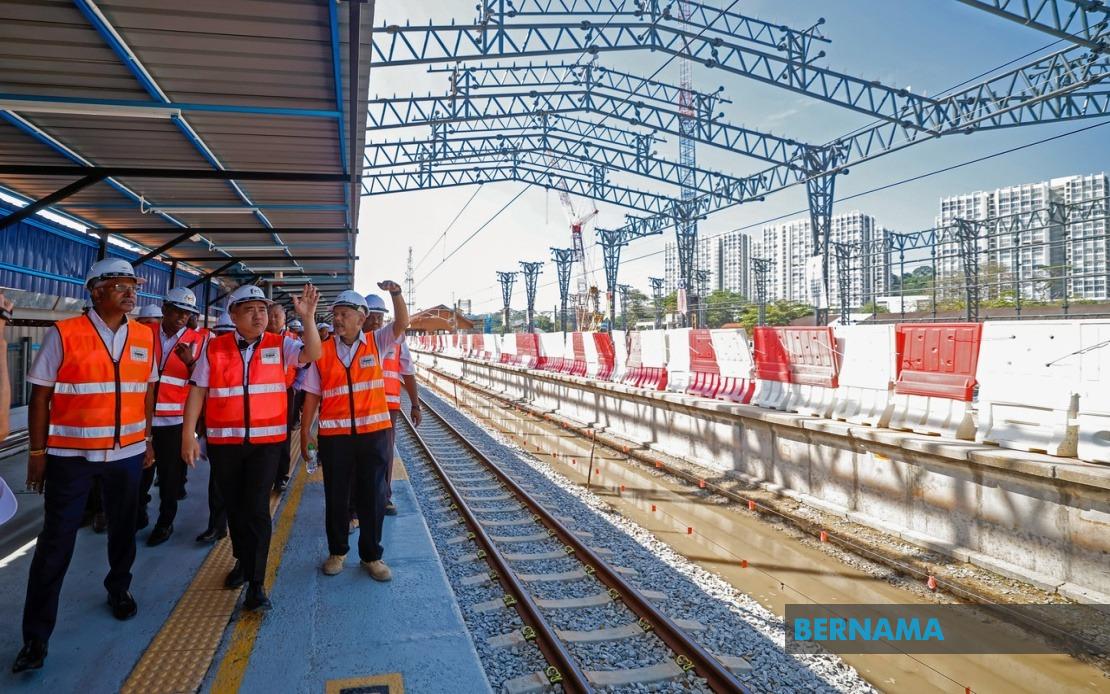
Seremban's new integrated railway station is on track to transform the Negeri Sembilan capital's transport infrastructure by March 2027, with construction having progressed to the 35% mark. Transport Minister Anthony Loke revealed that the most technically demanding work—including deep piling and relocation of underground utilities—has now been completed, creating conditions for accelerated work on the visible components of the project in coming months.
The RM100 million development represents a carefully orchestrated integration of the heritage Seremban KTMB Station, which has served the city for more than a century, with cutting-edge modern facilities. Loke explained that the initial slowness of the construction was not indicative of project troubles but rather reflected the inherent complexities of laying foundations on unpredictable terrain while precisely relocating critical underground infrastructure including electrical cables and water systems. These foundational challenges, which consumed more than two years of the project timeline, are now largely resolved.
With the underground work concluded, the project is entering a phase emphasising visible construction. The next stages will focus on roof installation, glazing work, and interior finishes that will define the station's contemporary character. Loke noted that the architectural concept draws inspiration from Minangkabau design traditions, creating a structure that honours local heritage while projecting modernity. This design philosophy extends to the station's environmental credentials, as the facility has been planned according to green building principles, positioning it as a demonstration of sustainable transport infrastructure development in Malaysia.
The station's operational capacity reflects ambitions for genuine regional significance. In its initial configuration, the facility is designed to accommodate 30,000 passengers daily, but the infrastructure has been conceived with remarkable flexibility—capacity can eventually expand to 120,000 daily passengers as demand materialises over the coming decades. To achieve this scalability, the station provides six platforms, though only three will be constructed immediately. This phased approach allows future expansion to proceed when demographic and economic conditions warrant the investment, potentially providing Seremban with transport capacity adequate for 30 to 50 years of development.
The frequency of rail services into the station will increase substantially once the project concludes and the double-track railway upgrade is completed. Loke emphasised that enhanced Komuter and ETS services will make Seremban an increasingly attractive option for residents seeking to live outside Kuala Lumpur while maintaining connectivity to economic hubs. This accessibility-driven development strategy reflects how modern Malaysian transport infrastructure is being conceived not merely as connection points but as catalysts for residential and economic distribution beyond traditional urban cores.
The station's design incorporates sophisticated traffic management elements intended to mitigate Seremban's congestion challenges. Two separate entrances and drop-off zones—one positioned at the front along Jalan Tunku Antah and another at the rear—allow traffic flows to be distributed, reducing the bottleneck effects that single-point access would create. This attention to traffic circulation reflects lessons learned from congestion problems at other major Malaysian transport nodes and represents the integration of urban planning principles into what might otherwise be a purely transit-focused facility.
Complementing the new station, the heritage Seremban KTMB Station underwent comprehensive renovation work that was completed last month. Rather than superficial cosmetic treatment, this renovation focused on substantive upgrades—modernising electrical systems and rewiring the 100-year-old structure to ensure it remains safe and functional. The project demonstrates commitment to preserving Malaysia's railway heritage whilst ensuring these structures meet contemporary safety and operational standards rather than being abandoned or demolished.
A particularly significant addition addresses Seremban's chronic flooding vulnerabilities. Engineers have designed a new sewerage system that routes rainwater directly toward Sungai Temiang without allowing it to pass through the station area. This represents a substantial operational improvement, as the original station frequently experienced platform and track flooding during intense rainfall, disrupting services. By segregating drainage flows, the project simultaneously addresses infrastructure longevity and service reliability—two factors crucial for passenger confidence in rail transportation.
The station represents the foundation for broader transit-oriented development in Seremban. Behind the new facility, a major transit-oriented development (TOD) project designated Seremban Sentral is being coordinated with the station's completion. This approach—clustering residential, commercial, and office development around an efficient transport node—follows international best practice and represents a shift in how Malaysian urban planners conceptualise new development. Rather than transport infrastructure adapting to sprawling development patterns, the model envisions development clustering around transport accessibility, theoretically reducing vehicle dependency and congestion.
The progress update arrives as the broader Klang Valley Double Track Phase 2 project advances toward 56% completion. This companion infrastructure investment directly relates to Seremban's future functionality, as enhanced dual-track capacity will enable increased service frequency on routes serving the new station. Loke acknowledged that temporary reductions in afternoon Komuter frequency reflect necessary adjustments while construction proceeds on one track, underscoring how major transport upgrades require short-term service disruptions to deliver long-term capacity gains. For Malaysian commuters in the Klang Valley and beyond, these infrastructure investments represent acknowledgment that the current single-track system has become inadequate for demand and that substantial capital investment is necessary to prevent transport becoming an economic constraint on national development.

