The Sarawak district of Serian is experiencing unhealthy air quality that has prompted the temporary closure of over a hundred schools, yet residents and business operators are largely maintaining their normal patterns of work and commerce, adapting their routines rather than abandoning them entirely. The Air Pollutant Index reading stood at 178 as of mid-afternoon, placing conditions firmly in the unhealthy category and triggering precautionary measures from education authorities, though the impact on the wider community has proven less disruptive than might be expected from air quality at this level.
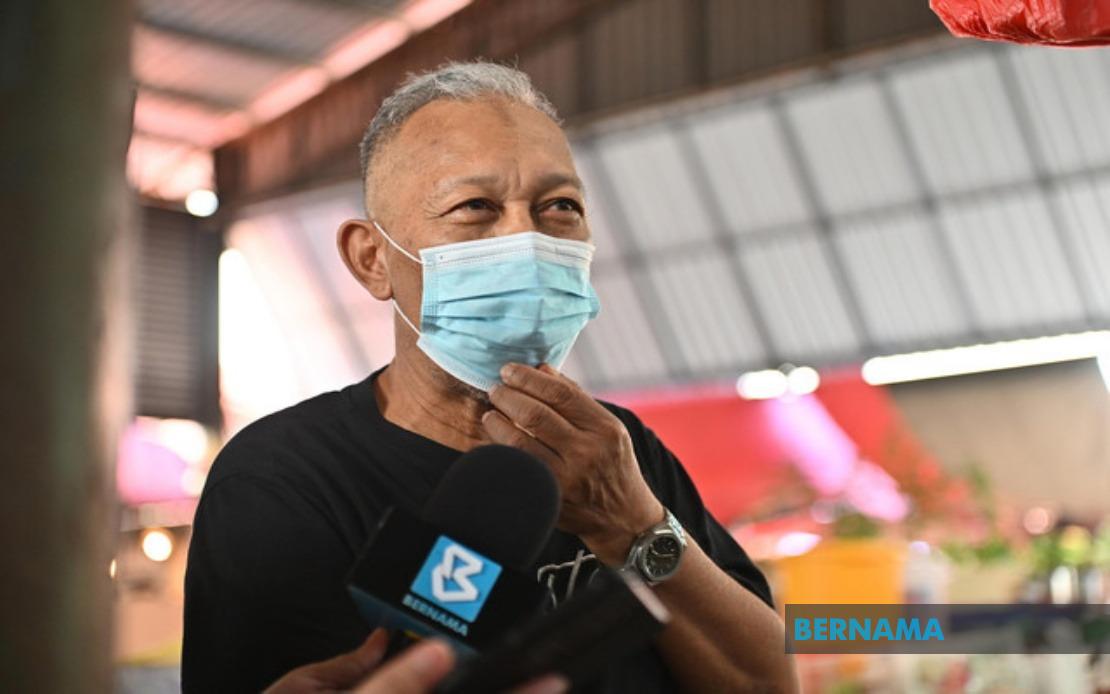
Market activity in Serian, the district's commercial heart, reveals the complex reality facing traders in the region. At the Tamu Market, vendors could be spotted wearing protective face masks while attending to customers, a visual reminder of the atmospheric hazard that surrounds them. Yet the presence of commerce itself demonstrates the resilience of residents who rely on daily business to sustain their livelihoods, unwilling or unable to pause operations despite the health implications of prolonged exposure to polluted air.
Vegetable trader Asmail Kipli, 62, captures the predicament facing small business operators across Serian. Operating from his stall despite the hazardous conditions, Kipli explained that his decision to remain open stems from economic necessity rather than indifference to air quality. His stall rental obligations force him to maintain operations even as his customer base has contracted significantly, with sales and income both dropping approximately 30 percent over recent days. This scenario illustrates a fundamental tension in developing economies where environmental health and economic survival often pull in opposite directions, leaving merchants with little choice but to expose themselves and their families to harmful air while their customer base dwindles.
The psychological and behavioral response among Serian's populace has shifted noticeably, with residents demonstrating increased caution about unnecessary outdoor ventures. Kipli observed that people throughout the district are making deliberate choices to minimize time spent outside, conducting only essential errands and avoiding leisure activities that would ordinarily draw them into public spaces. This self-imposed restriction represents a form of community adaptation to the haze, with residents using their own judgment about risk tolerance rather than waiting for official directives to guide their movement.
Fruit seller Marina Latong, 53, exemplifies the uncertainty facing traders who must balance income generation against personal health and the sustainability of their businesses. She has already reduced her daily operating window, closing at 3 pm instead of extending into evening hours as she would during normal circumstances. Latong has made it clear that if atmospheric conditions worsen or persist beyond the immediate term, she will temporarily shutter her business entirely, prioritizing a brief closure over the long-term health consequences of prolonged exposure to unhealthy air. Her contingency planning reflects the pragmatism of vendors who understand that a temporary closure is preferable to permanent illness or inability to work.
Beyond the market precinct, Serian's village communities continue their ordinary routines of acquiring groceries and necessities, suggesting that the haze, while notable and concerning, has not paralyzed normal life patterns. Residents are shopping, conducting transactions, and moving about their villages, though presumably with greater consciousness of air quality and personal protection measures than would exist during clear weather periods. This persistence in community life demonstrates both the adaptability of populations accustomed to variable environmental conditions and the practical reality that life in a district cannot simply halt due to transient atmospheric conditions, however unhealthy they may be.
The education sector has responded more decisively than the commercial sphere. Authorities have determined that 107 schools across Serian warrant closure from the announcement date through Friday, a decision reflecting greater caution regarding children's exposure to hazardous air over extended school days. This closure affects thousands of students and represents an official acknowledgment that certain vulnerable populations require protection even if broader commerce and daily life continue. The multi-day closure suggests authorities anticipate that air quality will not improve quickly, necessitating extended disruption to the academic calendar.
For Malaysian policymakers and observers, Serian's experience encapsulates the challenges facing districts where transboundary haze episodes intersect with economic dependence on daily commerce. The district's response reveals how quickly populations adapt to degraded air quality when their economic survival depends on it, a pattern repeated across Southeast Asia when seasonal burning and atmospheric conditions create temporary but severe air pollution. The voluntary actions of residents in reducing outdoor activity, combined with their determination to maintain income-generating work, demonstrates both personal responsibility and economic desperation.
Longer-term implications for Serian and comparable districts in the region point toward the need for more robust economic support mechanisms during environmental crises. If traders face potential losses of 30 percent or more during haze episodes, and if vulnerable populations like schoolchildren require repeated closures, then regional governments might consider whether temporary income support or accelerated assistance programs could reduce the pressure on workers to expose themselves to unhealthy conditions. The current approach essentially asks residents to choose between health and hunger, a choice that no community should face repeatedly.

