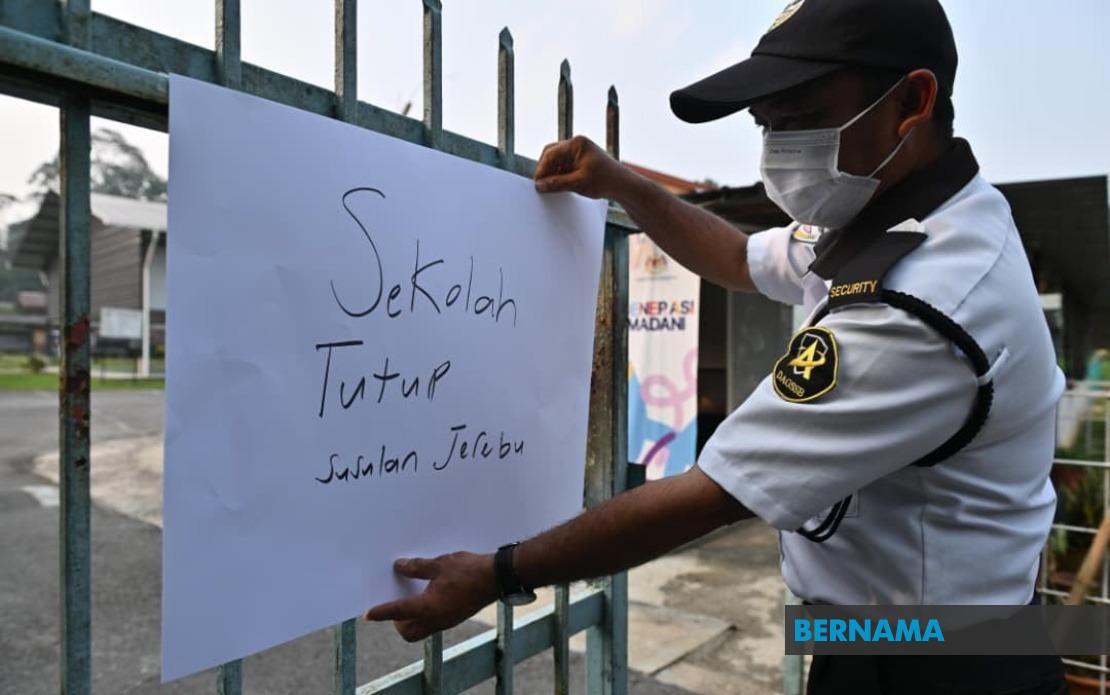
The Sarawak State Education Department has decided to extend the temporary closure of schools throughout the Serian district into Friday as deteriorating air quality from cross-border haze shows no immediate signs of improvement. The decision reflects growing concerns about the health and safety of students and staff in the affected region, where pollution levels have climbed into unhealthy categories.
Authorities reached this determination following consultations held between the Serian District Education Office and school leaders representing both secondary and primary institutions across the district. The collaborative approach allowed administrators to weigh the practical implications of continued operations against potential risks posed by poor air quality, ultimately concluding that an extension of the closure served the broader interests of the educational community.
The prolonged shutdown aims to shield multiple stakeholder groups from unnecessary hardship during the haze episode. School principals and headmasters face logistical challenges when trying to operate under compromised conditions, while teaching staff must balance instructional responsibilities with duty-of-care obligations toward pupils. Parents increasingly struggle to arrange childcare and adjust work schedules with short notice, adding financial and emotional strain to households. Most significantly, boarding school residents—students living away from home during the academic year—would endure particular difficulties, spending unhealthy air days confined to dormitories.
As of Thursday afternoon, Serian recorded an Air Pollution Index reading of 178 according to the Air Pollution Index Management System, placing it squarely within the unhealthy bracket. This measurement reflects the severity of particulate matter and gaseous pollutants saturating the atmosphere in the district, primarily stemming from transboundary smoke drifting across borders from neighbouring regions. An API of this magnitude poses documented risks to respiratory health, particularly for children, elderly individuals, and those with pre-existing cardiovascular or pulmonary conditions.
The education department has emphasized that schools must maintain awareness of evolving air quality conditions by regularly consulting the Air Pollution Index Management System, which provides real-time monitoring data for individual districts. This guidance recognizes that haze episodes can shift rapidly, and institutional leaders require access to current, localized information rather than broad regional generalizations. By directing educational administrators toward this specific monitoring tool, authorities ensure that decisions about reopening can be made swiftly and confidently once conditions improve sufficiently.
Such closures, while necessary for public health, carry downstream consequences that educators and policymakers across Southeast Asia have begun scrutinizing more carefully. Interruptions to academic calendars compress already demanding schedules, potentially affecting curriculum completion and assessment timelines, particularly for examination classes. For economically disadvantaged families, school closures eliminate crucial access points for meals and basic support services that institutions typically provide. Furthermore, disparities emerge between urban and rural schools, where air quality monitoring infrastructure and alternative educational delivery capacity vary significantly.
The Serian situation exemplifies a recurring challenge facing Sarawak and neighbouring regions during seasonal haze episodes. Transboundary air pollution originating from agricultural burning and forest clearance across borders continues to degrade air quality in Malaysian states, affecting commerce, healthcare systems, and social routines. Without robust regional cooperation mechanisms and firmer enforcement of preventive practices among upstream sources, communities like Serian face repeated cycles of disruption as atmospheric conditions deteriorate during vulnerable seasons.
Education authorities indicated that any shifts in the closure decision or additional updates would be communicated promptly to affected stakeholders. This commitment to transparent, timely communication helps families and school administrators prepare appropriately, reducing uncertainty during an already stressful period. Clear information channels also allow contingency planning, enabling schools to arrange catch-up sessions or alternative instructional approaches once normal operations resume.
The extension through Friday provides a buffer period allowing air quality conditions to stabilize or improve before students and staff return to classroom and administrative duties. It also offers health officials additional time to monitor vulnerable populations and ensure that medical facilities remain prepared for potential respiratory complications arising from prolonged exposure to unhealthy air. From a practical standpoint, the measure acknowledges that short closures sometimes create more disruption than benefit, as families have insufficient notice to arrange alternatives and schools waste resources preparing for resumption that quickly becomes unnecessary.

