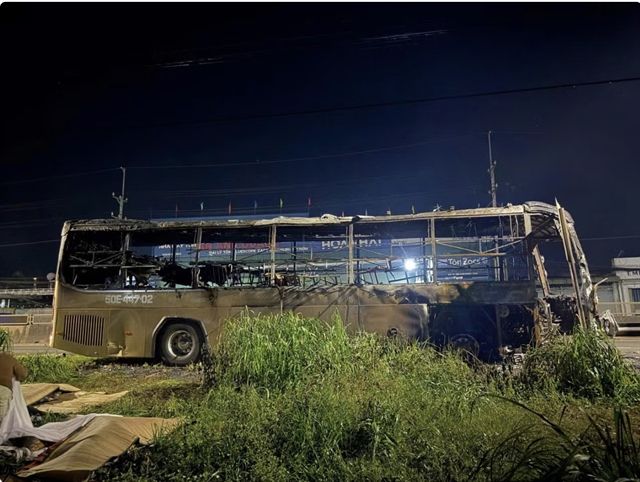
A tragic accident on Vietnam's National Highway 1 has claimed seven lives after a sleeper bus caught fire while transporting passengers through a southern province. The incident occurred in the early morning hours when the vehicle, operated by 41-year-old driver Tran Thanh Hai from Khanh Hoa Province, encountered difficulties while travelling from Dong Nai to Ho Chi Minh City with 33 people on board. Preliminary investigations suggest the bus struck a roadside embankment in Hung Thinh Commune at approximately 2.30am, setting off a chain of events that would result in one of the region's deadlier transport disasters this month.
The sequence of the accident unfolded rapidly once the initial impact occurred. According to local authorities, after striking the first embankment, the bus made contact with another before the driver managed to bring the vehicle under control. However, mere moments after the collision, fire erupted at the front of the bus and spread with alarming speed throughout the passenger compartment where travellers sat in their sleeping berths. The tight confines of a sleeper bus, where passengers rest in narrow compartments stacked above and beside one another, meant that occupants had little opportunity to respond to the sudden emergency.
While some passengers managed to escape the burning vehicle in those critical initial moments, others found themselves trapped as flames consumed the interior of the bus. Local residents who lived near the accident site demonstrated remarkable bravery by rushing toward the burning vehicle armed with whatever firefighting equipment they could gather, including portable fire extinguishers and other makeshift tools. Their immediate intervention represented the first line of defence against the advancing inferno, yet the ferocity of the blaze overwhelmed their efforts as the flames spread too quickly and too intensely to contain.
Emergency response authorities swiftly mobilised resources after receiving distress calls, dispatching professional firefighters, rescue teams, and specialised equipment to the scene. The coordinated efforts of emergency personnel eventually brought the fire under control, though not before the bus had been almost entirely consumed by the flames. Rescue operations continued as crews worked to extract trapped passengers and account for all those on board, while traffic diversion measures were implemented to maintain safety in the surrounding area.
Victim assessment and medical response began immediately as the fire was extinguished. The Hung Thinh Commune People's Committee confirmed that seven people had perished in the incident, while the injured were transported to Thong Nhat General Hospital for emergency treatment. Among those receiving medical care, one passenger sustained only minor injuries and has since been discharged, suggesting that medical intervention prevented additional fatalities. The surviving passengers face varying degrees of physical and psychological trauma from the ordeal.
Authorities have established a comprehensive investigation into the circumstances surrounding the accident. The scene has been cordoned off as forensic examination teams work to determine the precise cause of the fire, identify all seven victims, and reconstruct the exact sequence of events that led to the tragedy. Questions linger about whether the fire originated from mechanical failure, fuel system rupture, or some other ignition source, and investigators will scrutinise the bus's maintenance records and structural integrity.
This devastating incident represents a recurring nightmare for transport safety officials across Southeast Asia. The sleeper bus remains a popular choice for long-distance travel throughout Vietnam and the wider region, offering affordable overnight transport for workers, students, and families. However, the design of these vehicles—with their cramped compartments, limited emergency exits, and compressed seating—creates inherent risks should emergencies occur during transit. For Malaysian travellers who frequently use similar coach services for journeys within the country and across borders, this accident underscores the vulnerabilities that exist in regional transport infrastructure.
The tragedy gains additional significance within a broader context of transport safety failures in Vietnam. Just one week prior, on July 17, another sleeper bus veered off an expressway in Ha Noi and overturned, resulting in five deaths and leaving dozens injured. That vehicle had been returning passengers from Thien Cam beach in Ha Tinh Province to Thai Nguyen in the north when it lost control. The rapid succession of two major sleeper bus accidents within seven days suggests systemic issues requiring urgent attention—whether related to driver fatigue, vehicle maintenance standards, road conditions, or speed enforcement on highways.
For Malaysian policymakers and transport regulators, these incidents abroad offer cautionary lessons applicable to domestic operations. The sleeper bus sector operates under varying safety standards across Southeast Asia, and regulatory oversight remains inconsistent. Long-distance coach operators face intense commercial pressure to maximise passenger numbers and minimise operating costs, potentially compromising safety investments. The frequency of serious accidents involving these vehicles demands comprehensive review of driver working hours regulations, mandatory safety equipment standards, regular mechanical inspections, and passenger emergency training.
The human cost of inadequate transport safety extends beyond the immediate toll of casualties. Families lose breadwinners and relatives; communities mourn preventable deaths; and survivors endure lasting physical injuries and psychological scars. In Vietnam's case, where domestic and cross-border coach travel remains essential for economic mobility and social connectivity, the challenge intensifies. Building consumer confidence in long-distance bus travel requires demonstrable improvements in safety culture, transparent incident reporting, and accountability for operators who cut corners.

