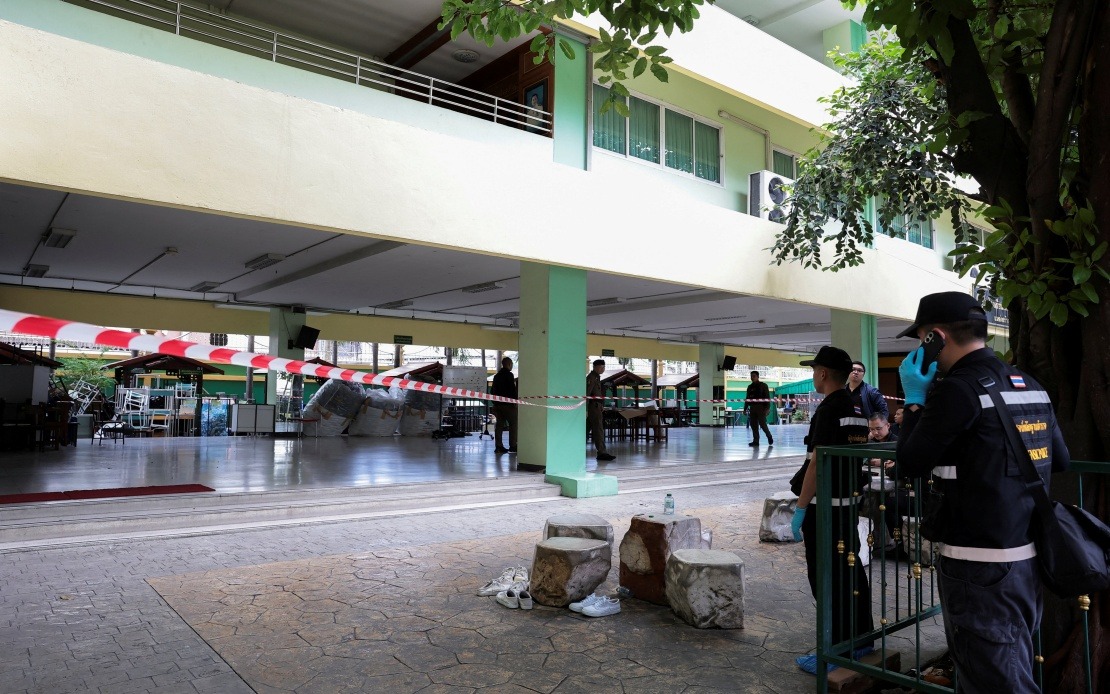
A devastating shooting at Debsirin Nonthaburi School in Bang Kruai district, located northwest of the Thai capital, has claimed the lives of seven people and left at least fifteen injured. The incident occurred on Friday morning around 10 am when a student at the institution opened fire on staff and fellow pupils, before the gunman was also killed at the scene. Among the dead are three teachers and three students, alongside the shooter, marking one of the deadliest school-related attacks in Thailand in recent memory.
According to Lieutenant General Trairong Piwpan, the Royal Thai Police deputy inspector-general, initial investigations recovered a 9mm handgun containing 34 rounds of ammunition from the scene. Authorities subsequently determined that the firearm belonged to the suspect's grandfather, raising significant questions about how the student gained access to the weapon and ammunition. The discovery has intensified scrutiny on how firearms stored within households remain vulnerable to misuse by younger family members, a critical oversight in securing registered weapons.
The fifteen individuals requiring hospital treatment included two patients classified as seriously injured, according to police statements delivered at the scene. Immediate response from educational authorities saw both teachers and students evacuated from the building and relocated to nearby Chanrat Wittaya School as a temporary sanctuary. School administrators worked alongside police to facilitate parent and guardian collection of children, although the traumatic circumstances inevitably created chaos and distress among families rushing to the location.
Recognising the psychological toll of such violence on survivors, the national police chief directed the Police General Hospital to deploy psychologists to the school and affected areas. This intervention reflects growing acknowledgment across Thai security apparatus that mass casualty incidents require mental health support alongside medical treatment. Counselling services have become standard protocol following traumatic events, acknowledging the lasting emotional consequences experienced by witnesses and bereaved families.
The incident prompted an immediate response from the Thai government hierarchy. Prime Minister Anutin Charnvirakul, concurrently serving as interior minister, issued statements expressing sorrow over the shooting and ordered authorities to prioritise assistance to the injured. He conveyed official condolences to victims' families whilst characterising the event as representative of broader security concerns facing the nation. His remarks underscored governmental commitment to addressing the underlying causes of such violence.
Most significantly, Anutin utilised the tragedy to reinforce his administration's controversial stance on firearm regulations. He directly connected the shooting to the government's policy decision to suspend the renewal of civilian firearm permits, arguing that the incident vindicated this restrictive approach. The statement suggests that the cabinet views tighter gun control as essential to preventing future mass casualty events, positioning the tragedy as evidence supporting their regulatory agenda within the ongoing national debate over personal gun ownership.
For Malaysian observers and regional security analysts, this incident underscores persistent challenges across Southeast Asia regarding civilian access to firearms and their potential for catastrophic misuse. Thailand's experience with school shootings reflects vulnerabilities that exist throughout the region, where formal licensing frameworks often coexist with inadequate enforcement and monitoring mechanisms. The recovery of a firearm registered to a family member demonstrates how personal weapons, ostensibly obtained through legitimate channels, can become instruments of mass harm when security protocols break down.
The tragedy also resonates within Malaysia's own context of school safety and security protocols. Both nations face similar challenges in balancing individual freedoms with institutional protection, particularly concerning vulnerable student populations. Malaysian schools have implemented various safety measures following international examples of preventative measures, yet questions regarding employee background checks and campus security remain subjects of ongoing policy discussion. The Thai incident provides a cautionary reference point for evaluating the efficacy of existing safeguards.
This shooting represents Thailand's second major school-related firearms incident within a six-month period. In February 2024, an eighteen-year-old opened fire at a Hat Yai school in Songkhla province, killing the school director and injuring additional individuals before being apprehended. The recurrence within such a compressed timeframe suggests systematic vulnerabilities within Thai society's approach to firearms security and youth violence prevention. Consecutive incidents inevitably intensify pressure on policymakers to implement more comprehensive preventative measures.
The repetition of school shootings raises uncomfortable questions about root causes beyond simple firearm availability. Thai authorities and international observers must grapple with underlying factors including youth mental health resources, social isolation, bullying dynamics, and broader access to weapons within communities. While stricter permit policies address supply-side concerns, demand-side factors driving individuals—particularly young people—towards mass violence require equally rigorous examination and intervention.
Regional governments, including Malaysia, should monitor Thailand's policy responses closely and consider whether comparable vulnerabilities exist domestically. Investment in school counselling infrastructure, threat assessment protocols, and mental health awareness programmes may prove equally critical as regulatory measures. The Thai government's emphasis on firearm permit restrictions represents one component of a necessarily multifaceted approach to preventing future tragedies. Southeast Asian nations collectively benefit from sharing best practices and learning from each other's experiences in protecting students and educational institutions from armed violence.

