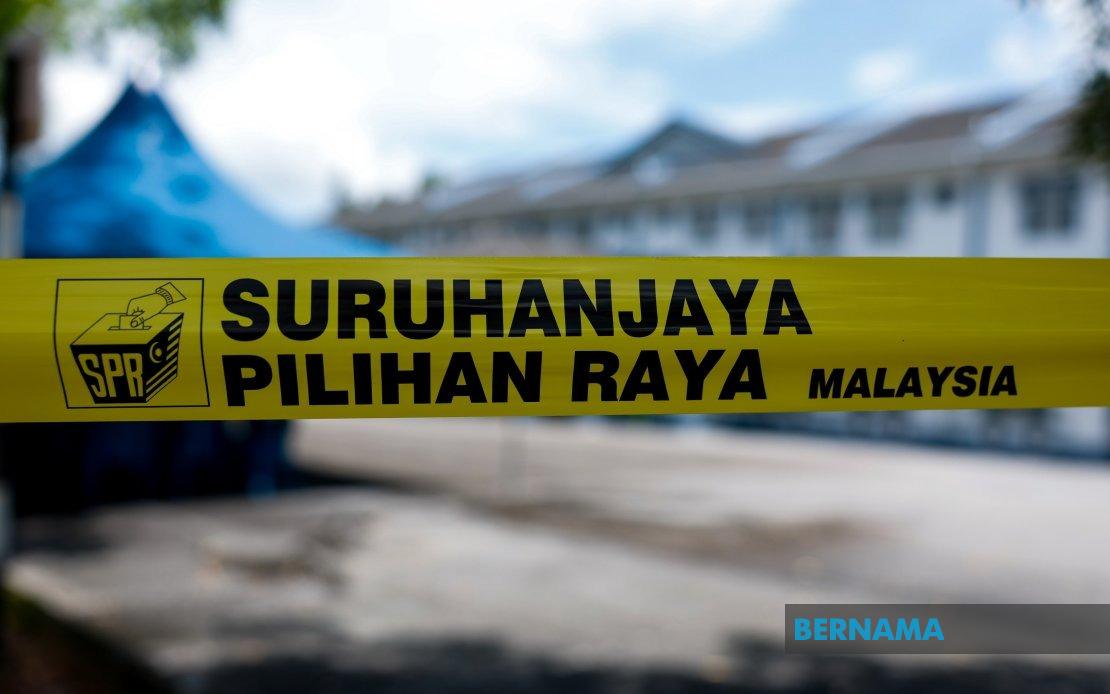
As the campaign for the 16th Negeri Sembilan state election enters its most intense phase, authorities are intensifying their enforcement efforts to maintain order and prevent legal breaches. Police have opened seven investigation papers concerning election-related offences so far, according to Negeri Sembilan Police Chief Datuk Alzafny Ahmad, signalling heightened vigilance during this sensitive political period.
Two of these investigations were initiated recently, both centred on allegations of property damage and mischief under Section 427 of the Penal Code. The timing of these cases reflects the escalating activity across the state as candidates, party machinery, and supporters mobilise for what has become one of Malaysia's more closely watched state contests. The offences underscore the tensions that can arise when political competition translates into street-level activity, from poster placement disputes to allegations of sabotage targeting campaign materials.
In the five-day window from July 18 to July 22, the Negeri Sembilan contingent of the Royal Malaysia Police received a cumulative total of 12 reports classified as election-related offences. This volume indicates the scale of the campaign activity unfolding across the state, with political parties and their supporters engaged in unprecedented levels of ground mobilisation. The police leadership has portrayed these figures as manageable within the context of a full-scale state election, though the underlying friction these cases represent warrants careful monitoring as polling day approaches.
Parallel to enforcement actions, the police machinery has simultaneously approved a substantial number of permits for political gatherings and campaign activities. On a single day, 53 applications were greenlit, bringing the cumulative total of approved permits to 226. This administrative openness reflects Malaysia's commitment to enabling democratic participation while simultaneously maintaining public order, a delicate balance that the police have sought to strike throughout this campaign period. The high volume of approved permits demonstrates the extensive ground game that political parties are conducting across Negeri Sembilan's constituencies.
The police have framed their role as ensuring that all political programmes and activities remain compliant with electoral law and do not undermine public safety or disrupt communal harmony. This enforcement posture is particularly significant given Malaysia's experience with elections that have occasionally descended into disorder or seen sporadic incidents of political intimidation. By maintaining visible oversight, the police signal that any transgression will be met with swift action, potentially serving as a deterrent to those inclined toward unlawful conduct.
Datuk Alzafny's public statements have emphasised the commitment to enhanced preparedness throughout the campaign period, with assurances that stern measures will follow any violations. This messaging strategy serves multiple audiences: it reassures the general public and business community that the election will proceed in an orderly fashion, while simultaneously signalling to political actors that the security establishment is prepared to enforce the rules impartially. The credibility of these assurances depends significantly on whether enforcement is perceived as even-handed across all contesting parties.
The Election Commission has structured the 16th Negeri Sembilan state election with early voting scheduled for July 28, followed by polling day on August 1. This compressed timeline means that the campaign period is inherently condensed compared to some previous state elections, which can create an intensified environment where tensions may be more likely to surface. The police's proactive approach in the run-up to these dates is partly a response to this compressed schedule, ensuring that law enforcement presence is visible and active precisely when political momentum is building.
For Malaysian readers and regional observers, this police report offers important signals about the health of electoral democracy in one of the country's important states. The relatively low volume of offences, when contextualised against the scale of political activity, might suggest that most stakeholders are respecting the rules of engagement. However, the presence of any violence-related incidents or property damage cases serves as a reminder that political competition can occasionally spill into unlawful territory, even in mature democracies.
The Appeal to Public Cooperation represents a critical dimension of the police strategy. Rather than relying solely on enforcement, police leadership has explicitly appealed to voters and the broader public to maintain respect for democratic processes and cooperate with authorities. This framing positions law enforcement not as an obstacle to political expression but as a custodian of the democratic exercise itself, a nuance that can be important for public perception and legitimacy.
Looking ahead, the final days of campaigning leading to August 1 will be particularly consequential. Political tensions often intensify as polling day approaches, and the police's demonstrated commitment to monitoring and swift enforcement action may prove decisive in preventing any last-minute breaches of conduct or disorder. The stakes are significant not only for Negeri Sembilan but for Malaysia's broader democratic trajectory, as successful, peaceful elections reinforce institutional confidence and voter participation in future contests.

