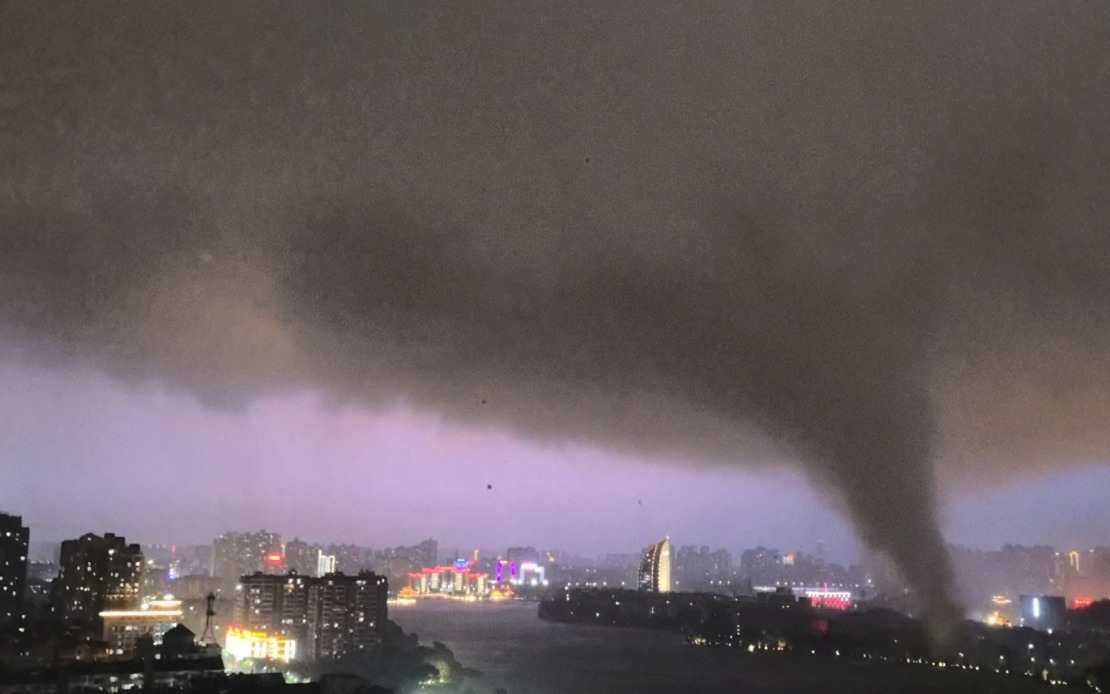
A devastating sequence of severe weather events unfolded across eastern Hubei Province in central China on Monday night, leaving a trail of destruction across multiple cities and claiming at least eleven lives. According to provincial authorities, the extreme conditions began around 7 pm and persisted until roughly 11 pm, affecting four major urban centres—Huangshi, Huanggang, Ezhou, and Xianning—with catastrophic force. The incident has also left one person unaccounted for, with search and recovery operations still underway across the affected regions.
The meteorological phenomenon that struck the province proved particularly severe in its intensity and geographic scope. Two townships in the impact zone experienced gales that reached level 13 on the wind scale, indicating sustained winds powerful enough to cause structural damage and pose acute dangers to anyone caught in exposed areas. Beyond the extreme wind conditions, local authorities confirmed that tornado activity occurred in certain localities, compounding the hazards faced by residents already struggling against the thunderstorms and electrical activity that accompanied the convective system.
The material damage inflicted by Monday's weather event has been substantial and far-reaching. Emergency officials documented that twenty-two structures were completely destroyed across the four affected cities, while an additional 4,855 buildings suffered varying degrees of damage ranging from minor roof deterioration to more serious structural compromise. These figures underscore the breadth of the disaster's impact, suggesting that the destructive footprint extended well beyond the immediate zones of most intense winds and tornadoes, affecting residential neighbourhoods, commercial districts, and potentially agricultural infrastructure across a considerable area.
Beyond the loss of life and property damage, the human toll extends to a significant number of injuries. Local authorities have reported that 331 residents sustained injuries during the extreme weather event, though the statement does not specify the severity distribution of these injuries or the current condition of those hospitalised. This substantial casualty figure indicates that many people either ventured into or were caught unaware by the rapidly deteriorating conditions, or were injured by debris and structural failures associated with the storms' destructive power.
The timing of the disaster during evening hours—when families are typically indoors or just concluding their daily activities—likely influenced both the casualty count and the nature of injuries sustained. Urban centres like Huangshi and Huanggang, which serve as important regional hubs in Hubei's economic landscape, would have had substantial resident populations in the affected zones, increasing the potential for significant human impact when such extreme weather strikes without adequate warning time.
Provincial authorities have mobilised comprehensive response mechanisms to address the immediate humanitarian crisis and prevent further deterioration. The government has initiated what officials describe as all-out rescue and relief efforts, indicating that multiple agencies and resources have been coordinated toward locating survivors, providing emergency medical care, restoring basic infrastructure, and distributing humanitarian assistance to displaced residents. These operations typically involve deployment of emergency services personnel, military or paramilitary units, and civilian volunteer organisations working in concert to maximise rescue effectiveness.
A critical component of the provincial response focuses on mitigating the risk of secondary disasters—a recognised hazard in post-extreme-weather situations where structural instability, flooding from associated rainfall, downed electrical lines, and contaminated water supplies can claim additional lives in the days following the initial event. By emphasising prevention of these cascading consequences, authorities acknowledge that the immediate danger period extends beyond the initial weather event itself and requires sustained vigilance and resource allocation.
For Malaysian and regional observers, this incident serves as a sobering reminder of the destructive potential inherent in severe convective weather systems that can develop during certain seasonal and atmospheric conditions. While Malaysia's tropical monsoon climate differs from central China's temperate continental regime, the fundamental mechanisms that produce extreme weather—including tornadoes and destructive gales—operate across various latitudes and can affect any region lacking adequate warning systems and building resilience standards.
The Hubei disaster also highlights critical infrastructure vulnerability in densely populated regions where rapid urbanisation may outpace the development of meteorological monitoring capabilities and building code enforcement. Southeast Asian nations experiencing similar rapid urban expansion would benefit from examining how more developed Chinese provinces have implemented early warning systems, public education campaigns, and structural standards designed to mitigate casualties during extreme weather events.
This event underscores the importance of investment in weather forecasting technology, public alert systems, and community preparedness training as fundamental components of disaster risk reduction strategy. For Malaysian state governments and municipal authorities managing rapid urban development, the Hubei example provides practical evidence of why building codes, zoning regulations, and emergency response protocols merit sustained attention and adequate funding allocation, even during periods of fiscal constraint.

