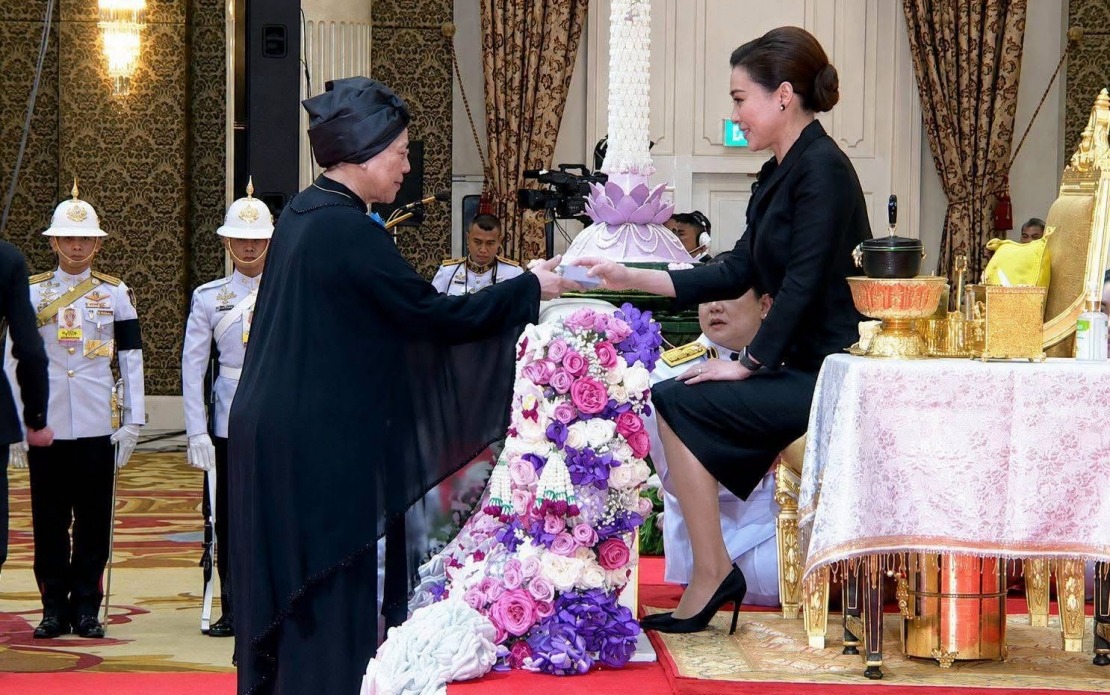
Prime Minister Datuk Seri Anwar Ibrahim has lauded Prof Emerita Tan Sri Datuk Seri Dr Sharifah Hapsah Syed Hasan Shahabudin's conferment of the Outstanding Woman Award for Social Development, presented by Queen Suthida Bajrasudhabimalalakshana of Thailand, as a testament to the growing international recognition accorded to Malaysian women leaders. Speaking alongside his wife Datuk Seri Dr Wan Azizah Wan Ismail, Anwar described the honour as extending beyond the individual recipient to reflect broader achievements by Malaysian women across multiple disciplines and sectors.
The award ceremony, held in Thailand, represents a significant diplomatic moment highlighting the cross-border recognition of women's leadership in Southeast Asia. Thailand's highest honour for women's contributions to social development underscores the region's growing emphasis on gender equality and women's participation in nation-building initiatives. For Malaysia, the recognition carries particular weight in demonstrating that the country's female professionals, academics, and leaders are making measurable impacts that resonate beyond national borders.
Anwar's public commendation, shared via social media, positioned the award as validation of what he characterised as the calibre, capability and sustained contributions of Malaysian women in various fields. The Prime Minister specifically noted that such international recognition serves as motivation for other women to pursue leadership roles and contribute meaningfully to society through knowledge-sharing, formal leadership positions and compassionate engagement in community development.
The MADANI Government's commitment to advancing women's roles has become increasingly central to its development agenda. By positioning Sharifah Hapsah's achievement as emblematic of broader Malaysian women's success, Anwar articulated a vision where women's participation and talent are foundational to the nation's progress. This framing suggests that the administration views gender inclusion not as a peripheral concern but as integral to meeting development objectives.
Malaysia's track record in producing women leaders and professionals across education, business, civil service and academia has expanded considerably over recent decades. The country has seen female representation increase in university professorships, corporate boardrooms, and government positions, though gaps in senior leadership remain. International recognition such as Thailand's award provides external validation that this progress is substantive and internationally acknowledged.
The emphasis on women's participation across sectors reflects global trends in development policy where gender equality is increasingly recognised as essential for economic growth and social stability. By highlighting Sharifah Hapsah's award, the Prime Minister aligned Malaysia with international best practices in recognising and supporting women's advancement, particularly in fields like social development that directly affect community welfare.
Anwar's call for women to engage through knowledge and leadership in advancing the MADANI agenda specifically links gender advancement to the government's broader development framework. MADANI, described as emphasising prosperity, compassion, and unity, becomes presented as a comprehensive platform where women's contributions are not merely welcomed but essential. This rhetorical move situates gender equality as foundational to achieving the administration's defining policy objectives.
The recognition also carries implications for Malaysia's regional standing. In Southeast Asia, where women's economic participation and political representation vary significantly across countries, Malaysia's visibility in producing internationally recognised female leaders contributes to the nation's soft power and positioning as a progressive Muslim-majority democracy. This matters not only for national pride but for regional diplomacy and Malaysia's ability to shape conversations about development and governance.
Looking forward, Anwar's statement signals that the MADANI Government intends to expand concrete opportunities for women's participation across sectors, rather than simply celebrating existing achievements. The commitment to ensure that women's talent, leadership and potential remain central to national development suggests policy initiatives focused on removing structural barriers, expanding access to leadership training, and creating pathways for advancement in traditionally male-dominated fields.
The award also reflects evolving definitions of development and social progress that emphasise inclusive, people-centred approaches. Sharifah Hapsah's recognition for contributions to social development, rather than conventional metrics of economic growth, signals international acknowledgement that sustainable development requires attention to community welfare, social cohesion and human-centred governance—areas where women leaders often pioneer innovative approaches.

