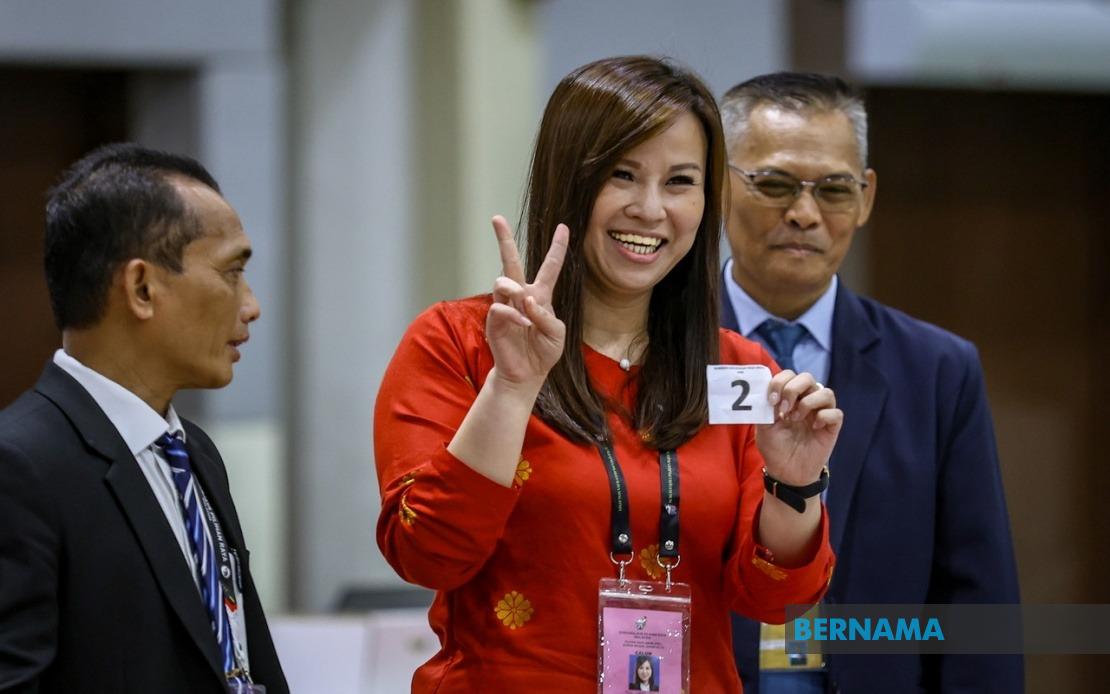
Sharon Teo, the Pakatan Harapan (PH) candidate for the Permas state seat, has centred her campaign around two interconnected issues that residents consistently bring to her attention: the condition of local roads and the adequacy of public welfare provisions. Speaking after completing the nomination process at Dewan Muafakat, Taman Mawar in Johor Bahru on June 27, Teo framed road infrastructure as a fundamental matter of public safety rather than mere convenience, signalling her intent to prioritise this area should she win the seat in the upcoming 16th Johor state election.
Teo brings relevant political experience to her candidacy, having previously worked as an aide in the Pulai parliamentary constituency under Amanah's late deputy president Salahuddin Ayub. Her current role as chief of the Johor Amanah Women's Youth (Warda) has given her a platform to engage directly with constituents and, according to her own account, to identify the primary grievances affecting daily life in Permas. She indicated that a detailed manifesto outlining her specific vision and mission for the constituency would be released imminently, though she did not provide a precise timeline.
The Permas constituency, which falls within the broader Pasir Gudang parliamentary division, encompasses 113,963 eligible voters registered for this state election. The electoral contest has evolved into a four-way battle, reflecting the increasingly fragmented political landscape in Johor. Beyond Teo and the incumbent, the race includes T. Vela representing Perikatan Nasional (PN) and Dr Zamil Najwah standing for Parti Bersama Malaysia (Bersama), each bringing their own party machinery and campaign messaging to a seat where the margin of victory could prove decisive for both major coalitions.
BarisanNasional's incumbent Baharudin Mohamed Taib, who secured the seat in the 2022 Johor election, faces the dual challenge of consolidating his existing voter base while fending off renewed opposition. In comments made after the nomination process, Baharudin acknowledged that defending a sitting state seat in the current political climate requires sustained effort and cannot be taken for granted. He noted that each of his three opponents possesses distinct advantages and campaign strategies, necessitating a rigorous ground effort to retain BN's hold on Permas.
Interestingly, Baharudin's campaign strategy diverges from Teo's approach in a meaningful way. Rather than launching a personalised manifesto as an individual candidate, he indicated his intention to campaign primarily on the basis of BN's broader party platform and electoral promises. This approach reflects a common BN strategy of emphasising the stability and resources of the coalition apparatus itself, rather than betting heavily on an individual candidate's personal brand. However, this also means Baharudin has provided fewer specific details about his own priorities for the Permas constituency compared to his PH challenger.
The timing of the Permas election falls within a broader political moment for Johor and Malaysia more generally. The 16th Johor state election represents an important test of voter sentiment following the 2022 federal election, which fundamentally reshaped Malaysia's political landscape. For Pakatan Harapan, contests like Permas offer opportunities to consolidate support in urban and peri-urban constituencies where infrastructure concerns and welfare provision resonate with voters. For BN, retaining seats it won in 2022 is essential to demonstrating continued electoral viability in one of Malaysia's most populous states.
The emphasis on road infrastructure in Teo's campaign reflects a broader regional issue. The Johor conurbation, encompassing Johor Bahru, Pasir Gudang, and surrounding areas, has experienced rapid urbanisation and industrial development. This growth has strained local road networks, and maintenance of existing roads has emerged as a recurring complaint in residential areas. For a candidate to foreground this issue suggests it carries genuine salience among Permas voters, who may be experiencing congestion, deteriorating road surfaces, and associated safety concerns in their daily commutes.
The welfare component of Teo's platform also speaks to contemporary economic anxieties. Rising costs of living, inflation affecting household budgets, and concerns about employment stability have made social safety net provisions increasingly important to Malaysian voters across demographic groups. Candidates who emphasise welfare support—whether through direct assistance programmes, subsidies, or targeted aid—appeal to voters worried about economic security. Teo's pairing of infrastructure and welfare suggests she is addressing both physical and economic dimensions of quality of life.
The voting schedule for this election creates a compressed campaign period. Nomination day was June 27, with polling set for July 11 and early voting on July 7. This brief window—less than two weeks of intensive campaigning—places a premium on ground organisation and message discipline. All four candidates must rapidly build campaign structures, distribute materials, and persuade voters in a densely populated constituency with over 113,000 eligible voters.
From a broader Malaysian political perspective, contests like Permas illustrate how state elections serve as crucial venues for testing messages and building momentum ahead of federal ballots. Both PH and BN will scrutinise results from Johor carefully, as the state remains economically significant and symbolically important. A strong PH showing in constituencies like Permas could signal growing momentum for the coalition, while BN victories would underscore its continued relevance in major states.
The four-way contest also reflects the splintering of Malaysia's opposition. With both PN and Bersama fielding candidates, anti-establishment votes risk becoming dispersed, potentially advantaging BN if the opposition cannot consolidate behind a single standard-bearer. For PH, competing effectively in a crowded field requires not only articulating clear policy differences but also convincing voters that their candidate represents the most viable alternative to the incumbent.
Ultimately, the outcome in Permas will depend on how effectively each candidate translates their stated priorities into tangible voter persuasion. Teo's focus on roads and welfare represents a pragmatic campaign centred on issues affecting daily life, while Baharudin's reliance on BN's broader platform reflects confidence in the coalition's institutional strength. As campaigning intensifies over the coming weeks, how these competing strategies resonate with Permas voters will become clearer.

