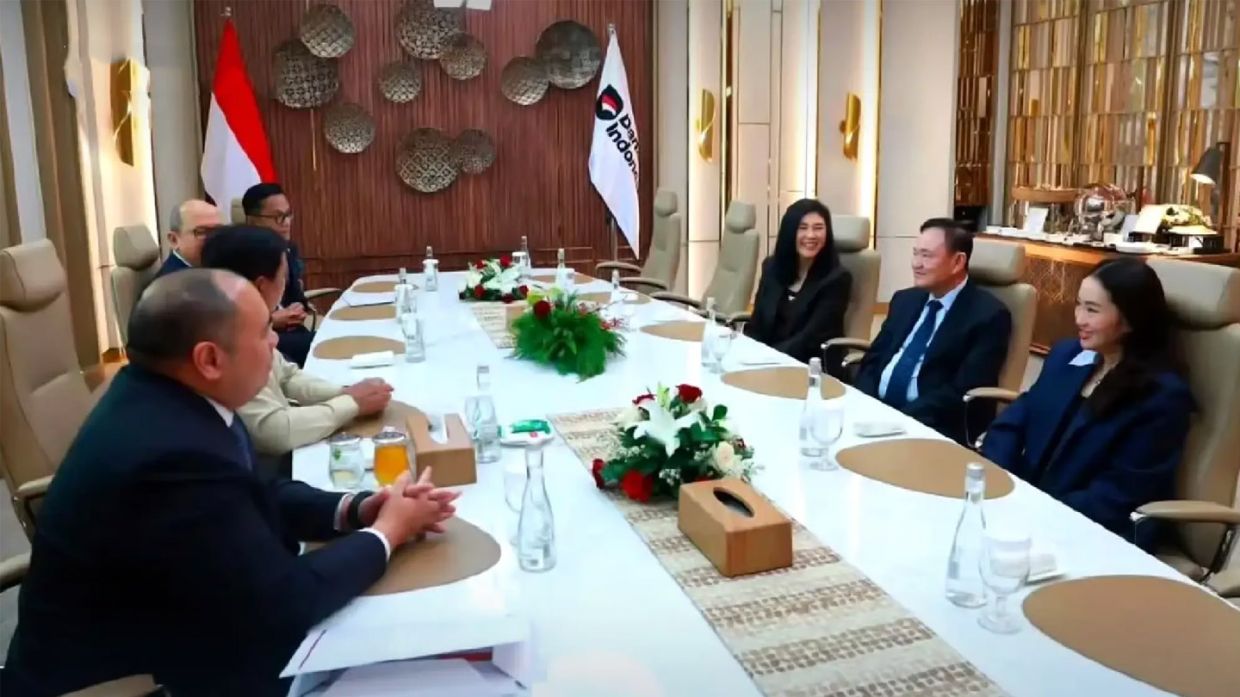
The Shinawatra family's economic influence extended across Southeast Asia this week when three of its most prominent members convened with Indonesian President Prabowo Subianto to explore investment partnerships and development strategies. Thaksin Shinawatra, Yingluck Shinawatra, and Paetongtarn Shinawatra travelled to Jakarta on Thursday, July 9, where they met the Indonesian leader at the Danantara building alongside senior government officials and agency executives. The gathering underscores how influential Thai political figures continue to shape regional economic conversations, even as their domestic political fortunes have fluctuated over the past two decades.
Danantara Indonesia, the state institution hosting the discussions, serves as Jakarta's principal vehicle for managing and optimising the country's strategic national assets. The agency operates with a mandate to steer Indonesia's long-term economic transformation by identifying high-impact investment opportunities and deploying capital toward sustainable development initiatives. By convening prominent regional figures like the Shinawatra trio, Danantara signals its intent to tap into networks of experienced investors and policymakers who understand the complexities of operating across Southeast Asia's diverse economies. Indonesian Cabinet Secretary Teddy Indra Wijaya confirmed the meeting, and official photographs shared on the Cabinet Secretariat's social media demonstrated the institutional significance accorded to the event.
Thaksin's particular involvement carries special weight given his formal advisory position within Danantara's governance structure. His appointment to the agency's advisory council reflects recognition of his extensive experience in building business empires and navigating regional markets during his tenure as Thailand's prime minister from 2001 to 2006. During that period, Thaksin championed what became known as "Thailand Incorporated," a nationalist economic philosophy that leveraged state power to develop Thai companies into regional champions. That track record, despite the political controversies that have shadowed his career, apparently appeals to Jakarta's development planners seeking perspectives on how to position Indonesia as a Southeast Asian economic powerhouse.
Yingluck's participation in the Jakarta discussions carries different implications. She served as Thailand's premier from 2011 to 2014, a period marked by significant infrastructure investment and rural development programmes that reshaped Thailand's economic geography. Though her administration ended in political crisis and her subsequent exile abroad forced her distance from Bangkok policymaking, Yingluck retains substantial business acumen and family connections that remain valuable in regional circles. Her presence at Danantara's headquarters alongside her brother and niece suggests that the family's collective expertise in translating economic vision into implemented policy remains sought after, even by foreign governments.
Paetongtarn's more recent tenure as Thailand's prime minister, serving from 2024 to 2025, places her in a particularly interesting position. As the family member closest to current Thai politics, her attendance at this Jakarta meeting could signal either continuity in Thai-Indonesian economic relations or reflect her individual standing as a pragmatic technocrat focused on development. The timing and setting of the encounter—described by Indonesian officials as warm and informal—suggests genuine relationship-building rather than merely ceremonial diplomacy. This distinction matters because it indicates substantive engagement on shared economic challenges facing both nations.
The substantive focus of discussions centred on three interconnected themes: identifying suitable investment vehicles for capital deployment, developing asset management strategies that generate sustainable returns, and crafting long-term economic development plans that address structural challenges within both Thailand and Indonesia. These topics reflect preoccupations common across Southeast Asia as the region seeks to transition toward higher-value manufacturing, develop digital economies, and manage the twin pressures of demographic change and climate adaptation. By bringing the Shinawatra family into these conversations, Indonesian policymakers gain access to thinking informed by years of navigating such transitions at a national level.
The institutional context surrounding Danantara's role deserves attention for Malaysian observers and investors. State-owned development investment agencies have become increasingly important across Southeast Asia as governments seek to coordinate capital allocation toward national priorities rather than relying entirely on private markets. Similar mandates drive Malaysia's own sovereign wealth funds and development finance institutions. The presence of high-profile foreign advisors within these structures reflects a growing recognition that economic transformation requires both domestic expertise and access to international networks and capital sources. Danantara's willingness to convene figures like Thaksin suggests confidence in deploying state capital across borders to pursue returns aligned with broader strategic objectives.
Beyond the formal Danantara gathering, the Shinawatra delegation also attended a separate, more intimate gathering at President Prabowo's private residence in Jakarta. This secondary meeting, occurring outside official institutional settings, emphasises the personal relationships underlying the economic discussions. Such dynamics matter considerably in Southeast Asian business practice, where trust and personal connection often determine whether technical agreements translate into actual deal-making. The Indonesian government's explicit characterisation of this residence meeting as warm and cordial suggests that personal chemistry and mutual regard existed between the participants, factors that typically facilitate smoother future negotiations.
For Malaysia and the broader region, these developments merit close observation. The Shinawatra family's continued engagement in cross-border economic discussions demonstrates that family business networks and political experience retain significant value in contemporary Southeast Asia, despite the cyclical nature of Thai politics and the legal challenges that have shadowed individual family members. The Indonesian government's cultivation of such relationships through a major state investment institution suggests Prabowo's administration views access to transnational business expertise and capital networks as central to executing its development agenda. Malaysian policymakers and investors would do well to consider whether similar engagement with experienced regional figures might enhance their own economic strategy formulation and implementation capacity.
The broader implication concerns how Southeast Asian countries are increasingly treating economic development and investment attraction not merely as technical exercises but as relationship-intensive endeavours requiring cultivation of networks across national borders. By hosting the Shinawatra delegation at Danantara and the presidential residence, Indonesia's leadership invested in building rapport with people who understand how to execute large-scale economic projects across the region. Whether this translates into specific investment flows or policy collaboration remains to be seen, but the meeting itself confirms that personal networks and institutional credibility remain critical currencies in regional economic diplomacy.

