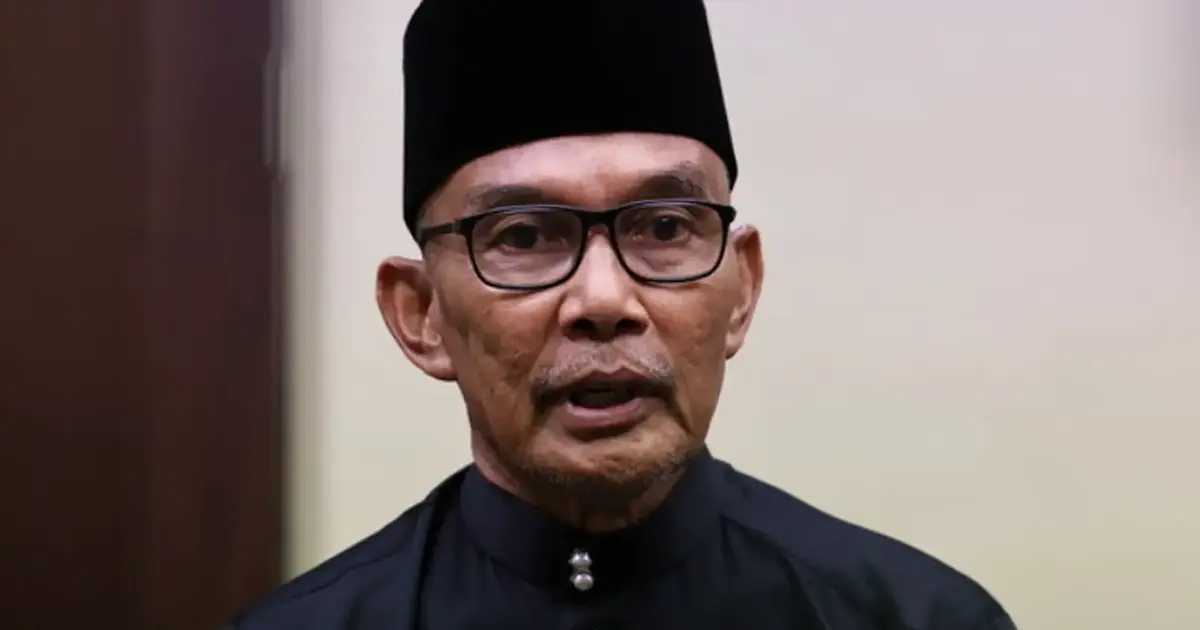
The former Perlis menteri besar Shukri Shuib has pushed back against suggestions that he has been orchestrating resistance within PAS ranks, insisting that despite the emotional toll of his political setback, he has refrained from actively working to undermine the party's organisational strength or encourage members to distance themselves from official programmes.
Shukri's clarification comes amid lingering tensions within the Islamist party in Perlis, where questions have persisted about whether his departure from the position of menteri besar last year has created fractures or resentment that could manifest as internal dissent. The former leader's acknowledgement that he remains wounded by the episode suggests the political wound has not fully healed, even as he seeks to position himself as someone who, despite personal grievances, has not allowed bitterness to override his commitment to party discipline and unity.
The distinction he draws is significant in the context of Malaysian politics, where internal party cohesion often determines electoral viability and the durability of state-level governance. A prominent figure openly campaigning against party activities would represent a serious breach of political discipline and could precipitate broader factional struggles. By asserting that he has not crossed this line, Shukri appears to be walking a careful path between acknowledging his dissatisfaction and preserving his standing within PAS organisational structures.
The broader significance of Shukri's statement extends beyond his personal rehabilitation. PAS has positioned itself as a centrist Islamic party capable of governing secular Malaysian states, and internal discord at the state level—particularly involving a former menteri besar—can undermine that narrative. Perlis, as one of the more religiously conservative states in Malaysia, forms a crucial part of PAS's electoral geography and policy testing ground. Any suggestion of factionalism threatening party discipline there reverberates through the party's national calculations.
For readers across Southeast Asia concerned with Malaysian politics, the Shukri situation illustrates how personality-driven disputes within political parties can create structural vulnerabilities. Unlike Western-style parliamentary systems where defeated leaders often retreat to backbench obscurity, Malaysian politics frequently sees outsted figures retain significant grassroots support and organisational reach. This can generate protracted periods of low-level tension as parties attempt to reintegrate wounded leaders without appearing to validate their grievances or appear weak in the eyes of rival factions.
The question of what prompted Shukri's removal has not been fully clarified in public discourse, and this opacity itself becomes politically consequential. When party members lack transparent explanations for leadership changes, they become susceptible to rival interpretations—some sympathetic to the departed leader, others reflecting the current hierarchy's version of events. Shukri's insistence that he has not undermined the party may be a way of signalling to PAS leadership that despite his hurt feelings, he remains integrated into the party apparatus rather than positioned as a disruptive external critic.
The timing of Shukri's remarks also matters. Political statements of this nature are rarely spontaneous; they typically emerge when party leaders have signalled concern about loyalty and cohesion. That Shukri felt compelled to explicitly deny inciting boycotts suggests someone, somewhere, had raised such concerns publicly or privately. This dynamic reflects how rumours and perceptions shape Malaysian political life, sometimes independently of what actors actually do.
From a regional perspective, Shukri's situation exemplifies broader patterns in Southeast Asian party politics where the lines between organisational loyalty and personal dignity often remain poorly defined. Thai, Indonesian, and Filipino politics have witnessed similar episodes where senior figures, excluded from power, navigate the difficult terrain between protest and compliance. The Malaysian case shows how different that terrain can be depending on the specific party culture and factional balance.
PAS's ability to manage figures like Shukri will influence its trajectory as an organisation. Should it succeed in keeping wounded leaders within the fold while preventing them from destabilising state-level structures, it demonstrates institutional resilience. Conversely, if former menteri besar positions become launching pads for internal opposition, the party's coherence as a national force could suffer, particularly as it seeks to expand beyond its traditional heartlands.
Shukri's statement, carefully calibrated to acknowledge pain while denying destructive action, also serves a personal function. By establishing that he has not crossed certain red lines, he may be positioning himself for eventual rehabilitation within PAS structures—perhaps in a future role or at least in a way that preserves his dignity and organisational standing. In Malaysian politics, where careers can experience dramatic reversals and comebacks, maintaining good standing within one's party remains crucial for longevity.
The unresolved question is whether Shukri's personal restraint, if genuine, will be reciprocated by PAS leadership with gestures that acknowledge his contributions and ease his transition from high office. How the party handles this relationship will send signals to other ambitious figures within PAS about the costs of political defeat and the possibilities for comeback within the organisational framework.

