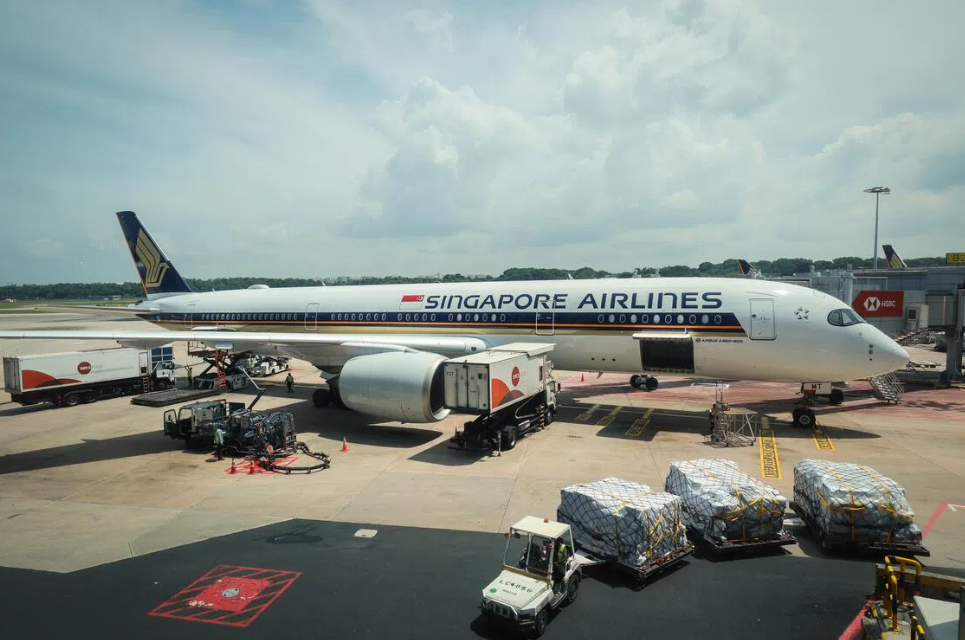
Singapore Airlines' ultra-long-range service to New York encountered a mechanical issue in the early hours of August 13, forcing the aircraft to return to Changi Airport just hours after departure. Flight SQ22, an Airbus A350-900 that had lifted off the previous evening at 11.35pm on August 12, turned back at 3.06am on August 13 after experiencing an undisclosed technical fault. The airline declined to elaborate on the specific nature of the problem, a decision that later drew mild criticism from at least one passenger who took to social media to express frustration over the lack of transparency.
The disruption affected one of the aviation industry's most ambitious routes. SQ22 covers approximately 16,700 kilometres and typically requires more than 18 hours of flight time, placing it among the world's longest non-stop commercial services. The route represents a significant operational achievement for Singapore Airlines, showcasing the capabilities of modern wide-body aircraft on ultra-long-range missions. The return journey required careful handling of logistics, as the aircraft had to be towed to a remote maintenance bay rather than docking at a conventional gate, complicating passenger and baggage handling procedures.
All 133 passengers and 17 crew members safely disembarked the aircraft without incident. The airline coordinated a methodical evacuation process, bussing the travellers to the terminal building as the aircraft underwent inspection and repairs in its isolated parking location. The situation demanded swift decision-making from ground operations staff, who faced the challenge of managing passenger expectations while addressing the immediate mechanical concerns. Singapore Airlines' ground crew moved quickly to establish support systems for the stranded passengers, recognising that an overnight incident on a premium long-haul route required attentive customer care.
Passengers received food vouchers while awaiting assignment to replacement transportation, a standard courtesy on Singapore Airlines services during extended delays. However, the most significant complication arose from aviation regulations governing crew working hours. The original flight crew, having already expended a portion of their regulatory flight time allowance during the aborted journey, would have exceeded maximum duty limits if assigned to operate the replacement service. This necessitated sourcing a fresh crew complement before departure could be reattempted, adding several additional hours to the overall delay.
A replacement aircraft was prepared and made ready for the resumed journey. Flight SQ22 finally departed Changi Airport at 5.41am on August 13, carrying the rebooked passengers and a new crew. Despite the substantial delay caused by mechanical diagnosis, repairs, passenger reallocation, and crew sourcing, the replacement aircraft successfully completed the gruelling trans-Pacific crossing. The flight touched down at Newark Liberty International Airport at 12.15pm local time on August 13, ensuring that passengers, though significantly delayed, ultimately reached their destination.
Singapore Airlines provided affected customers with ongoing communication throughout the ordeal and facilitated rebooking on alternative connecting flights for those whose schedules had been disrupted. This proactive approach to passenger care helped mitigate the frustration inherent in such disruptions. The airline issued a formal apology acknowledging the inconvenience caused to travellers, while reiterating its commitment to passenger and crew safety as the paramount operational consideration. The response aligned with SIA's reputation for premium service standards, though the refusal to disclose technical details left some passengers wanting greater clarity.
One passenger's social media post offered a measured assessment of the airline's handling of the crisis. The traveller acknowledged that Singapore Airlines managed the situation "incredibly well" from a logistical and customer service perspective, praising the operational efficiency and attentiveness displayed by ground staff. However, the same passenger expressed disappointment at not receiving detailed explanation for the tow-away procedure and the baggage handling constraints that resulted. The observation reflects a broader tension between operational necessity and passenger communication—airlines must balance timely information sharing with the possibility of incomplete or inconclusive technical findings during active fault diagnosis.
The incident underscores the technical complexity and operational challenges inherent in ultra-long-range aviation operations. The A350-900, while representing state-of-the-art aircraft design, operates at the absolute frontier of commercial aviation capabilities. Routes of such extreme distance and duration place intensive demands on aircraft systems, avionics, and structural integrity. Even minor mechanical irregularities, detected through pre-flight checks or initial flight phase monitoring, necessitate immediate return and thorough investigation rather than risk continuation over the Pacific Ocean.
For Malaysian travellers and regional observers, the SQ22 incident illustrates both the robustness of modern safety protocols and the operational resilience of Singapore Airlines' network. The airline's ability to rapidly source replacement aircraft, crew, and services demonstrates the logistical depth required to maintain premium ultra-long-range services. Regional carriers operating similar long-haul routes must maintain comparable backup systems and response capabilities. The incident also demonstrates how regulatory frameworks governing crew rest and flight time limits, while occasionally adding operational complexity, serve as essential safeguards preventing fatigue-related risks on punishing intercontinental missions.
Singapore Airlines' handling of passenger communications and rebooking—providing vouchers, updates, and alternative flight options—established a template for managing high-impact disruptions on prestige routes. The airline's decision to prioritise transparent apology and safety assurances, even while withholding technical specifics, reflects calculated crisis management. For the travelling public across Southeast Asia, the incident reinforced that mechanical disruptions, though inconvenient, are managed through established protocols designed to protect all parties. The safe return of SQ22 and subsequent successful completion of its mission on replacement equipment demonstrated that even the most ambitious commercial aviation operations have built-in redundancies and contingency mechanisms to ensure passenger safety remains inviolable.

