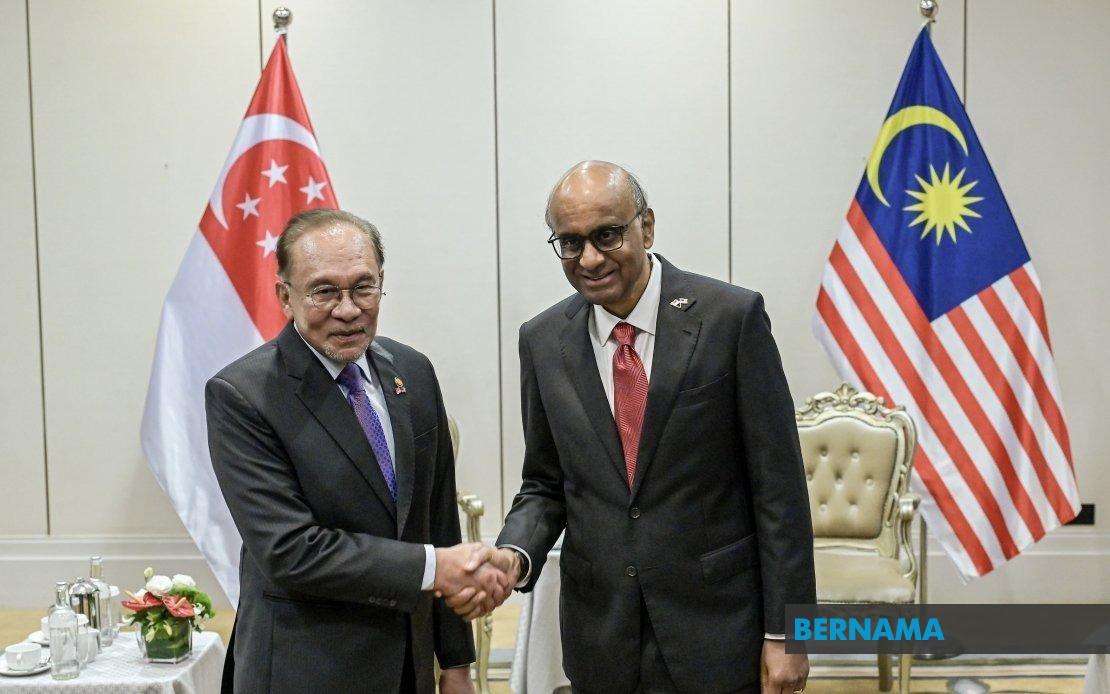
Singapore's President Tharman Shanmugaratnam and Malaysian Prime Minister Datuk Seri Anwar Ibrahim have committed to deepening bilateral collaboration across several critical domains, signalling a fresh momentum in ties between the two neighbouring nations. The pledge was made during a courtesy call on Monday as part of Tharman's inaugural state visit to Malaysia, which runs from July 12 to 15. The engagement reflects both countries' recognition that sustained partnership remains essential for regional prosperity and security in an increasingly volatile geopolitical environment.
Among the priority areas identified for enhanced cooperation are food security and energy—two sectors of fundamental importance to the stability and economic resilience of Southeast Asia. For Malaysia and Singapore, both heavily dependent on regional and global supply chains, the focus on these domains underscores shared vulnerabilities and mutual interests in building resilience. The food security agenda carries particular significance for the region, where rapid urbanization, climate variability, and supply chain disruptions have amplified concerns about self-sufficiency and price volatility. By coordinating on agricultural innovation, trade protocols, and emergency reserves, the two nations can better cushion their populations against future shocks.
The energy dimension of the partnership extends beyond conventional hydrocarbon trade. As Southeast Asia transitions toward renewable energy and decarbonization, Malaysia and Singapore have opportunities to collaborate on grid integration, technology transfer, and green financing mechanisms. Singapore's expertise in refining and energy trading, combined with Malaysia's substantial hydrocarbon resources and renewable potential, creates a complementary foundation for strategic alignment. Both leaders appear intent on leveraging these comparative advantages to strengthen the region's energy independence and transition pathways.
During their discussion, Tharman and Anwar also addressed broader geopolitical developments, with particular attention to regional implications stemming from instability in West Asia. This reflects growing Southeast Asian concern about how Middle Eastern conflicts could affect shipping routes, energy prices, and regional security architecture. Both leaders reaffirmed the centrality of international law to maintaining stability, specifically emphasizing the United Nations Convention on the Law of the Sea (UNCLOS) and freedom of navigation—principles that directly affect the critical sea lanes through which trillions of dollars in regional trade flows annually.
The ceremonial dimensions of Tharman's visit underscored the diplomatic significance both nations place on the engagement. The Singapore President and his wife Jane Ittogi Shanmugaratnam received a full state welcome at Istana Negara, with presentations by His Majesty Sultan Ibrahim, King of Malaysia, and Her Majesty Raja Zarith Sofiah, Queen of Malaysia. Such ceremonial protocol signals respect and political importance at the highest levels, setting a tone for substantive cooperation beyond the immediate bilateral framework.
Throughout his Malaysian tour, Tharman has moved beyond federal-level engagements to strengthen subnational ties. His audience with the Sultan of Selangor, Sultan Sharafuddin Idris Shah, and subsequent meeting with Selangor Menteri Besar Datuk Seri Amirudin Shari, demonstrate Singapore's interest in deepening connections with individual Malaysian states. Selangor, as Malaysia's most developed and economically dynamic state, represents a particularly valuable partnership platform given its concentration of manufacturing, financial services, and technology sectors.
Conversations during these Selangor engagements identified several collaborative opportunities spanning technical and vocational education, climate adaptation and flood mitigation, and start-up ecosystem development. Technical vocational education holds strategic importance for both economies as they navigate skills shortages in emerging sectors like digital technology and green industries. By harmonizing curricula and facilitating student exchanges, Malaysia and Singapore can build regional talent pipelines that benefit both labour markets. Tharman's explicit welcome of enhanced exchanges between Singapore and Selangor provides institutional momentum for institutionalizing these connections.
The climate adaptation and flood mitigation agenda reflects shared environmental vulnerabilities in the region. Both Singapore and Malaysia experience intense monsoon seasons and face rising sea-level risks exacerbated by climate change. Collaborative research, early warning systems, and infrastructure standards can enhance preparedness across the border and reduce economic losses from extreme weather events. Malaysia's broader land area and diverse ecosystems, combined with Singapore's technological sophistication and financial resources, create opportunities for mutually beneficial knowledge exchange and joint projects.
The focus on start-up ecosystem growth indicates recognition by both leaders that innovation-driven economies require cross-border talent mobility, venture capital flows, and regulatory harmonization. Malaysia's digital economy has expanded significantly, with Kuala Lumpur emerging as a regional technology hub. Singapore's mature venture capital ecosystem and fintech infrastructure position it as a natural partner for Malaysian entrepreneurs seeking international scale. Bilateral cooperation on regulatory frameworks, intellectual property protection, and cross-border fund mobility could accelerate growth in both markets while strengthening the region's competitive position against global technology centres.
Tharman's inaugural state visit arrives at a moment of flux in Malaysian politics following recent electoral cycles and coalition realignments. Anwar's administration has signalled openness to pragmatic partnerships with neighbouring countries, and the Singapore engagement demonstrates this approach in practice. For Singapore, cultivating strong ties with Malaysia's federal and state governments reduces political uncertainty and creates multiple entry points for cooperation, insulating bilateral relations from potential fluctuations at any single level of governance.
The breadth of sectoral cooperation outlined during the visit—spanning security, economics, technology, environment, and education—reflects a maturation of bilateral relations beyond traditional trade and investment frameworks. Both nations recognize that 21st-century partnership requires alignment across multiple dimensions of national interest. The reaffirmation of commitment to international law and UNCLOS, in particular, signals both countries' investment in rules-based regional architecture at a time when some powers have challenged international norms.
Looking forward, the concrete outcomes of these pledges will depend on institutional implementation and sustained political will. Creating cross-border task forces, establishing joint research centres, and removing regulatory obstacles will be necessary to translate diplomatic commitments into tangible benefits. The involvement of Selangor state authorities suggests Malaysia is prepared to use subnational governance as laboratories for novel cooperation models that could later be scaled or replicated across the federation. For the broader Southeast Asian region, a deepening Singapore-Malaysia partnership provides a stabilizing anchor and demonstration effect that economic interdependence and pragmatic diplomacy remain superior alternatives to regional fragmentation.

