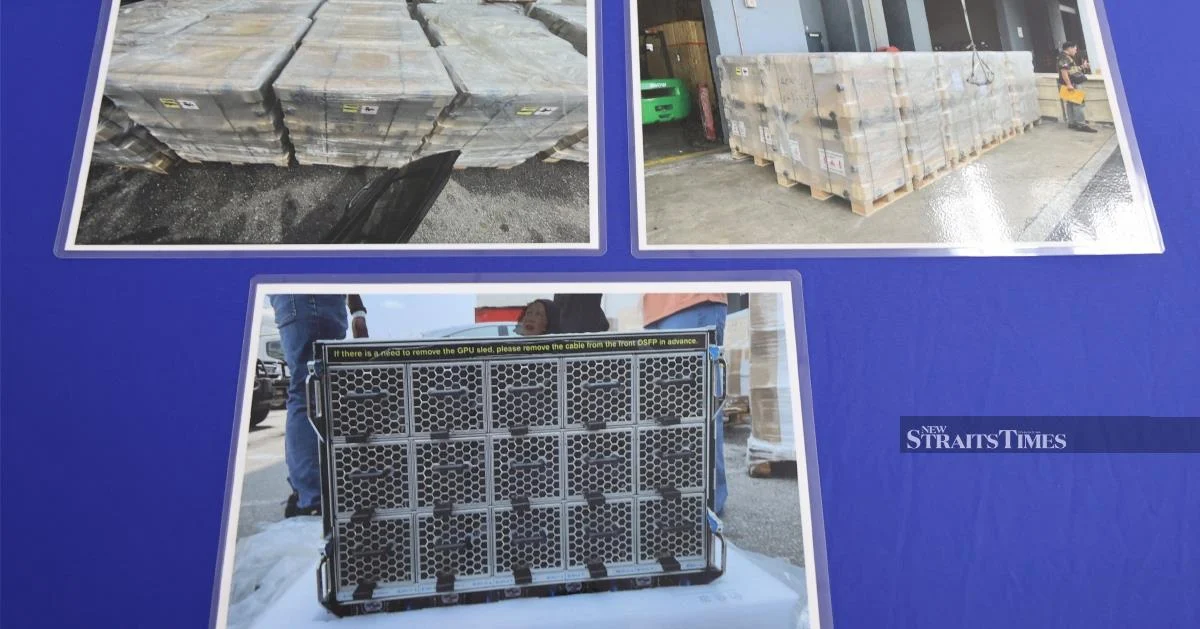
Singapore's police force announced on Wednesday the seizure of a luxury residential property worth in excess of US$40 million as part of an active fraud investigation centred on the illicit movement of advanced artificial intelligence chips. The case represents a significant development in efforts to enforce strict international controls governing the export of cutting-edge semiconductor technology, particularly products subject to United States regulatory restrictions designed to limit access to sensitive computational equipment.
The confiscation underscores growing concerns across Asia-Pacific nations about the enforcement of technology export controls in an era of intense competition for artificial intelligence capabilities. Singapore, positioned as a major financial and technology hub in Southeast Asia, has become an important node in global supply chains and consequently faces scrutiny regarding its role in policing illicit technology transfers. The seizure signals that authorities are taking seriously their responsibility to ensure compliance with international trade regulations and sanctions regimes that govern restricted semiconductors.
Artificial intelligence chips represent some of the most strategically important and tightly controlled technologies in modern commerce. Governments worldwide have implemented export licensing requirements and restrictions aimed at preventing advanced computational hardware from reaching jurisdictions or entities that might pose national security concerns. These measures reflect the fundamental importance of AI capabilities to military applications, cybersecurity operations, and technological superiority in an increasingly competitive geopolitical landscape.
The fraud investigation suggests that individuals or organisations may have engaged in deliberate schemes to circumvent these protective mechanisms. Such schemes typically involve misrepresenting the intended use or final destination of semiconductors, routing shipments through intermediaries, or employing other deceptive practices to mask the true purpose of technology transfers. Investigators working the case will need to establish the full scope of alleged violations, identify all parties involved, and trace the movement of restricted materials across borders.
For Malaysia and other Southeast Asian economies, this development carries direct relevance. The region hosts significant technology manufacturing and distribution infrastructure, making it vulnerable to becoming an unintended conduit for illicit chip transfers. Malaysian authorities and businesses must remain vigilant about compliance requirements, particularly those engaged in electronics manufacturing, trading, or logistics. The reputational and legal consequences of involvement in technology export violations can be severe, affecting not only individual companies but entire sectors and nations.
The value attributed to the seized property—more than US$40 million—suggests that individuals under investigation may have accumulated substantial wealth, potentially through proceeds generated by illicit technology transactions. Asset seizure represents an important enforcement tool that disrupts criminal activities and removes financial incentives for repeat violations. Such actions demonstrate that authorities are pursuing comprehensive strategies that extend beyond simple criminal prosecution to encompass the recovery of ill-gotten gains.
International cooperation will likely prove essential to resolving this investigation fully. Technology export control violations frequently involve multi-jurisdictional dimensions, requiring coordination between Singapore authorities and their counterparts in the United States, as well as intelligence sharing with other regional partners. The involvement of American export controls suggests that US officials may also be investigating complementary aspects of the same overall scheme, potentially leading to parallel proceedings or coordinated enforcement actions.
The case reflects broader tensions in the technology sector between commercial interests and national security imperatives. Companies legitimately engaged in semiconductor trade must navigate complex regulatory frameworks while remaining sensitive to the legitimate concerns that underlie export controls. Businesses operating across Southeast Asia should ensure robust compliance programmes that address evolving regulatory requirements and document all transactions meticulously.
Singapore's decisive action demonstrates that major financial centres are willing to use law enforcement powers to address technology export violations. This approach may serve as a deterrent to others considering similar schemes, while also reassuring international partners that Singapore takes its obligations seriously. However, enforcement actions alone cannot fully address systemic challenges; sustained investment in regulatory infrastructure, customs training, and intelligence sharing remains necessary across the entire region.
The investigation also highlights the sophisticated methods employed to circumvent existing controls. As technology becomes increasingly valuable and more tightly restricted, incentives for illegal transfers correspondingly increase, potentially encouraging more elaborate schemes designed to evade detection. This dynamic creates an ongoing challenge for enforcement agencies requiring continuous adaptation of investigative techniques and preventive measures.
Regional stakeholders, including industry associations and government bodies across Southeast Asia, may need to develop enhanced dialogue mechanisms to share best practices in technology trade compliance and enforcement. Malaysia, Singapore, and neighbouring countries benefit from coordinated approaches that raise barriers to illicit activities while facilitating legitimate commerce and technology development. The outcome of this investigation may provide important lessons applicable across the region's technology sectors.
As investigations continue, attention will focus on identifying all parties involved, determining the ultimate destination and intended use of transferred chips, and establishing the full financial scope of alleged misconduct. The case underscores that enforcement of technology export controls remains an active priority for Singapore and international partners, with significant consequences for those found to have violated these increasingly critical regulatory frameworks.

