Singapore has taken action against two citizens radicalised by the escalating Israeli-Palestinian conflict, in what authorities describe as an escalating domestic security threat fuelled by competing extremist narratives online. The Internal Security Department announced on Wednesday that Cyrus Dzulqarnain Al-Shahriar, 19, received a restriction order, while Tarmizi Mohd Taha, 30, faced detention. These cases bring to eight the total number of Singaporeans dealt with under the Internal Security Act whose radicalisation stems directly from the October 7, 2023 Hamas attacks and subsequent Gaza war.
Cyrus's case illustrates the growing complexity of modern extremism in Southeast Asia, where young people encounter a bewildering array of militant ideologies simultaneously rather than adhering to any single coherent doctrine. The student first began exploring Islamic teachings through online religious communities in 2022, seeking deeper spiritual knowledge. Yet within these spaces, he encountered anti-Western content and material hostile to the LGBTQ community, gradually shifting his worldview toward viewing violence as justified.
Following Hamas's October 2023 attacks on Israel, Cyrus became exposed to pro-Hamas messaging and came to view civilian deaths caused by the militant group as acts of religious warfare. By 2024, he had contemplated travelling to Gaza to fight alongside Hamas forces, though practical obstacles and personal fear of physical violence ultimately deterred him. This progression reveals how a young person's initial religious curiosity can be systematically redirected toward violent extremism through algorithmic exposure to increasingly radical content.
The trajectory accelerated dramatically in early 2025 when Cyrus discovered an online chat group devoted to violent accelerationism, an extremist philosophy that views chaos and destabilisation as necessary precursors to establishing a global Islamic order. Members of this group framed Singapore, along with other developed Western nations, as extensions of American power and Zionist control—a conspiracy narrative that positions local security and government institutions as fundamentally hostile to Muslim interests. Cyrus eagerly adopted these interpretations and began glorifying historical terrorist attacks, including Al-Qaeda's 2001 assault on the United States and the 2002 Bali bombings that devastated Indonesia and claimed over 200 lives.
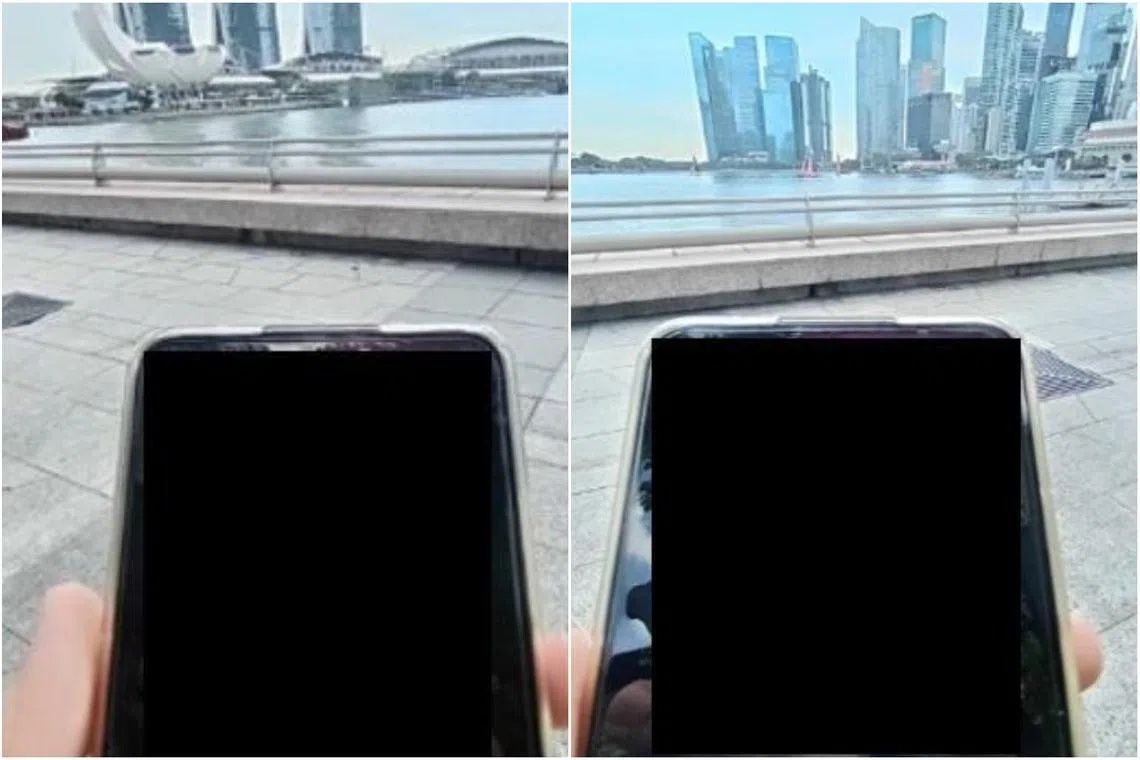
Most notably, Cyrus participated in what the group termed a "digital jihad" campaign, taking photographs of extremist publications at iconic Singapore locations like Marina Bay Sands before sharing them on social media platforms. These actions, seemingly innocuous to outside observers, served multiple purposes within the extremist ecosystem: they demonstrated loyalty to the group, showcased commitment to the cause, and broadcast radical messaging to wider audiences. Cyrus also posted disinformation online to discredit perceived critics of Islam and made numerous posts celebrating Hamas and the Syrian militant organisation Hay'at Tahrir al-Sham.
Particularly concerning to security officials was Cyrus's exposure to incel ideology through online discussions of mass shooter Elliot Rodger, who killed six people in California in 2014. The incel movement, comprised predominantly of men who attribute their romantic and sexual failures to a rigged social system dominated by women and more sexually successful men, has become a recognised radicalisation pathway in multiple countries. After discovering incel forums, Cyrus identified with this identity and made threats against women, adopting dehumanising language while fantasising about committing violence in schools against LGBTQ individuals and couples. Though these remained purely ideational—he took no concrete preparatory steps and shared his extremist views with neither family nor schoolmates—authorities recognised the escalatory potential.
The case of Tarmizi Mohd Taha follows a markedly different profile but shares the same triggering event. The 30-year-old customer service officer explicitly stated his willingness to conduct attacks within Singapore if instructed by Hamas leadership. His previous military experience in the Singapore Police Force, including training as a logistics assistant, led him to fantasise about utilising these skills to support the militant organisation, framing contribution to Hamas as a pathway to religious martyrdom. Unlike Cyrus, Tarmizi represented a more direct and actionable threat, though both men operated within the Gaza conflict's emotional and ideological gravitational pull.
What distinguishes these cases from earlier extremism patterns is what Singapore's security apparatus terms Composite Violent Extremism, or "salad bar" ideology—the cherry-picking of multiple, sometimes contradictory extremist frameworks into a personalised belief system. Rather than adhering to one coherent movement like Al-Qaeda, ISIS, or Jemaah Islamiyah, individuals like Cyrus blend pro-Hamas Palestinian nationalism, accelerationist desire to overthrow the global order, incel grievance narratives, and anti-LGBTQ ideology into a hybrid worldview that justifies violence across multiple targets. This fragmentation poses novel challenges for counterradicalisation, as preventing recruitment to any single group proves insufficient when individuals construct ideologies from freely available online material.
The phenomenon carries particular resonance across Southeast Asia, where countries including Malaysia, Indonesia, and Thailand have grappled with radicalisation linked to the Palestinian cause for decades. However, the Gaza conflict's elevation via social media platforms has accelerated exposure and recruitment far beyond traditional networks. Young people across the region encounter intensive pro-Palestine messaging—much legitimate political advocacy, some explicitly extremist—alongside parallel exposure to incel communities, accelerationist forums, and transnational jihadist networks. The psychological vulnerability of youth navigating identity questions, social isolation, and romantic rejection creates particular susceptibility when these messaging streams converge.
Singapore's response has been to place Cyrus in a rehabilitation programme designed to address underlying radical beliefs while acknowledging that his actions, though deeply concerning, had not yet manifested in actual preparation for violence. Officials recognised that a 19-year-old's ideation requires intervention distinct from detention of someone like Tarmizi, whose explicit willingness to conduct attacks on instruction represented an imminent security threat. The distinction reflects evolving understanding that not all radicalised individuals progress to operational planning at the same pace, and that younger people exposed to extremist ideology may retain greater capacity for re-engagement with mainstream society when provided structured intervention.
The announcement underscores how the Gaza conflict, while geographically remote, exerts significant radicalising influence throughout Southeast Asia's Muslim-majority and multi-religious societies. The conflict provides vocabulary and legitimisation for diverse violent ideologies, from traditional militant Islamism to modern incel misogyny to accelerationist anarchism. For security planners across the region, the challenge extends beyond monitoring traditional jihadi networks to understanding how geopolitical events catalyse rapid ideological evolution among vulnerable youth navigating complex online environments. Singapore's identification of eight citizens radicalised by the October 2023 conflict within roughly eighteen months suggests the scale of this emerging threat throughout the wider region.