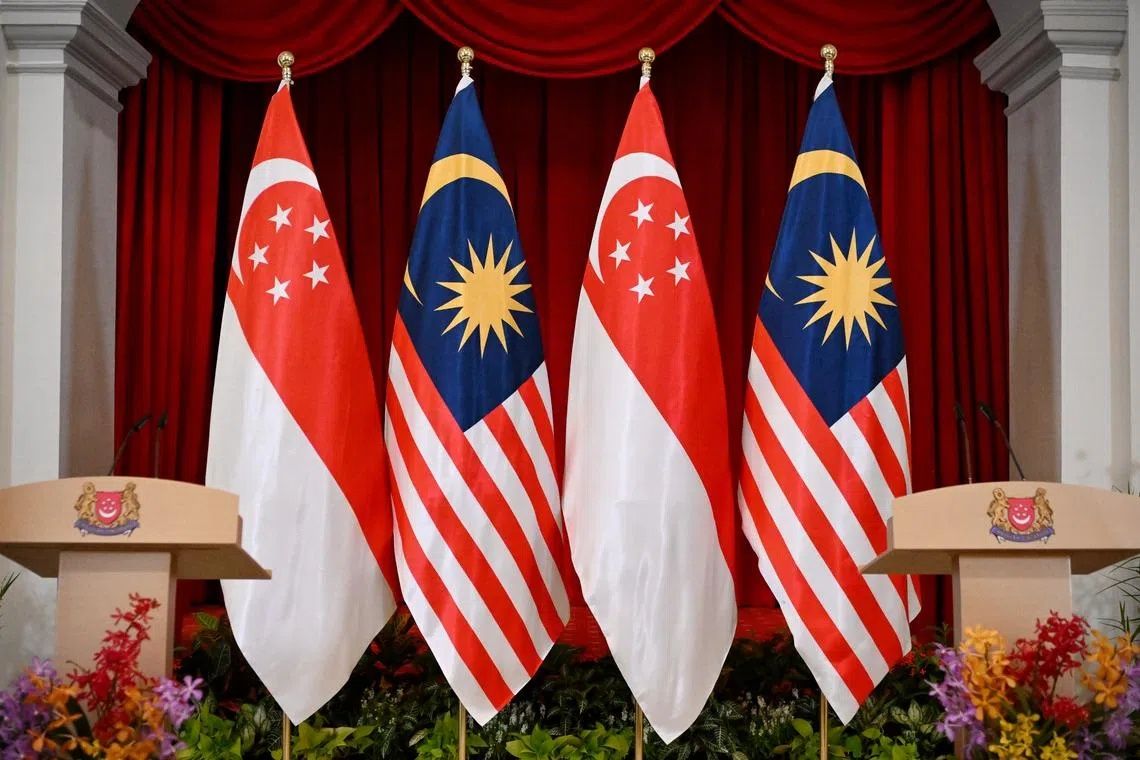
Singapore and Malaysia must view their periodic disagreements not as threats to their partnership but as manageable differences between close neighbours, according to President Tharman Shanmugaratnam, who is on a four-day state visit to Malaysia at the invitation of Malaysian King Sultan Ibrahim Sultan Iskandar. The remarks, shared in an interview with Malaysian news agency Bernama, reflect a sophisticated understanding of how neighbouring nations with shared history navigate complex relationships without allowing individual disputes to corrode their broader strategic alignment. Rather than sweeping contentious issues under the carpet, both nations have deliberately chosen to address them openly while maintaining their overarching commitment to strengthening bilateral ties.
The foundation of the Singapore-Malaysia relationship extends beyond mere convenience or economic calculation, President Tharman emphasised. He described it as one driven by mutual respect and a genuine understanding of each country's strategic interests and development priorities. This framing is significant because it positions the partnership not as a series of transactional exchanges but as a genuine alliance rooted in shared values and long-term vision. The distinction matters for how the two governments approach disputes—they are treated as isolated issues within a larger framework of cooperation rather than indicators of fundamental incompatibility. The trust accumulated over six decades provides sufficient capital to absorb disagreements without jeopardising the relationship itself.
Historically, Singapore and Malaysia have grappled with numerous sensitive and complex bilateral matters that required careful negotiation and mutual forbearance. President Tharman acknowledged that such disputes are inevitable between neighbours sharing a centuries-old history and contemporary interdependencies. However, successive administrations on both sides have consistently refused to allow these issues to become defining features of the relationship. Instead, they have pursued resolution mechanisms grounded in mutual respect and adherence to international law, demonstrating that neighbouring states need not become adversarial simply because they face disagreements. This institutional discipline has become a hallmark of Singapore-Malaysia diplomacy and a model that carries implications for other regional relationships facing similar pressures.
The machinery for managing differences relies fundamentally on high levels of interpersonal trust and familiarity among political and administrative leaders, as well as deepening connections among ordinary citizens across the border. President Tharman highlighted that this reservoir of goodwill creates psychological and diplomatic space for dialogue that might otherwise prove impossible. When leaders know each other well and have experienced previous successful resolutions of disputes, they approach new challenges with greater confidence that negotiated solutions are achievable. Similarly, when people-to-people connections strengthen, public pressure for confrontation diminishes and space for pragmatic leadership expands. The implication is that regional stability depends not on eliminating disputes entirely—an impossible objective—but rather on developing robust institutional and interpersonal mechanisms for managing them responsibly.
President Tharman framed the Singapore-Malaysia example as offering crucial lessons for Asean and the wider region. At a time of geopolitical turbulence and great power competition, smaller nations benefit enormously from demonstrating that dialogue, restraint, and respect for sovereignty remain viable approaches to managing differences. When the Singapore-Malaysia partnership functions smoothly, it reinforces these principles throughout the regional architecture and strengthens Asean's credibility as a bloc committed to peaceful dispute resolution. Conversely, deterioration in the relationship would send troubling signals about whether smaller nations can maintain cooperative frameworks amidst external pressures. The stakes therefore extend beyond bilateral relations to encompass the entire regional system that Malaysia and Singapore helped establish through their commitment to Asean.
For Malaysian and Southeast Asian readers, the emphasis on proactive engagement across borders carries particular relevance. President Tharman stressed that the spontaneous cross-border connections that characterised earlier generations must now be deliberately cultivated through structured bilateral exchange programmes, youth leadership forums, and community development initiatives. This reflects recognition that organic people-to-people connections no longer occur automatically and require institutional support to flourish. The implication is that governments must invest seriously in these mechanisms, recognising that strong civil societies with dense cross-border networks provide buffers against political tensions and create constituencies with vested interests in maintaining peaceful relations. Malaysian policymakers should note that such investments in cultural and educational exchange constitute legitimate governance priorities rather than mere cultural niceties.
The economic dimensions of the partnership deserve particular attention for Malaysian stakeholders. President Tharman highlighted several concrete cooperative ventures that exemplify win-win arrangements: the Johor-Singapore Special Economic Zone and the RTS Link represent precisely the kind of projects that combine complementary strengths to generate mutual benefit. More broadly, he advocated for deeper market integration, enhanced energy and supply chain resilience through bilateral partnerships, and joint approaches to renewable energy and carbon credits. For Malaysia, these proposals suggest significant opportunities for industrial deepening, technology transfer, and sustainable development. The suggestion that both countries should move beyond narrow sectoral cooperation toward systemic integration indicates that higher-order collaboration awaits if both nations can align their economic strategies and regulations more closely.
Regional architecture considerations also featured prominently in President Tharman's remarks, particularly regarding Asean's evolution and Malaysia's 2025 chairmanship. He noted that Malaysia's tenure achieved significant milestones, including Timor-Leste's accession as Asean's eleventh member, thereby expanding the organisation's reach and capabilities. Both Singapore and Malaysia share interests in maintaining Asean as a coherent, reliable and trustworthy partner in global affairs. As the region moves toward Singapore's 2027 chairmanship, the two nations possess leverage and responsibility to ensure that Asean preserves its central coordinating role in regional peace, stability and growth. This sequential leadership arrangement itself reflects the partnership's maturity and the mutual confidence with which both nations approach their regional responsibilities.
The geopolitical context surrounding these remarks cannot be ignored. International trading systems are fracturing as great power competition intensifies, creating conditions where smaller regional clusters must strengthen their internal cohesion and resilience. President Tharman's advocacy for deeper Singapore-Malaysia integration and expanded Asean cooperation directly responds to this challenging external environment. By strengthening regional bonds and developing greater autonomy in critical areas such as energy and supply chains, Southeast Asian nations can better insulate themselves from external pressures and maintain space for independent policymaking. For Malaysia particularly, this suggests that deepening ties with Singapore and other Asean partners constitutes not just a commercial strategy but a geopolitical necessity in an increasingly fractious world order.
President Tharman concluded his remarks with a reflection rooted in Malay cultural wisdom, invoking the saying "jiran sepakat membawa berkat"—neighbours in agreement bring blessings. This invocation demonstrates sensitivity to Malaysian audience sensibilities while articulating a universal principle about cooperative neighbourliness. The message is fundamentally optimistic: Singapore and Malaysia have found in each other a reliable friend and partner whose presence in the region serves mutual interests. Over six decades of cooperation have generated tangible benefits—development, prosperity, stability—that accrue to both nations. The implicit challenge to current and future leaders is to maintain this accumulated trust, continue investing in the relationship through dialogue and structured cooperation, and recognise that shared success comes through genuine affection and respect rather than grudging calculation or transactional exchange.

