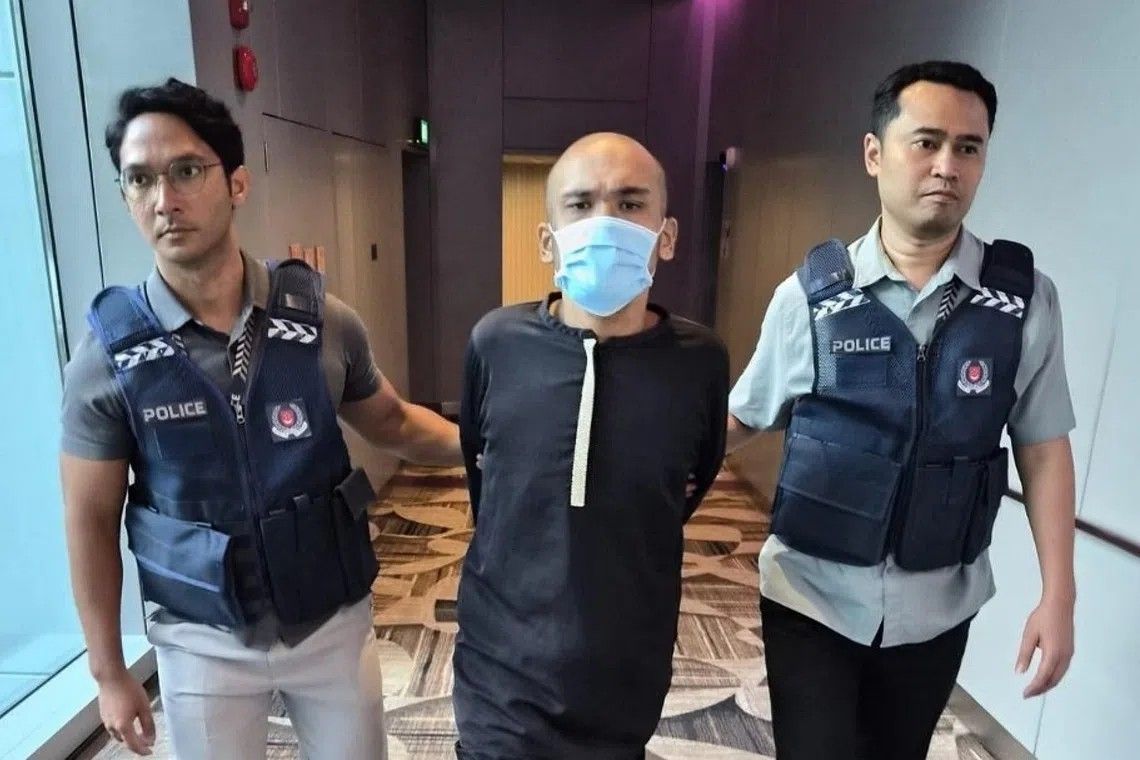
A 27-year-old Singaporean has been charged in court with making insulting and derogatory remarks directed at the Muslim community, marking another case of religious sensitivity breaches in the multicultural city-state. Elvin John Baptist appeared before the courts on August 7 after allegedly posting content deemed offensive to Islam and potentially destabilising to Singapore's delicate religious fabric.
Baptist faced a formal charge under the Maintenance of Religious Harmony Act, legislation that sits at the heart of Singapore's approach to preserving interfaith relations. The Act empowers authorities to act swiftly against individuals whose speech or conduct threatens religious peace, a principle that underpins Singapore's stability as a nation where Malays and Muslims comprise a significant minority within a predominantly Chinese society.
According to court documents, the alleged offences stemmed from two TikTok videos uploaded on March 1. The videos purportedly featured Baptist uttering statements in Malay that he knew would be offensive to Muslims. Legal authorities determined the content was calculated to provoke and capable of triggering wider disturbances to public order in Singapore. The use of the Malay language—the native tongue of Singapore's Malay-Muslim community—added a layer of deliberateness to the allegations, suggesting targeting rather than careless speech.
The case took on a regional dimension when police investigations revealed Baptist had fled Singapore before authorities could apprehend him. A report about his actions was filed on the same date as the video uploads, but by then he had already departed the country. This prompted Singapore's police to seek assistance from their Malaysian counterparts through the Royal Malaysia Police, demonstrating how cross-border cooperation functions in the region to track individuals accused of serious offences.
Baptist was eventually located in Malaysia, where he was deported on August 6. He arrived back in Singapore the same day and was arrested immediately by local police. The swift coordination between Singapore and Malaysia highlights the pragmatic approach both nations take toward maintaining religious and social stability, even as they navigate occasional diplomatic tensions. For Malaysian authorities, cooperating in such cases reflects shared concerns about online incitement and its potential to inflame communal sensitivities across borders.
Beyond the primary charges, Baptist is assisting police investigations into a separate and particularly inflammatory incident. A video circulating on social media allegedly depicts an individual deliberately stepping on a Quran, Islam's holiest text. Police believe the footage was recorded on a public bus in Singapore, suggesting the incident occurred in a public space where it could have witnessed by multiple commuters and potentially sparked immediate confrontation.
The convergence of these two cases underscores a troubling pattern of online religious provocation in Southeast Asia. What distinguishes these incidents from mere poor taste is their apparent intentionality and the mediums through which they spread. TikTok and other social platforms enable rapid dissemination to wide audiences, particularly younger demographics, amplifying the potential for inflaming tensions. The fact that authorities are pursuing multiple related investigations suggests they view these as part of a coordinated or at least connected campaign of religious harassment.
For Malaysia, these developments carry relevance beyond Singapore's borders. As a Muslim-majority nation with substantial ethnic Chinese and Indian minorities, Malaysia faces its own challenges with online religious speech. The case illustrates how quickly digital content can cross national boundaries and how enforcement must sometimes rely on regional cooperation. It also demonstrates that Singapore's stringent approach to religious harmony laws—which some critics argue curtail free speech—reflects a deliberate policy choice to prioritise social cohesion over unfettered expression.
The Maintenance of Religious Harmony Act remains contentious among free speech advocates, yet Singapore's leadership maintains that in a plural society with a history of serious communal riots, such measures are essential guardrails. The law's provisions allow for prosecution not only of explicit attacks on religions but also statements likely to promote ill-will between religious groups. This preventative approach differs markedly from jurisdictions relying primarily on post-incident criminal responses.
For the broader Southeast Asian context, these incidents reflect growing anxiety about online religious speech. Indonesia, the world's largest Muslim-majority nation, has similarly strengthened laws addressing religious defamation and incitement. Thailand and other regional nations grapple with balancing digital freedom and religious protection. Singapore's case thus represents a microcosm of regional tensions between technology's democratising potential and traditional concerns about maintaining social peace in diverse societies.
The cooperation between Singapore and Malaysian police in apprehending Baptist demonstrates that religious harmony is increasingly a regional concern requiring coordinated responses. As digital platforms continue enabling instantaneous cross-border communication, enforcement becomes more complex. Neither nation can unilaterally prevent content creation or sharing, yet both can work together to identify, prosecute, and deter individuals whose actions threaten interfaith relations.

