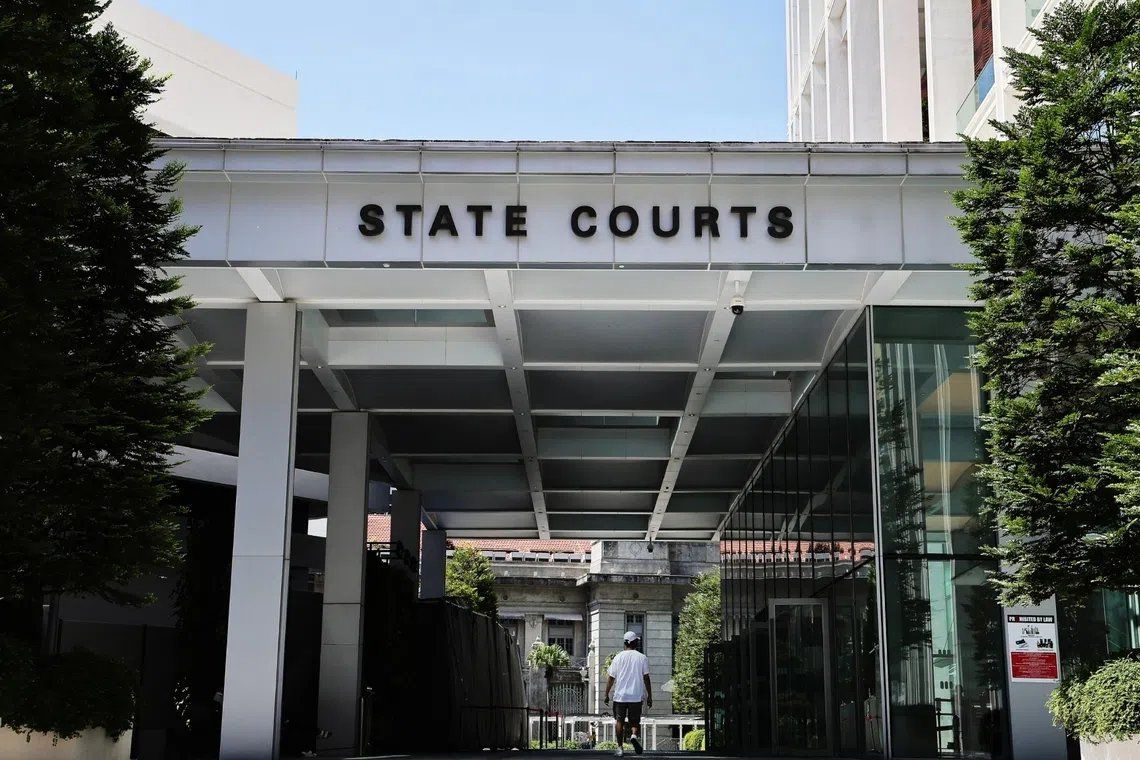
A 35-year-old Singaporean man has been sentenced to two years and three weeks in prison for his role in a violent assault at a nightclub in 2021, capping a complicated case that saw him flee across borders and spend years evading authorities. Marcus Yeo Zhen Wei was handed the jail term on Thursday after pleading guilty to multiple charges including assault, performing a rash act, and unlawfully departing Singapore, bringing to a close a saga that highlights the complications of cross-border criminal cases in Southeast Asia.
The brawl that triggered this chain of events unfolded on the evening of March 21, 2021, at a club located near Magazine Road and Havelock Road in Singapore's entertainment district. Yeo arrived at the venue with three male companions, all of whom had been drinking before entering. The group's evening took a violent turn when they accused other patrons of staring at them, an accusation that quickly escalated into confrontation rather than reasoned conversation.
What began as verbal altercation transformed into a full-scale assault when Yeo and his friends hurled glasses and bottles at the other patrons. Club security intervened to eject the four men from the premises, but this did not mark the end of the incident. Instead of leaving the area, one member of Yeo's group retrieved a baton from a parked vehicle and returned to the club entrance, while another armed himself with a knife. The situation spiralled further into serious violence.
The two victims of the escalated attack were Vietnamese men who were leaving the club at the time. They were set upon by Yeo's companions, with one victim bearing the brunt of the violence and being struck repeatedly with the baton. The injuries sustained were severe enough to warrant immediate medical intervention. Doctors at Singapore General Hospital discovered that one of the victims had suffered a collapsed lung alongside other significant injuries, a condition that necessitated 21 days of medical leave.
Yeo's initial arrest came swiftly, with authorities apprehending him on March 26, 2021, just five days after the incident. He was remanded in custody for six days before being released on bail. However, while awaiting his scheduled court appearance in November that year, Yeo made the consequential decision to abscond. In October 2021, he travelled to Pulau Ubin, a small island off Singapore's coast, before arranging passage by boat into Malaysian waters and ultimately into Malaysian territory.
The flight to Malaysia did not result in safety or escape from legal consequences. Malaysian authorities apprehended Yeo in 2022 for involvement in a drug-related offence, though specific details of this arrest remain undisclosed. His time in Malaysia proved temporary, as he was eventually handed back to Singapore authorities in November 2025, nearly four years after he had fled. The repatriation set the stage for him to finally face the music for the 2021 assault.
The sentencing hearing revealed the gravity with which Singapore's courts treated the incident. Deputy Public Prosecutor Mark Chia outlined the facts of the case to the court, emphasizing the severity of injuries sustained by the victim with the collapsed lung. The narrative presented demonstrated a pattern of escalating violence—from an accusation about staring, to throwing projectiles, to retrieving weapons and launching a coordinated assault. This progression was not accidental but represented a deliberate decision by multiple people to intensify harm.
The illegal departure charge added another dimension to Yeo's culpability. By fleeing Singapore while on bail, he not only evaded accountability for the assault but also demonstrated a disregard for the legal process and the court's authority. Immigration and Checkpoints Authority prosecutor Deputy Superintendent Wong Wai Yuen presented evidence of Yeo's deliberate escape route, detailing how he reached Pulau Ubin and arranged boat transport to Malaysia, actions that showed planning and intent rather than mere flight of panic.
It is noteworthy that Yeo's three companions in the brawl had already been dealt with by Singapore's court system, indicating that the prosecutorial process had largely moved forward despite Yeo's absence. Their earlier sentencing meant that the legal framework had already addressed most of the incident's participants, making Yeo's eventual return and sentencing more of a concluding chapter than a reopening of a major case.
The case underscores the challenges facing law enforcement in Southeast Asia when criminals cross borders seeking refuge. While Malaysia ultimately apprehended Yeo on separate charges, the drug offence that led to his capture was not the original crime he was fleeing. The eventual extradition or repatriation process, which took several years to conclude, demonstrates the complex diplomatic and legal arrangements required when suspects flee international borders within the region.
For Malaysian readers, this case presents a reminder of the interconnected nature of law enforcement across the Strait of Malacca. The Singapore-Malaysia border, despite being heavily patrolled, remains a route through which some individuals attempt to evade justice. The eventual outcome reflects cooperation between authorities on both sides, though the multi-year lag between Yeo's initial escape and his return to face sentencing raises questions about the efficiency of repatriation processes and the coordination between neighbouring law enforcement agencies.
The two-year-plus sentence handed down reflects the seriousness with which Singapore regards violent assault, particularly when weapons are involved and victims suffer significant injuries like a collapsed lung. The charge of unlawfully leaving Singapore and the additional time served in Malaysian custody appear to have been considered in the sentencing calculation, though the court's precise reasoning on these mitigating or aggravating factors was not detailed in proceedings.

