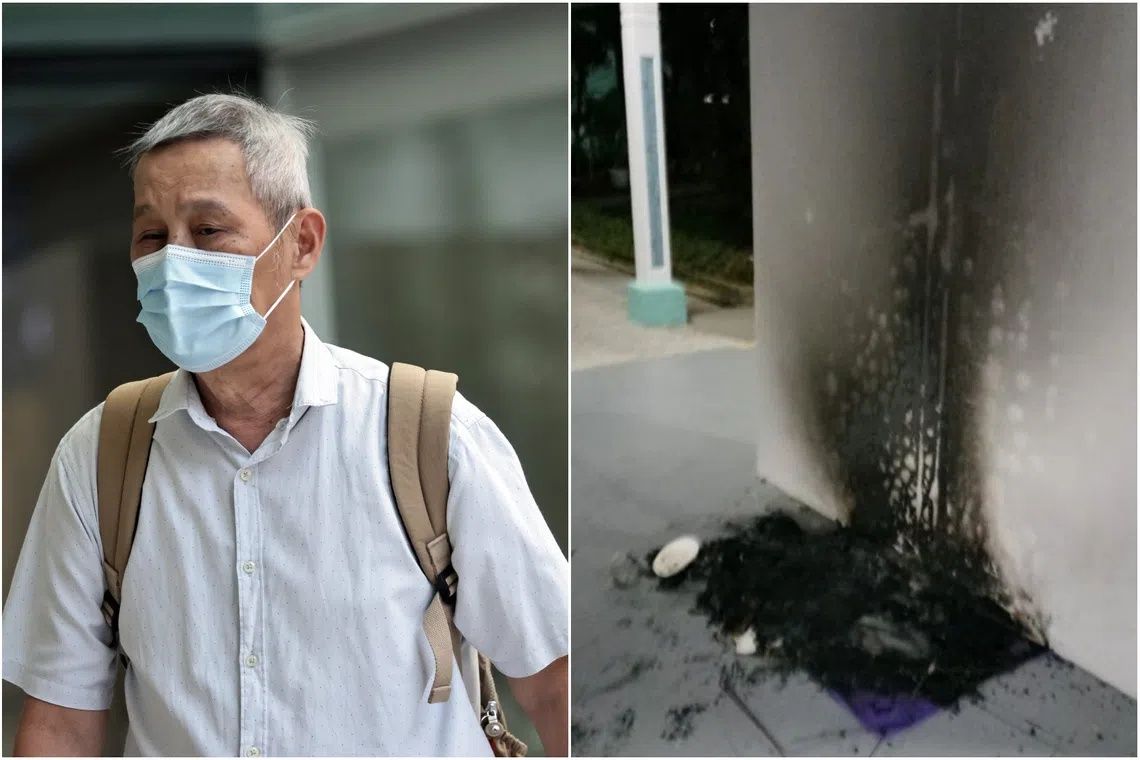
A 68-year-old retiree in Singapore's Bukit Batok neighbourhood has been sentenced to three months' imprisonment for deliberately setting fire to cardboard shelters built to house community cats near his home. Koh Teng Boo pleaded guilty to committing mischief by fire, after a series of incidents in late 2025 in which he ignited multiple cat houses at a pavilion and void deck adjacent to his residential block on Bukit Batok East Avenue 4, resulting in property damage estimated at S$913.
The underlying tension that led to Koh's criminal acts began in September 2025, when volunteers or residents erected cardboard structures around the void deck specifically designed to provide shelter for stray cats in the neighbourhood. These makeshift houses were furnished with food and water supplies to sustain the animals. Deputy Public Prosecutor Stephen Yeo explained to the court that such community initiatives aim to provide basic welfare for street cats, which have become an increasingly visible presence in many Singapore housing estates. Koh, however, grew increasingly frustrated by what he perceived as the negative consequences of having these structures in close proximity to his residence.
Koh's objections to the cat houses were rooted in what he characterised as hygiene and pest management concerns rather than any direct animosity toward cats themselves. He observed that birds frequented the cat houses to scavenge for the food left there, and he believed the structures would inevitably attract unwanted pests to the residential area. He also noted that some residents were disposed of litter by depositing rubbish directly into the cardboard shelters, compounding his sanitation worries. These concerns appeared legitimate to him, and he took action through official channels by raising the matter with his Member of Parliament, expecting the authorities to intervene and remove the structures.
When no visible action materialised from his parliamentary complaint in September, Koh's patience deteriorated rapidly. In October 2025, he took matters into his own hands by collecting three of the cat houses and placing them into an incense burner bin before igniting them. The arson damaged the flooring and walls of the void deck area. Rather than deterring further installations, however, this act of vandalism seemed only to prompt residents to replace the destroyed shelters—more cat houses appeared around his block within two days of the first fire.
Frustrated that his destructive action had failed to resolve the issue, Koh escalated his complaint by visiting his MP again on November 17, reiterating his concerns about hygiene and pest attraction while again insisting he bore no personal ill-will toward the cats themselves. The MP appears not to have taken decisive action, or at least not quickly enough to satisfy Koh's demands. This apparent inaction, combined with the continued presence of the cat houses, pushed him to commit a more brazen act.
In the early hours of November 19, at approximately 1.30am, Koh returned home after consuming alcohol when he encountered another cat house. Acting on impulse fuelled by frustration and diminished judgment from drinking, he removed a lighter and set the shelter ablaze. He then departed the scene without extinguishing the fire or ensuring it was safely contained, leaving it burning unattended. The investigation later revealed no details about when or how the fire was eventually extinguished, suggesting passers-by or emergency responders may have intervened.
Undeterred by this second arson, Koh repeated his actions the very next day, November 20, setting fire to yet another cat house. This time, two bystanders witnessed the flames and took the initiative to extinguish the fire before it could spread or cause additional damage. Koh was apprehended later that same day. The accumulated damage from these incidents—charring to flooring, scorching and damage to surrounding walls—totalled S$913, which the Jurong-Clementi-Bukit Batok Town Council was forced to repair.
The case illustrates a broader tension in densely-populated urban neighbourhoods across Southeast Asia, where community welfare initiatives for street animals sometimes conflict with residents' preferences and perceptions of neighbourhood management. Community-driven cat sheltering has become increasingly common in Singapore, Malaysia, and other regional cities as part of grassroots animal welfare efforts. However, such initiatives can generate friction with neighbours who worry about sanitation, pest attraction, or simple aesthetic disruption to common spaces. Typically, these disputes are resolved through dialogue between residents, their elected representatives, and town councils, not through vigilante destruction of property.
Koh's decision to resort to arson rather than persist through official channels demonstrates how frustration with perceived bureaucratic inertia can escalate behaviour toward criminal conduct. The court's decision to impose a three-month custodial sentence reflects the seriousness with which Singapore treats property destruction by fire, even when the target is an informal community structure. The Penal Code provisions under which Koh was charged allow sentences of up to seven years' imprisonment and fines for mischief by fire committed with intent to cause property damage.
Since his conviction, Koh has made complete financial restitution to the town council, covering the full cost of repairs. This mitigating factor likely influenced the court's decision to impose a relatively shorter custodial term within the available sentencing range, rather than a lengthier prison sentence. His age—being a 68-year-old retiree—may also have weighed in his favour during sentencing, though it did not spare him from incarceration entirely. The case serves as a cautionary reminder that in Singapore's ordered society, even citizens with legitimate grievances must exhaust civil and administrative remedies before resorting to property destruction, regardless of their frustration with the pace of official response.

