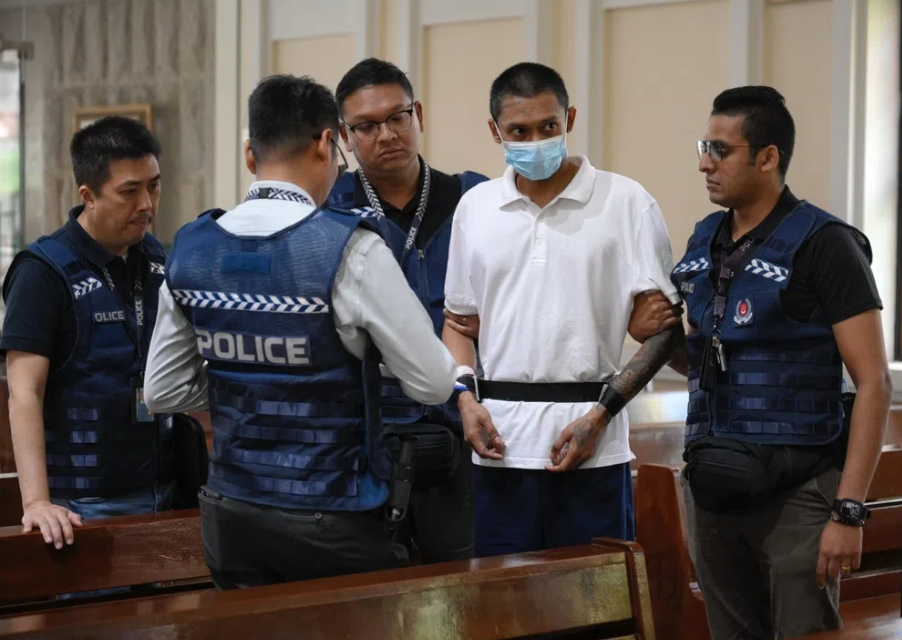
A 38-year-old man in Singapore has received a custodial sentence of four years and three months along with nine strokes of the cane following his guilty plea to stabbing a Catholic priest during Sunday mass. Basnayake Keith Spencer committed the unprovoked attack on Reverend Christopher Lee, then aged 57, at St Joseph's Church on November 9, 2024, when approximately 900 worshippers were present for evening prayers and a children's mass.
The incident unfolded during the communion segment of the service, when Father Lee was standing at the front of the church administering the sacrament to parishioners. Basnayake, who had arrived at the church alone around 5.30pm and taken medication to manage his emotional state, suddenly joined the queue behind Father Lee despite initially positioning himself behind another priest. The moment Father Lee offered communion to Basnayake, the attacker produced a 23-centimetre foldable knife with a 10-centimetre blade and thrust it directly into the priest's mouth.
The stabbing inflicted severe facial trauma on the victim. Father Lee sustained an 8-centimetre laceration to his tongue, a 3-centimetre wound on his upper left lip, and a 4-centimetre cut at the corner of his mouth, with blood pooling significantly from the injury. Despite his injuries, Father Lee demonstrated remarkable presence of mind by grabbing the rear pocket of Basnayake's jeans to prevent further attacks on other congregants. Members of the congregation, including an off-duty police officer, swiftly subdued the attacker, restrained him physically, and alerted law enforcement.
Investigation revealed that Basnayake had arrived at the church armed with multiple weapons. Beyond the knife used in the attack, police discovered he was carrying a 14.5-centimetre penknife, an additional flip knife, and a fishing gaff—a pole with a sharp hook. The presence of these implements suggested premeditation, though Basnayake's mental state at the time of the offence remained a significant factor in the case. Authorities determined he was under the influence of drugs and experiencing a drug-induced psychotic episode when he committed the assault, though he retained sufficient awareness to understand his actions.
Father Lee required immediate hospitalisation, remaining under medical care for six days before discharge on November 15, 2024. Beyond the acute phase of recovery, the priest faced a lengthy rehabilitation process. He was granted 40 days of hospitalisation leave and subsequently required speech therapy to address complications arising from the tongue laceration. The attack's traumatic impact extended well beyond the physical wounds, affecting his ability to fulfil his duties as a clergyman and leaving lasting consequences on his health and ministry.
District Judge Shaiffudin Saruwan emphasised the gravity of the offence during sentencing on August 21, underscoring that the assault was entirely unprovoked and deliberately targeted a defenceless individual performing sacred duties. The judge noted the attack occurred at the precise moment Father Lee was administering communion, a sacred ritual central to Catholic faith, creating genuine risk of mass panic and additional injuries among the nearly 900 worshippers present. This context significantly influenced the severity of the sentence, as courts in Singapore take seriously crimes that disrupt religious gatherings and endanger congregations.
Basnayake's criminal history informed the sentencing decision. In 2019, he had been convicted for voluntarily causing hurt with a dangerous weapon, receiving a one-year jail sentence after stabbing his then-girlfriend in the buttocks with a kitchen knife while intoxicated on methamphetamine. This prior conviction demonstrated a troubling pattern of weapon-related violence and substance abuse, raising serious concerns about his rehabilitation and risk of reoffending. The prosecution had argued for a sentence ranging between four years and three months to four years and eleven months, citing these factors.
The prosecution's case highlighted Basnayake's drug intoxication and compromised mental state during the attack, yet maintained he possessed sufficient cognitive capacity to understand his actions constituted a serious crime. Deputy Public Prosecutor Xu Sijia presented evidence that Basnayake had taken five pills on the day of the attack—two pills initially to maintain focus upon arriving at the church, followed by three additional pills to calm himself after recognising it was a children's mass. This deliberate medication intake suggested he was attempting to manage his psychological condition rather than acting in complete oblivion.
Balancing these factors, the defence counsel from the Public Defender's Office, Ashwin Ganapathy, sought leniency by requesting a sentence below four years and nine strokes of the cane. The defence emphasised Basnayake's remorse, shame, and request for proportionate punishment, arguing that his mental health condition and substance abuse issues warranted mitigation. However, the court determined that public safety and the serious nature of attacking a religious figure during worship required the sentence ultimately imposed.
Basnayake has spent over a year and nine months in remand since his arrest, with bail having been denied in December 2024 after prosecutors successfully argued he posed an exceptionally high danger to the community and substantial risk of further violent offences. The extended pre-sentencing custody period reflected the judicial system's concern regarding his likelihood to reoffend and the need to protect public safety. Under Singapore law, the offence of voluntarily causing grievous hurt with a dangerous weapon carries a maximum penalty of life imprisonment or up to 15 years in jail, along with potential fines and caning.
This case reverberates beyond the specific incident, highlighting broader concerns about security at places of worship across Southeast Asia. Religious institutions typically operate with minimal security measures, creating vulnerability to individuals experiencing mental health crises or harbouring violent intentions. The incident at St Joseph's Church demonstrates how rapidly situations can escalate during moments of spiritual significance when congregants are focused on religious observance rather than situational awareness. For Malaysian readers, the case underscores the importance of balancing religious freedom and accessibility with reasonable safety protocols at houses of worship, a consideration increasingly relevant across the region as communities grapple with similar security challenges.

