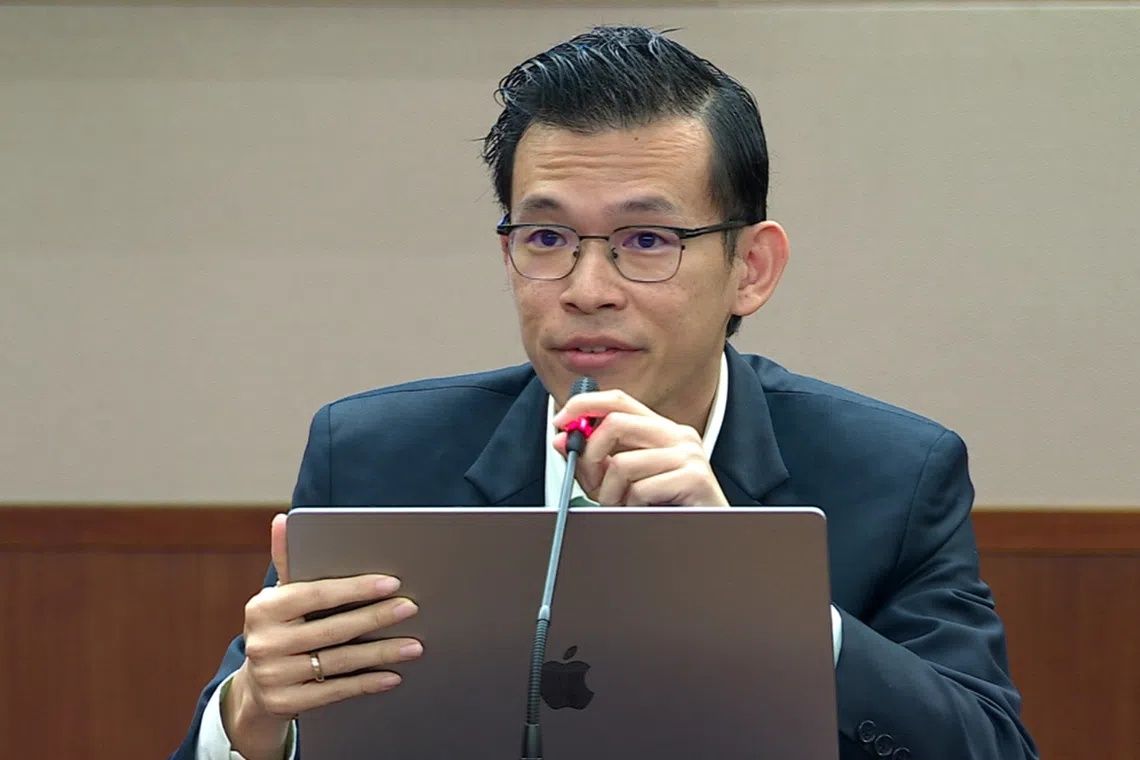
Singapore's Parliament has affirmed a motion on the country's economic future, marking a rare moment of cross-party engagement on how the island nation should reshape its approach to growth and opportunity. The debate, which stretched across nine hours in the chamber, centred on whether Singapore's longstanding reliance on multinational corporations should give way to a more balanced model supporting domestic enterprises and fairer wealth distribution. Trade and Industry Minister Tan See Leng responded to the Workers' Party's proposal by reframing the government's economic vision not as growth for growth's sake, but as prosperity designed to reach ordinary Singaporeans through improved livelihoods and upward mobility.
Workers' Party MP Kenneth Tiong initiated the motion, articulating his party's argument that Singapore's current strategy has become increasingly inadequate for nurturing local talent and homegrown business success. Tiong contended that the traditional model prioritising foreign investment has left young workers with fewer prospects and constrained local entrepreneurs from achieving their potential. He advocated instead for an economy built on fair distribution embedded within growth itself, rather than the present approach of expanding the economy first and then attempting to redistribute gains through government vouchers and rebates. This diagnosis represented a fundamental critique of the government's three-decade strategy, suggesting that MNCs, while historically valuable, no longer deliver the employment and entrepreneurial dynamism Singapore requires.
The government's response, articulated through four amendments proposed by PAP MP Edward Chia, sought to reframe rather than reject the underlying concerns. While Tan acknowledged that Singapore faces genuine economic challenges in an uncertain global environment, he emphasised that the government's model has proven its capacity to generate good jobs, rising incomes, and genuine social mobility across generations. However, his response also signalled recognition that maintaining this trajectory requires adaptation. The minister's framing suggested that the government accepts the broad premise that economic policy must evolve, even as it defends the fundamental architecture that has underpinned Singapore's development.
The Workers' Party's rejection of the first amendment and subsequent vote against the final motion demonstrated the limits of consensus. All 12 of its MPs voted against the affirmed version, signalling that the opposition remained unconvinced by the government's position despite the apparent common ground identified during debate. This dissent underscores a real strategic disagreement about the pace and scope of economic transformation. For Malaysian observers, the episode illustrates how even in consensus-oriented Singapore, substantive economic policy disputes can drive parliamentary division, a pattern increasingly visible across Southeast Asia as countries grapple with shifting global circumstances and domestic inequality concerns.
Tan's personal narrative during his closing remarks revealed how the government views the entrepreneur-state relationship. A medical doctor by training, he recounted founding Healthway Medical Group at age 27 without formal business training, learning business fundamentals while building the company. Critically, he positioned MNCs not as competitors crowding out local firms but as partners that helped his company establish credibility and expand. By providing access to demanding global standards and early clients, these multinational relationships became a springboard for local growth. This lived experience shaped his philosophical position that government should create conditions for entrepreneurship but cannot substitute for the risk-taking, innovation, and persistence that only business owners and their teams can provide.
The minister outlined five critical gaps that government policy aims to bridge: the transition from aspiration to first venture, research to commercial innovation, product to initial customer acquisition, early traction to sustainable scaling, and domestic strength to global competitiveness. Rather than direct state ownership or control, the government's approach involves targeted support programmes at each stage. Startup SG Founder provides early-stage capital, mentorship and networking for serious entrepreneurs, while the Partnerships for Capability Transformation scheme creates structured collaborations between local SMEs and multinational corporations, enabling smaller firms to access supply chains and international expertise. These mechanisms reflect a philosophy where government removes obstacles and provides platforms but ultimately depends on private sector dynamism.
Tan highlighted the Scale-Up programme as evidence that state support can meaningfully accelerate entrepreneurial success. The eighty companies across the programme's first seven cohorts generated combined additional revenue of S$2.5 billion within three years, with S$1 billion derived from overseas expansion. These figures suggest that targeted intervention can work, yet Tan cautioned against inflating expectations of government's role. His repeated emphasis that government support must function as a springboard rather than a business model itself addressed implicit criticism within Tiong's motion that current policies remain insufficiently directed toward domestic enterprise development. This tension between demonstrating programme effectiveness while maintaining ideological boundaries about the state's proper role characterised much of the debate.
The parliamentary discussion revealed substantial agreement on aspirational goals: creating fulfilling careers, generating good incomes, developing globally competitive Singapore enterprises, and ensuring workers have genuine pathways for progression. What remained contested was whether current policies adequately served these objectives and whether more aggressive state involvement in supporting local entrepreneurship was justified. The debate also touched on Singapore's perennial challenge of maintaining open markets and attracting foreign investment while simultaneously nurturing domestic champions—a balancing act that becomes increasingly delicate during periods of geopolitical fragmentation and trade uncertainty.
For regional policymakers, Singapore's parliamentary scrutiny of its economic model carries relevance. Malaysia, Indonesia, and Thailand face similar questions about over-reliance on foreign capital, underdeveloped domestic private sectors, and whether current approaches adequately distribute growth's benefits. Singapore's sophistication in designing stage-specific support programmes—from early-stage venture funding through to global scaling assistance—offers institutional lessons even if the political and economic contexts differ substantially. The Workers' Party's willingness to challenge the government's framework on distributional grounds reflects broader regional anxiety about inclusive growth, a concern increasingly vocalized across Southeast Asia.
Tan's closing statement captured the government's core position: that Singapore's economic strategy remains fundamentally sound but requires constant refinement to remain effective in changing circumstances. He sketched a division of labour where government maintains trusted institutions, open markets, clear rules, and addresses capability gaps, while entrepreneurs bear responsibility for identifying opportunities, building teams, making commercial decisions, and persevering through setbacks. This framework assumes high levels of institutional quality, human capital, and enabling infrastructure—advantages Singapore possesses but which remain aspirational elsewhere in the region. The affirmation of the amended motion represents not triumphant consensus but a negotiated positioning where both government and opposition could claim partial vindication while disagreeing fundamentally on adequacy and direction.
The broader significance of this parliamentary moment extends beyond Singapore's borders. As Southeast Asian economies mature and inequality concerns intensify, governments across the region face mounting pressure to demonstrate that growth translates into tangible improvements for ordinary citizens. Singapore's Workers' Party, like opposition parties throughout the region, increasingly articulates suspicion that current models privilege corporate and foreign interests over local entrepreneurs and workers. While Singapore's institutional quality and wealth distinguish it from neighbours, the underlying tensions the debate surfaced—about distributional fairness, local enterprise development, and whether growth alone suffices as economic policy—resonate across the region and will likely shape political economy debates in coming years.

