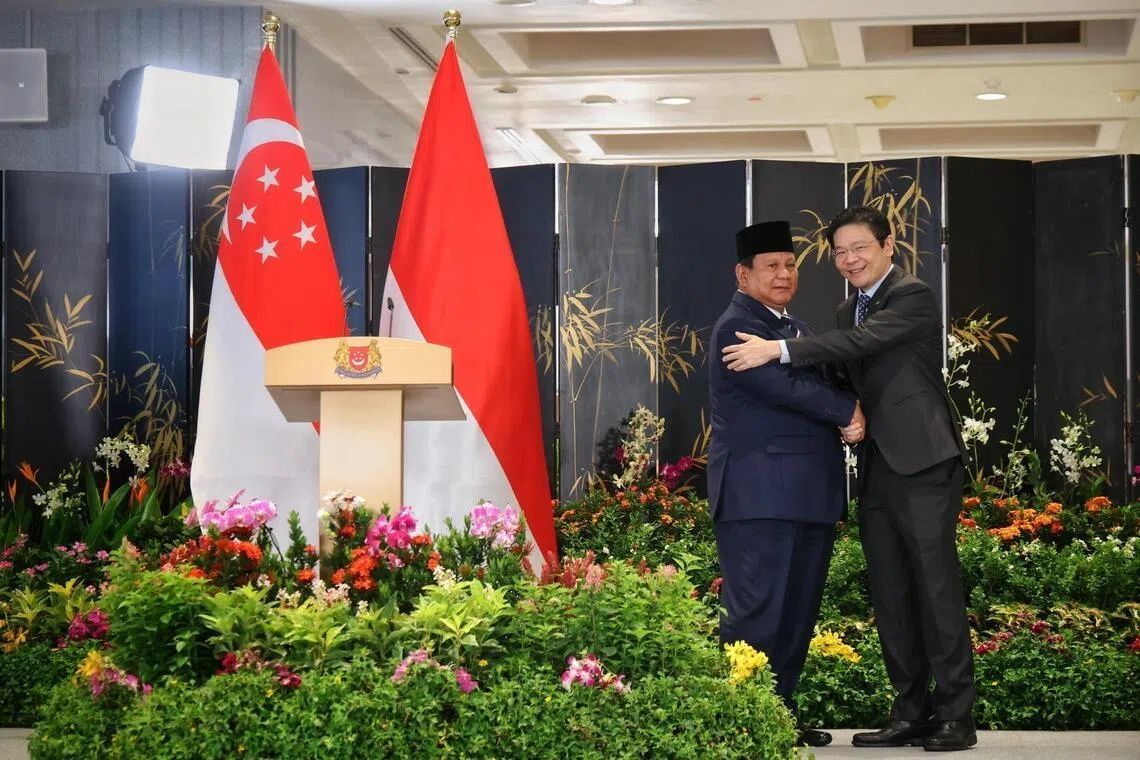
Prime Minister Lawrence Wong is set to travel to Jakarta on Monday, July 6, for the Singapore-Indonesia Leaders' Retreat, a key diplomatic engagement where he and Indonesian President Prabowo Subianto will assess the state of bilateral relations and chart the course for expanded cooperation. The retreat represents the highest-level bilateral platform between the two Southeast Asian neighbours, bringing together senior government officials from both sides to review and advance their shared interests across multiple sectors.
This will mark the second iteration of the annual leaders' retreat format, with the previous meeting held in Singapore in June 2025. The current gathering in Jakarta, hosted by President Prabowo, follows an earlier retreat in April 2024 when then Prime Minister Lee Hsien Loong and then President Joko Widodo met at the Bogor Presidential Palace. PM Wong, who was deputy prime minister and finance minister at the time, and President Prabowo, then president-elect, were both present at that occasion, ensuring continuity in leadership engagement.
The retreat carries symbolic weight as both nations continue to strengthen what officials describe as deep and enduring bilateral ties. According to Singapore's Prime Minister's Office, the meeting will reaffirm commitment by both governments to deepening cooperation and allow leaders to exchange views on how to further advance their relationship. This consistent diplomatic rhythm underscores the importance Singapore and Indonesia place on regular, structured dialogue at the highest levels of government.
During the retreat, both leaders are expected to review the progress of bilateral projects initiated since their last meeting, receiving updates on implementation and outcomes. This project-focused approach ensures that diplomatic engagement translates into tangible outcomes affecting businesses, citizens and institutions in both countries. The discussion of regional and global developments will also provide an opportunity for the two leaders to coordinate on broader geopolitical issues affecting Southeast Asia.
The economic relationship between Singapore and Indonesia remains remarkably robust. In 2025, Singapore retained its position as Indonesia's leading source of foreign direct investment, channelling US$17.4 billion, equivalent to S$22.4 billion, into the Indonesian economy. This figure demonstrates the depth of business ties and suggests that private sector interests will likely feature prominently in discussions about removing barriers and creating new opportunities for investment flows.
The bilateral cooperation agenda has evolved significantly beyond conventional pillars of trade, investment and defence. Both nations are increasingly collaborating on emerging priority areas that reflect contemporary global challenges and opportunities. These include green economy initiatives, cross-border electricity trade arrangements, carbon capture and storage technology, artificial intelligence development, and digital connectivity infrastructure. This diversification reflects recognition by both governments that their partnership must evolve to address climate change, energy security, technological advancement and digital transformation.
The green economy and clean energy collaboration carries particular relevance for Malaysia and the wider region. As Southeast Asian nations navigate the transition towards renewable energy and emissions reduction, bilateral initiatives between Singapore and Indonesia could establish templates for regional cooperation. Cross-border electricity trade mechanisms developed between these two countries may inform future regional energy integration efforts, potentially creating opportunities for other ASEAN members to participate in similar frameworks.
PM Wong is travelling with a substantial ministerial delegation that reflects the comprehensive nature of the bilateral relationship. Deputy Prime Minister and Minister for Trade and Industry Gan Kim Yong, Coordinating Minister for Public Services and Minister for Defence Chan Chun Sing, Foreign Minister Vivian Balakrishnan, Minister for Social and Family Development Masagos Zulkifli, and Minister for Manpower and Minister-in-charge of Energy and Science and Technology Tan See Leng will accompany the Prime Minister. This high-powered team indicates that discussions will span economic, defence, foreign policy, social and technological domains.
During PM Wong's absence from Singapore, Coordinating Minister for National Security and Minister for Home Affairs K. Shanmugam will assume the role of acting prime minister, ensuring continuity in government operations. This succession arrangement demonstrates Singapore's well-established protocols for maintaining institutional continuity during leadership travel.
For Malaysian observers and policymakers, the Singapore-Indonesia retreat offers insights into how two major ASEAN nations are structuring their bilateral relationship to address 21st-century challenges. The emphasis on emerging sectors such as artificial intelligence and digital connectivity signals that both countries view technological advancement as central to their future prosperity. Similarly, the commitment to cross-border energy solutions suggests a regional shift towards integrated approaches to climate and energy challenges that may eventually encompass broader ASEAN participation.
The retreat also reflects Indonesia's elevation within regional diplomacy under President Prabowo's presidency. By hosting the retreat and setting the agenda, Indonesia positions itself as an active shaper of Singapore-Indonesia relations rather than a respondent to Singaporean initiatives. This dynamic could influence how bilateral relationships across Southeast Asia evolve, potentially encouraging other nations to take more assertive roles in bilateral forums.
The timing of this retreat, occurring just months into President Prabowo's presidency, provides an opportunity to establish the tenor and substance of Indonesian foreign policy. The breadth of sectors under discussion and the seniority of visiting officials suggest that Singapore-Indonesia relations will remain a cornerstone of both nations' regional and economic strategies moving forward.

