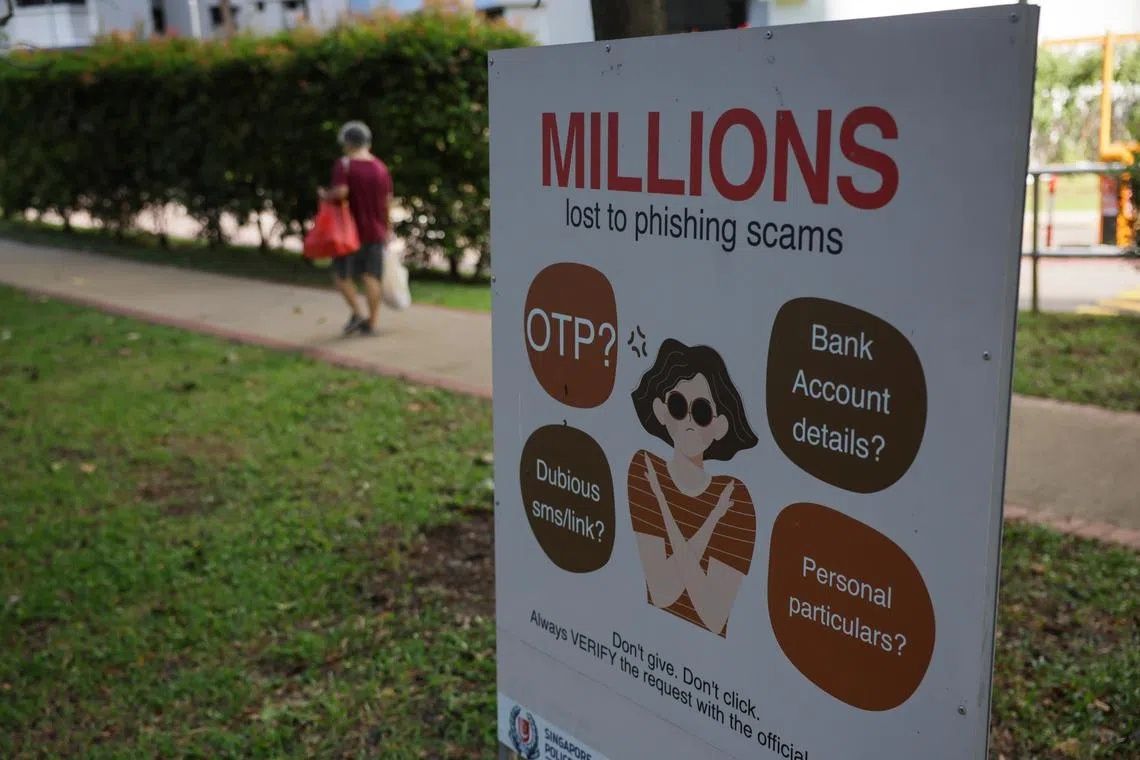
Singapore's police have intensified their crackdown on fraud networks with the arrest of 230 individuals suspected of orchestrating or facilitating scams that have resulted in losses exceeding S$9 million. The operation, spanning from mid-June to early July, represents a significant escalation in the city-state's efforts to combat increasingly sophisticated criminal schemes. Among those under investigation are 159 men and 71 women ranging in age from 16 to 77 years old, suggesting that scam syndicates are successfully recruiting perpetrators from an unusually wide demographic spectrum that extends into the teenage population.
The breadth of the investigation highlights the evolving nature of fraud in Southeast Asia's financial hub. The 230 suspects are believed to have orchestrated more than 713 separate scams across multiple categories, indicating that these are not isolated criminal acts but rather coordinated operations with established networks. The types of fraud identified span the full spectrum of digital-age deception: e-commerce scams that prey on online shoppers, friend impersonation schemes that exploit personal relationships, fabricated job offers designed to extract personal information or recruitment fees, government official impersonation scams that manipulate trust in state institutions, investment fraud that promises unrealistic returns, and rental scams that target housing-desperate individuals.
The enforcement action was conducted jointly by Singapore's Commercial Affairs Department and all seven police land divisions, indicating a comprehensive, island-wide coordination that suggests the problem extends across residential and commercial zones rather than being confined to specific districts. This coordinated approach reflects a recognition that modern scam networks operate without traditional geographic boundaries, often using digital infrastructure to reach victims across the entire country and beyond. The scale of the two-week operation demonstrates that authorities are deploying substantial resources to dismantle these organised criminal structures rather than pursuing isolated perpetrators.
Investigations centre on three primary legal violations: cheating, money laundering, and operating payment services without proper licensing. The inclusion of unlicensed payment services in the charge sheet reveals an important operational dimension of modern scam networks. Many fraudsters establish pseudo-financial infrastructure that mimics legitimate banking or digital payment systems, allowing them to process transactions without regulatory oversight. This infrastructure enables the rapid transfer of victim funds and makes tracing stolen money significantly more challenging for law enforcement.
The potential penalties attached to these offences are designed to deter participation across the entire scam value chain. Those convicted of cheating face imprisonment for up to a decade and fines, while money laundering convictions can result in similar jail terms alongside fines reaching S$500,000. Individuals operating unlicensed payment services face sentences up to three years and fines of S$125,000. Most significantly, Singapore's mandatory caning provisions distinguish its approach from Western jurisdictions: convicted scammers and syndicate members face between six and 24 strokes, while money mules—the relatively low-level individuals who facilitate fraud—can receive up to 12 strokes.
The employment of money mules represents a critical vulnerability in scam operations that authorities are actively targeting. These individuals, often recruited through seemingly legitimate employment offers or desperate financial circumstances, provide essential services by accepting stolen funds into personal bank accounts and SIM cards or by sharing government digital credentials. By placing themselves within the transaction chain, mules create crucial distance between the fraud perpetrators and the stolen proceeds. Singapore's response extends beyond criminal penalties to include restrictions on banking services and mobile subscriptions for convicted mules, effectively removing their ability to facilitate future scams through the same mechanisms.
Recent statistics reveal that Singapore's anti-scam efforts are showing measurable results, though the challenge remains substantial. Police reported that scam cases declined from over 50,000 in 2024 to 37,308 in 2025—a reduction of roughly 25 percent. More importantly for victims, total losses fell from S$1.1 billion to S$913.1 million, suggesting that enforcement is not only reducing frequency but also limiting the scale of individual operations. However, these figures underscore that scamming remains a significant criminal industry generating nearly a billion dollars annually in a single Southeast Asian jurisdiction.
Within the scam taxonomy, e-commerce fraud emerged as the most prevalent category in 2025, with over 6,700 reported cases and S$16.7 million in losses. This prominence reflects the explosion of online shopping across Southeast Asia and the vulnerability of digital commerce platforms to fraud. E-commerce scams typically involve either fake sellers offering non-existent goods or compromised legitimate seller accounts used to conduct fraudulent transactions. The frequency of these cases suggests that both e-commerce platforms and consumers face ongoing challenges in verifying seller legitimacy and protecting transactions.
For Malaysian readers and regional observers, the Singapore operation carries important implications. The sophistication and scale of fraud networks operating in one developed financial centre likely indicates comparable or more serious problems in less densely regulated markets. The involvement of teenage perpetrators is particularly concerning, suggesting that scam recruitment is successfully targeting younger generations who may view online fraud as low-risk and lucrative. The fact that women comprise nearly one-third of arrested suspects challenges simplistic assumptions about scam perpetrators and indicates these operations employ diverse recruitment strategies.
The operation also demonstrates the limitations of enforcement-only approaches to scam prevention. While arrests and prosecutions serve essential deterrent and incapacitation functions, the persistence of large-scale fraud despite substantial police resources suggests that addressing root causes—including financial desperation, inadequate digital literacy, and the availability of easy-to-use but unregulated financial infrastructure—requires complementary social and regulatory interventions. Singapore's ScamShield initiative, providing public awareness resources and a dedicated helpline, represents recognition that victim education and early reporting mechanisms are necessary components of comprehensive scam reduction.
The investigation underscores why international cooperation on scam prevention remains essential for Southeast Asian countries. Scam syndicates frequently operate across borders, recruiting perpetrators and victims from multiple nations while routing stolen funds through international banking corridors. A teenager arrested in Singapore may have been recruited online from another country, while victims from Malaysia, Indonesia, or other neighbouring nations may have unknowingly transferred funds to accounts operated by Singapore-based mules. Effective scam prevention therefore requires not only robust domestic law enforcement but also coordinated regional intelligence sharing and harmonised legal frameworks that prevent criminals from exploiting jurisdictional differences.

