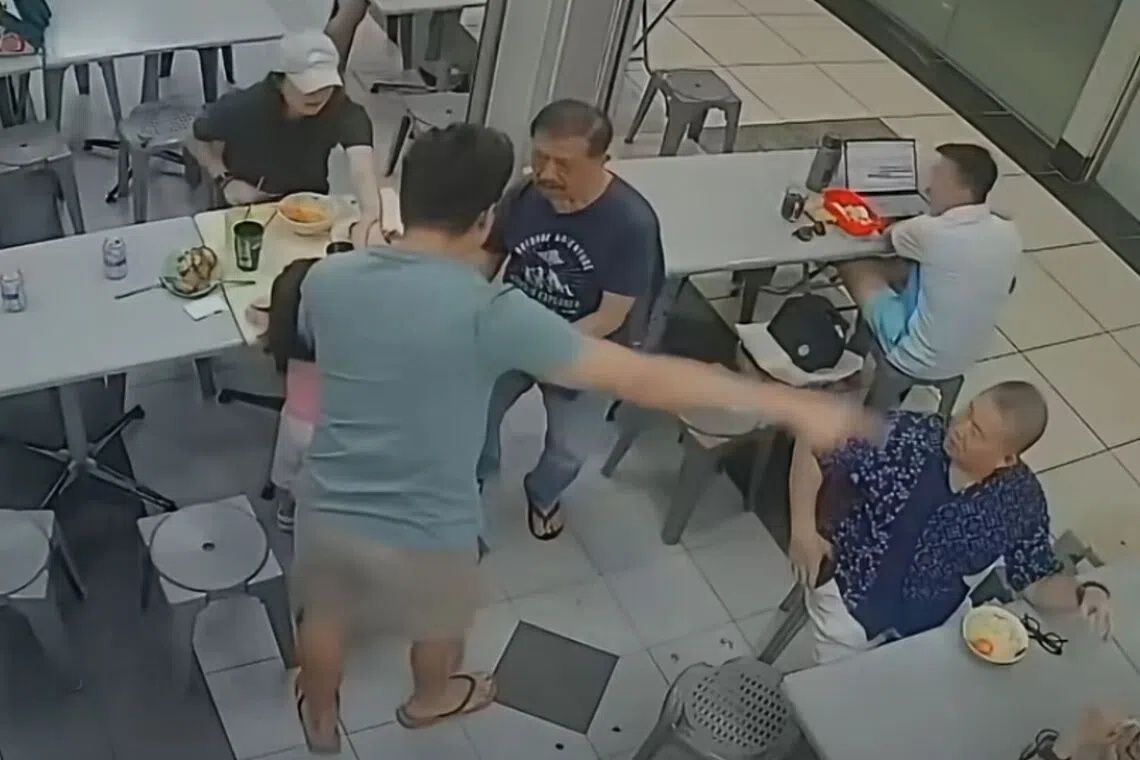
Singapore authorities have launched an investigation into a confrontation at a coffee shop in the East Coast district that resulted in an elderly man being knocked to the ground. The incident, which unfolded in front of other customers, has sparked wider discussion about public behaviour and intergenerational tensions in crowded community spaces. Police confirmed they received a report and are actively examining the circumstances surrounding the altercation.
The elderly man involved, described as being in his 70s and struggling with mobility issues, was at the coffee shop where he regularly assists at a food stall. Security camera footage reveals him moving carefully through the establishment, steadying himself by gripping tables as he navigates the cramped space typical of Singapore's popular food courts. His deliberate movements demonstrate the physical challenges he faces with everyday movement, a factor that would have made the subsequent fall particularly dangerous for someone of his age and condition.
The confrontation began when the elderly man extended a casual gesture toward a young girl seated nearby. Patting children on the head is a traditional gesture in many Asian cultures, often intended as a friendly or affectionate acknowledgement, though norms around such interactions have evolved. The girl's companion, a woman at the same table, immediately moved to prevent the contact by deflecting his hand away. This initial intervention suggested discomfort with the interaction, setting the stage for escalation.
A man associated with the girl's table then returned to the scene after briefly stepping away. Rather than attempting dialogue or further gentle redirection, he verbally confronted the elderly man before physically pushing him down. The force of the shove sent the elderly man crashing to the ground, an outcome particularly concerning given his age and apparent frailty. The incident was captured on the coffee shop's security camera system, providing a clear record of the sequence of events and the relative force involved in the altercation.
Following the incident, the man involved approached the elderly victim and offered an apology along with a drink. This apparent gesture of reconciliation suggests possible remorse for his actions, though it does not necessarily constitute an acceptable resolution given the injury sustained. The elderly man's son, who learned of the incident through the victim himself, took to social media on August 15 to seek information about the man's identity and appeal for public assistance in documenting what had occurred.
The physical consequences for the elderly man extended well beyond the immediate trauma of being pushed over. He subsequently experienced severe back pain, a common and sometimes serious complication for elderly individuals who sustain falls. Back injuries in older adults can lead to prolonged mobility difficulties, further independence loss, and complex recovery processes. This injury trajectory underscores why incidents involving elderly victims warrant particular scrutiny from law enforcement and the broader public.
The son's initial Facebook post, published at 7:14 pm on August 15, included the security footage and context about his father's age and regular presence at the stall. His account presented the incident from the victim's perspective and sought to identify the man responsible. By the following morning, the son posted again to thank the community for expressions of concern and for contributing information about the incident, though he indicated at that time that he still lacked conclusive identification of the man involved.
This incident reflects broader tensions that occasionally surface in Singapore's shared public spaces, particularly coffee shops and food courts where diverse groups converge in close proximity. The ambiguity surrounding cultural norms—what constitutes acceptable public behaviour, appropriate physical contact with strangers, and reasonable responses to perceived boundary violations—remains a source of friction. Generational differences in attitudes toward children and physical contact further complicate these interactions, as do varying personal comfort levels regarding personal space in crowded environments.
For Malaysian and Southeast Asian readers, the incident raises familiar questions about communal living standards and conflict resolution in densely populated urban areas. Across the region, food courts and coffee shops serve as democratic gathering spaces where people from different backgrounds interact regularly. The balance between maintaining these inclusive spaces and establishing clear boundaries about acceptable conduct remains an ongoing challenge for communities throughout Southeast Asia. This particular incident illustrates how quickly misunderstandings can escalate into physical confrontations when communication breaks down.
The police investigation will likely examine whether the initial gesture constituted harassment, whether the woman's deflection was proportionate, and critically, whether the man's response—a forceful shove—was a reasonable or excessive reaction. The criminal threshold for what constitutes assault in Singapore will frame how authorities proceed. Beyond the immediate legal questions, the case has sparked broader community reflection on how to handle uncomfortable interactions in public spaces without resorting to violence.
The involvement of security footage is significant, as it provides objective documentation of events and eliminates ambiguity about the sequence and nature of physical contact. However, footage alone cannot explain the motivations behind the interactions or establish the context that may have existed prior to the camera's recording. The police investigation will likely interview all parties involved and potentially witnesses present at the coffee shop, seeking to understand whether there were prior incidents or tensions between the parties.
As investigations continue, the case underscores the importance of conflict de-escalation training for public-facing employees and community awareness about appropriate responses to uncomfortable social situations. While defending oneself or others from perceived threats is legitimate, the proportionality of response matters significantly, particularly when the person involved is elderly and vulnerable. The broader lessons extend beyond this single incident to encompass how communities can better manage disagreements and protect vulnerable members while maintaining the openness that characterises shared public spaces.

