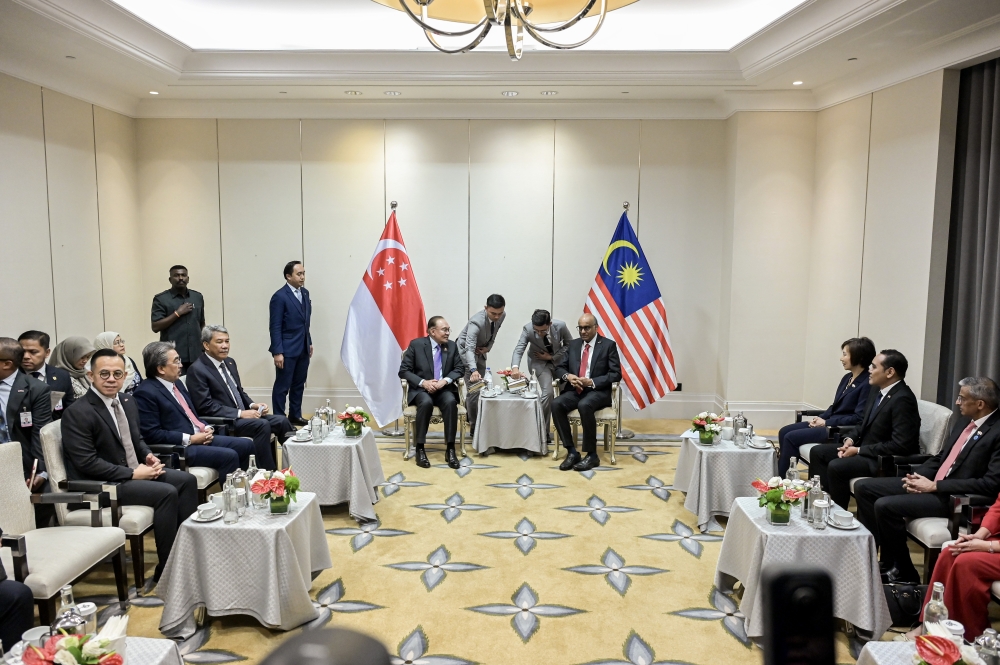
Singapore President Halimah Yacob held a 40-minute meeting with Malaysian Prime Minister Datuk Seri Anwar Ibrahim on Monday during her official state visit to Malaysia, marking another chapter in the close diplomatic engagement between the two countries. The courtesy call, conducted in the Malaysian capital, reflected the significance both nations place on maintaining regular high-level dialogue despite occasional tensions that have characterised their relationship over the decades.
The meeting duration and characterisation as substantive discussions rather than mere ceremonial pleasantries suggest the two leaders had substantive matters to address. While official statements typically remain guarded on the specifics of such engagements, the timing of the visit and the length of their discussion indicate that pressing bilateral concerns were likely on the agenda. This reflects the pattern established between Kuala Lumpur and Singapore, where senior leadership meetings often tackle issues ranging from trade and economic cooperation to border matters and regional security considerations.
President Halimah's visit represents an important symbolic moment in Malaysia-Singapore relations. As Singapore's head of state, her presence in Malaysia carries ceremonial weight, yet such visits are invariably coupled with substantive diplomatic work. The fact that Prime Minister Anwar made time for an extended conversation underscores Malaysia's commitment to maintaining strong institutional ties with its southern neighbour, a relationship that remains crucial to stability in the Southeast Asian region.
The bilateral relationship between Malaysia and Singapore encompasses numerous interconnected dimensions. Trade between the nations remains substantial, with Singapore serving as an important market for Malaysian goods and a key source of investment. The two countries also share intricate supply chains and financial linkages that bind their economies together. Beyond commerce, they cooperate on security matters, transportation infrastructure, and people-to-people exchanges that involve hundreds of thousands of workers and visitors crossing the causeway daily.
From a Malaysian perspective, maintaining cordial relations with Singapore is strategically important. Singapore's position as a financial hub and its influence in regional forums make it a significant player in Southeast Asian affairs. For Malaysia, ensuring that diplomatic channels remain open allows both nations to address grievances and find common ground on issues of mutual concern. The regular engagement at the highest political levels serves as a pressure valve for potential disputes and demonstrates commitment to peaceful resolution of differences.
Regionally, the Malaysia-Singapore relationship carries implications beyond the bilateral sphere. Both nations are members of ASEAN and participate in various regional mechanisms. Their relationship sets a tone for Southeast Asian diplomacy and cooperation. When Malaysia and Singapore maintain strong ties, it contributes to overall regional stability. Conversely, tensions between them can create ripples throughout the region, affecting collective ASEAN initiatives and regional confidence.
The meeting also reflects broader trends in how Malaysia is conducting its foreign policy under Prime Minister Anwar's administration. Since taking office, Anwar has emphasised the importance of regional partnerships and economic cooperation. His engagement with Singapore aligns with this broader strategy of strengthening Malaysia's relationships with key neighbours and trading partners. This approach contrasts with more confrontational stances on certain issues, attempting instead to balance assertiveness on matters of principle with pragmatism in fostering productive relationships.
For Singapore, the state visit and substantive engagement with Malaysia's leadership reaffirm its commitment to stable relations with its largest neighbour. Singapore's prosperity depends significantly on frictionless relations with Malaysia, given the geographical proximity and economic interdependence. Regular high-level meetings provide opportunities to address concerns before they escalate into public disputes that could harm business confidence or regional standing.
The visit also carries implications for other Southeast Asian nations watching Malaysia-Singapore dynamics. Countries like Thailand, Indonesia, and Brunei have stakes in Malaysian-Singaporean stability, as disruptions between them can affect regional trade flows and security cooperation. A positive meeting between Anwar and President Halimah sends reassuring signals to the broader regional community that the two largest economies in the region are committed to maintaining constructive engagement.
Looking ahead, such diplomatic engagement will likely remain essential as both nations navigate complex regional and global challenges. Trade tensions, maritime security, environmental issues, and responses to broader geopolitical shifts all require coordinated thinking between Malaysia and Singapore. The regular renewal of contacts at the highest levels, as demonstrated by President Halimah's visit, ensures that both nations maintain the institutional framework necessary for managing their relationship effectively.
The substantive nature of Anwar and President Halimah's discussion, despite its relatively brief duration, underscores how much can be communicated when senior leaders prioritise engagement. In an era where bilateral relations can rapidly deteriorate without sustained attention, such meetings represent an investment in stability and cooperation that benefits both nations and the broader Southeast Asian region.

