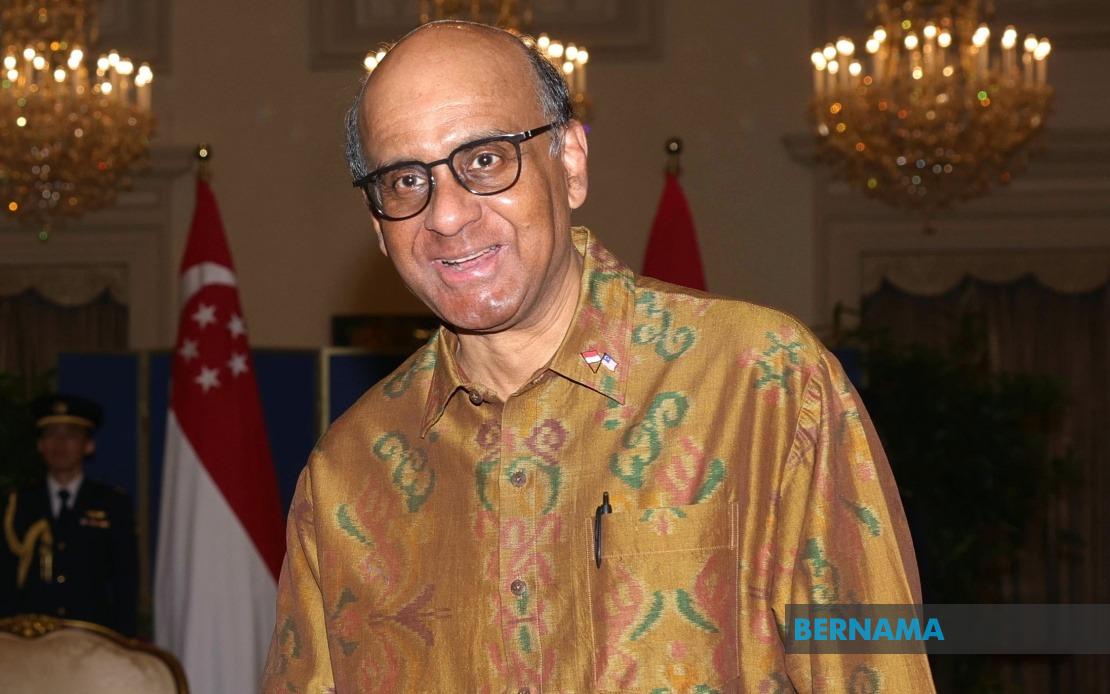
Singapore President Tharman Shanmugaratnam is set to embark on a three-day state visit to Malaysia beginning July 13, marking his inaugural trip in an official capacity since taking office as Singapore's ninth president in September 2023. The visit, extending through July 15, comes at the formal invitation of His Majesty Sultan Ibrahim, King of Malaysia, and represents a carefully calibrated diplomatic gesture that underscores the significance both nations attach to their relationship.
This state visit constitutes a reciprocal engagement following His Majesty's own visit to Singapore on May 6 and 7 last year, demonstrating the cyclical nature of high-level diplomatic exchanges between Kuala Lumpur and Singapore. The Malaysian Foreign Ministry characterized the forthcoming visit as reflective of the "strong and enduring partnership" binding the two countries, with particular emphasis on how it signals deepening cooperation across multiple domains of shared concern and mutual benefit. Such carefully choreographed exchanges serve not merely as ceremonial occasions but as substantive opportunities for the two nations to reaffirm commitments and chart coordinated courses on pressing regional matters.
The presidential delegation will include Tharman's spouse, Jane Ittogi Shanmugaratnam, alongside a substantial contingent of ministerial and senior government officials, signalling the comprehensive nature of the engagement. The formal itinerary encompasses several key ceremonial and substantive elements designed to honour the visiting head of state and facilitate substantive bilateral dialogue. Tharman will be received with full state honours, including a State Welcoming Ceremony upon arrival, followed by a formal audience with His Majesty at Istana Negara, the royal palace. The visit will culminate in an official State Banquet, a traditional highlight of high-level diplomatic visits that provides intimate settings for candid exchanges between senior leaders beyond the formality of public ceremonies.
During the three-day engagement, Prime Minister Datuk Seri Anwar Ibrahim has scheduled a courtesy call with the Singapore President, providing a critical opportunity for bilateral discussions at the highest governmental level. Such one-on-one meetings between heads of state and chief executives typically address both immediate bilateral concerns and broader regional and international questions affecting both nations' strategic interests. These discussions often yield commitments on specific cooperation initiatives and serve as forums for addressing any outstanding issues requiring resolution at the pinnacle of government.
The timing and nature of this visit acquire additional significance when contextualized against the broader economic interdependence characterizing the Malaysia-Singapore relationship. Singapore functions as Malaysia's second-largest trading partner on a global scale, while simultaneously serving as Malaysia's largest trading partner among all other Association of Southeast Asian Nations member states. This dual positioning underscores the centrality of bilateral commerce to both economies and the inherent stakes involved in maintaining robust diplomatic relations.
Bilateral trade flows between the two nations have demonstrated considerable momentum in recent periods. During 2025, total bilateral trade reached RM402.35 billion, equivalent to approximately US$93.97 billion, representing a modest expansion of 1.5 percent relative to 2024 figures. This growth trajectory accelerated noticeably in early 2026, with the January-to-May period recording bilateral trade valued at RM189.90 billion or US$47.87 billion, reflecting a robust 14.5 percent year-on-year increase compared to the corresponding period in 2025, which had registered RM165.93 billion or US$37.65 billion. Such acceleration suggests underlying economic dynamism and suggests confidence among traders and investors in the bilateral commercial environment.
These trade statistics illuminate why state visits between Malaysian and Singaporean leadership carry practical resonance beyond ceremonial import. The sustained growth in bilateral commerce, particularly the sharp acceleration observed in early 2026, reflects the complex web of manufacturing, financial services, energy, and logistics interactions binding the two economies. Malaysian companies depend substantially on Singapore as a regional financial centre and entrepot, while Singaporean firms leverage Malaysia's natural resources and manufacturing capabilities. Disruption to this relationship would impose considerable costs on both economies.
The visit also assumes significance within the broader context of Southeast Asian regionalism and the evolution of ASEAN dynamics. Malaysia and Singapore, despite historical tensions and ongoing maritime boundary complexities, have developed sophisticated mechanisms for managing bilateral relations and cooperating effectively on regional matters. Their ability to maintain robust diplomatic engagement while navigating occasional disputes serves as a model, however imperfect, for how neighbouring states can balance competitive interests with cooperative imperatives. Singapore's President visiting Malaysia reinforces ASEAN's commitment to peaceful diplomacy and multilateral engagement.
Furthermore, the state visit reflects evolving leadership transitions within both nations and the importance of establishing personal rapport among new office-holders. Tharman Shanmugaratnam's recent assumption of Singapore's presidency represented a significant moment in Singapore's political evolution, and this inaugural state visit to Malaysia allows him to establish his credentials as a regional statesman and to signal continuity in Singapore's diplomatic posture. His predecessor's relationships with Malaysian leaders are implicitly being reaffirmed and renewed through this engagement, ensuring that leadership transitions do not disrupt the bilateral relationship.
The visit's emphasis on state-level ceremony and formality reflects both nations' understanding that such diplomatic rituals serve important symbolic and practical purposes. While critics occasionally dismiss state visits as expensive pageantry, they remain valuable mechanisms through which nations communicate respect, reaffirm commitments, and create atmospheres conducive to substantive negotiation. The presence of multiple ministers and officials within Tharman's delegation suggests that bilateral discussions will extend across numerous portfolios, potentially encompassing trade and investment, security cooperation, education, cultural exchanges, and regional stability concerns.
Looking forward, the outcomes of this visit will likely influence the trajectory of Malaysia-Singapore relations during the coming months. Any joint statements, memoranda of understanding, or policy commitments announced during the visit will signal priorities both nations have identified as requiring enhanced cooperation. Given the acceleration in bilateral trade and the robust economic interdependence characterizing the relationship, observers will likely scrutinize any announcements regarding trade facilitation, investment promotion, or regulatory harmonization initiatives that might further deepen commercial linkages.

