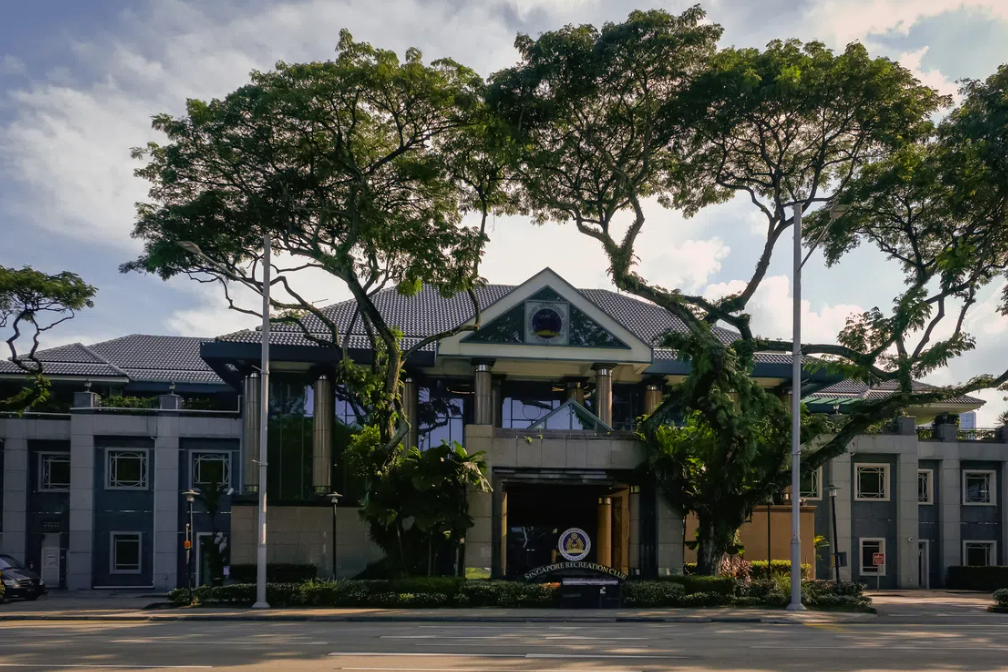
A Singapore High Court judge has cleared the way for a full trial to settle a contentious dispute within the Singapore Recreation Club regarding the transformation of its billiards facilities. The decision, announced in written grounds by Senior Judge Chan Seng Onn on August 26, marks a significant development in what has become an increasingly complex question about the proper interpretation and application of constitutional procedures within large membership organisations. Two billiards section members, Sean Kerwin Mathews and Mu Yee Shyong, initiated legal proceedings in November 2025 challenging the validity of a resolution passed at an extraordinary general meeting on October 18, 2025, that would repurpose the billiards room on level 2 as a co-working space.
The crux of the dispute centres on whether the management committee properly conducted the vote according to club constitutional requirements. Mathews and Mu argue that the club's governing rules explicitly demanded that any resolution be approved by a simple majority of voting members physically present at the meeting—a threshold they calculate at 280 of the 559 members in attendance. However, only 151 members voted in favour of the resolution, substantially below what they contend was the necessary threshold. The judge's determination that legitimate triable issues exist on these constitutional points suggests that questions about proper voting procedures in member organisations merit judicial examination, a conclusion with broader implications for how such organisations conduct internal governance across Singapore and the region.
The voting process itself proves revealing when examined in detail. Members received two distinct voting slips under a structure the judge viewed as problematic. The first slip contained a binary choice: approve relocation of the billiards room and payment of escalated land betterment charges of $4.9 million, or reject the plan. If members voted yes on the first slip, they were instructed that the second slip became inapplicable. This cascading arrangement meant those dissatisfied with the relocation but interested in alternative uses for the billiards room faced a voting constraint—a design choice that evidently troubled the High Court judge.
The second voting slip, available only to those rejecting the relocation plan, offered what appeared to be two options: convert the billiards room into a dedicated co-working space, or integrate the billiards room within a larger co-working space. Yet what the club presented as genuine alternatives masked a problematic voting architecture. Members cannot vote against both proposed uses without their votes being rendered spoilt or blank. The judge recognised this as creating a false choice scenario where members' fundamental right to vote negatively on substantive proposals becomes effectively constrained. Out of 514 total votes cast, the split was 151 favouring the second resolution, 125 opposing it, with 183 spoilt votes and 55 blank votes. The management committee subsequently declared the resolution passed based on a 54.7 per cent majority of valid votes—a determination Mathews and Mu fundamentally contest.
Their argument hinges on whether blank votes ought to be counted as abstentions or as negative votes. If the 55 blank votes are combined with the 125 opposition votes, the total opposition reaches 180, creating a majority against the conversion proposal. The judge identified this as presenting a genuine legal question worthy of trial, particularly given the circumstances under which members voted. The unusual voting arrangement and the restrictions placed on members' ability to reject both proposals together created, in the judge's view, circumstances sufficiently peculiar to warrant examination of whether blank votes might reasonably be interpreted as expressing member dissatisfaction.
This dispute emerged against the backdrop of a larger $16.6 million transformation initiative approved by club members in March 2024. That broader plan encompassed relocating the billiards room from level 2 to basement 2 whilst establishing a co-working space on level 2. The originally allocated budget included a provision of S$1.5 million for potential land betterment charges—an indirect property tax levied on increased land valuations. However, when actual betterment charges subsequently escalated to $4.9 million, substantially exceeding the original estimates, the management committee concluded the original relocation plan had become financially unviable. This cost explosion created the circumstances necessitating the October 2025 extraordinary general meeting and the controversial voting procedure.
The management committee's defence, articulated through counsel Walter Alexander, rested on the argument that invalidating the resolution would serve no practical purpose and would leave the club gridlocked. In response, Judge Chan rejected this characterisation with pointed reasoning. He observed that nullifying the resolution would not paralyse the organisation; rather, the membership could conduct a fresh vote conducted according to proper constitutional procedures. The judge's insistence that the proceedings served a legitimate purpose—securing fair voting processes—reflects a judicial philosophy valuing procedural integrity within membership organisations even when the substantive outcome might otherwise appear settled.
The Singapore Recreation Club represents one of the region's longest-established social institutions, with approximately 7,000 members. The billiards section has historically held significant cultural weight within the club's identity. This particular dispute therefore carries implications beyond mere procedural mechanics. Across Southeast Asia, similar membership organisations frequently navigate tensions between management efficiency and member democratic participation. How Singapore's courts resolve this matter may influence how other established clubs and associations conduct internal governance when member interests diverge from management preferences.
The judge's detailed reasoning highlighted specific concerns about the voting mechanism itself. He noted that members received conflicting instructions regarding their ability to reject both proposed outcomes. The structure effectively forced members to choose between unwelcome options rather than enabling genuine democratic expression. This observation suggests the court views not merely the vote tallies as potentially problematic, but the entire architecture within which voting occurred. The presence of spoilt votes, blank votes, and constrained voting options all feature in the judge's analysis as evidence that members' democratic entitlements may have been curtailed.
One particularly notable element of the judgment concerns the judge's treatment of spoilt and blank votes. Conventionally, such votes are excluded from counting because they reveal no clear member preference. However, Judge Chan argued that this case presented sufficiently unusual circumstances to warrant reconsidering that standard treatment. When the voting mechanism itself curtails genuine options for expressing opposition, blank and spoilt votes might reasonably signal member dissatisfaction rather than mere indifference. This interpretive move, whilst not predetermined by the judgment, opens a potential pathway for the trial judge to examine not merely raw vote numbers but the intentions behind voting patterns.
The appellate stage brought Mathews and Mu before the High Court only after an assistant registrar had initially agreed with the management committee's application to dismiss the entire claim. That initial dismissal would have prevented any trial from occurring. Mathews and Mu's successful appeal, supported by counsel Clarence Lun, demonstrates that courts sometimes view procedural questions about voting validity as sufficiently substantive to warrant full judicial examination rather than early dismissal. The transition from attempted strike-out to ordered trial reflects a shifting assessment of the issues at stake.
As the matter proceeds toward trial, the Singapore Recreation Club case illuminates broader governance questions pertinent to membership organisations throughout Malaysia, Singapore, and the wider region. The judgment suggests that courts will examine not only whether majority votes were technically achieved, but whether the processes enabling those votes operated fairly and in accordance with constitutional requirements. For clubs, associations, and similar bodies across Southeast Asia, the implication is that internal governance procedures warrant careful attention to fairness and constitutional compliance, as courts may intervene when voting architecture appears to constrain member democratic rights. The upcoming trial will determine whether the extraordinary general meeting vote stands or whether members must vote again under modified procedures.

