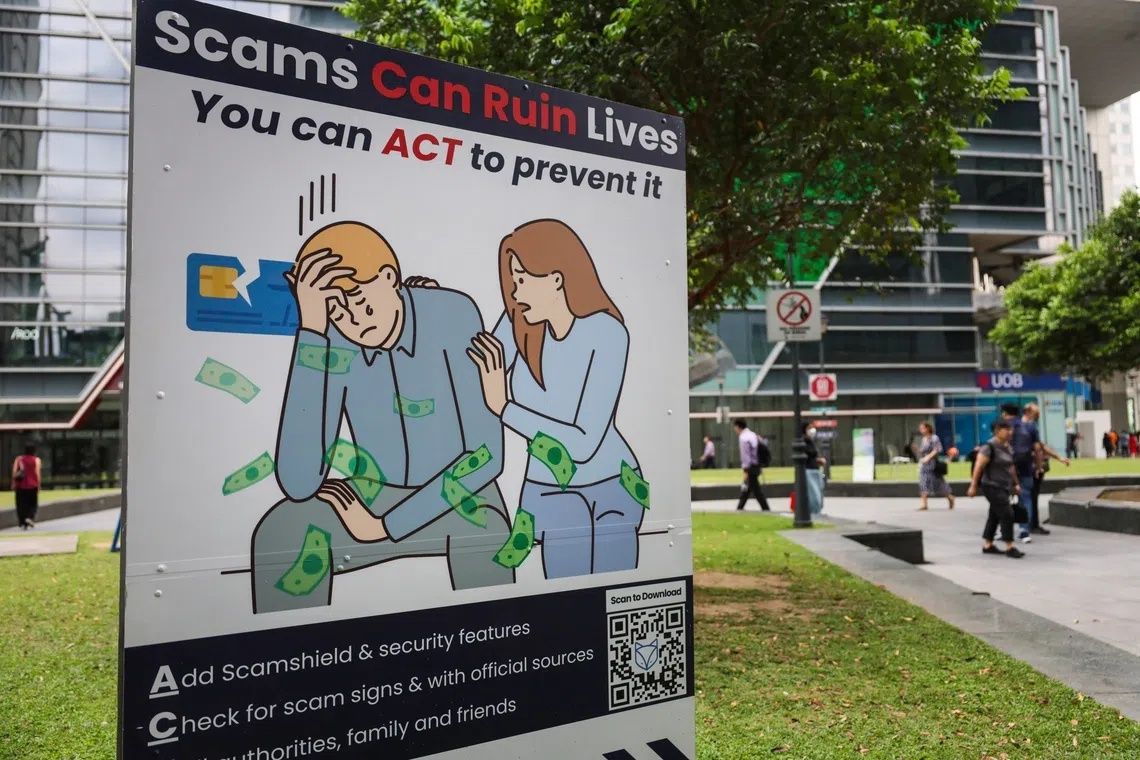
Singapore is moving to close a significant legal gap in its fight against online fraud by introducing legislation that will specifically criminalise the supply and use of social media and e-commerce accounts for scams. The Scams (Countermeasures) and Other Matters Bill, tabled in Parliament on Tuesday, August 4, represents a major escalation in the city-state's battle against rapidly evolving criminal networks that have turned digital platforms into instruments of mass deception.
While Singapore already had laws targeting money mules and those trading in SIM cards and Singpass accounts, the new Bill creates specific offences around online account fraud. This addresses a critical vulnerability: scammers have been systematically recruiting individuals to hand over personal information for creating fake accounts on Facebook, Instagram, WhatsApp, Telegram, TikTok and Carousell. These compromised accounts then become vehicles for impersonation, phishing and other scams that have devastated countless victims across the region.
Under the proposed legislation, anyone providing personal details for such account creation faces criminal charges, as do those who supply, receive or possess accounts created for criminal purposes. The penalties are severe: fines up to S$10,000, imprisonment for up to three years and up to 12 strokes of the cane. This multi-pronged punishment reflects Singapore's determination to disrupt the supply chain that enables scammers to operate at scale, rather than merely targeting the fraudsters themselves.
Equally significant is the dramatic increase in fines for non-compliant platforms and service providers. The maximum penalty has been raised from S$1 million to S$10 million, with daily fines for continuing violations jumping from S$100,000 to S$300,000. This tenfold increase puts real teeth into the Online Criminal Harms Act and sends a clear message that Meta, which received implementation directives in September 2025 and January 2026, and other major platforms must prioritise Singapore users' safety or face crippling financial consequences.
The scale of Singapore's scam crisis underscores the urgency of these measures. In 2025, scams accounted for three in five police reports, and losses reached S$913.1 million that year alone. More alarming still, government impersonation scams more than doubled from 1,504 cases in 2024 to 3,363 in 2025, making this category the fifth most common scam type. Since 2019, scam victims in Singapore have lost more than S$4 billion—a cumulative toll that dwarfs many conventional crimes.
A key innovation in the Bill is its embrace of artificial intelligence and automated systems to combat AI-driven scams. Scammers have increasingly weaponised AI to generate convincing fake identities and mass-produce fraudulent accounts and advertisements at a pace that manual review processes cannot match. The legislation will empower police to issue anti-scam directions via computer programmes, including those powered by AI, dramatically accelerating the detection and disabling of suspect accounts. Importantly, safeguards will be built in to ensure such automated systems remain accurate and fair.
The Bill also establishes three new police orders to strengthen inter-agency coordination. The disclosure order compels service providers to share information about suspect accounts and scam-related activities, feeding into Singapore's National Scams List. This real-time information-sharing infrastructure will allow banks and other stakeholders to identify and freeze accounts and money flows before criminals can move proceeds—a preventive rather than reactive approach. The account disabling order gives police power to shut down suspected scam accounts for up to 60 days, providing a rapid response mechanism that matches the speed at which criminal syndicates operate.
The facility restriction framework, already operational since October 2025, demonstrates the success of coordinated action. As of June 30, the framework had placed 1,423 money mules, 1,439 SIM card mules and 53 corporate mules under restrictions affecting their access to financial, telecommunications and government services. The new legislation formalises and strengthens this approach through the service limitation order, which will allow police to restrict services to suspects for up to three years, substantially raising the compliance bar beyond current voluntary arrangements.
For Malaysian and Southeast Asian observers, Singapore's legislative response holds important lessons. The region faces similar scam epidemics, with criminal networks operating across borders and exploiting the borderless nature of digital platforms. The Bill's focus on supply-side disruption—targeting account mules rather than just end-scammers—recognises that scams are industrial operations with multiple nodes vulnerable to intervention. Singapore's willingness to dramatically increase platform penalties also signals that tech companies can no longer treat compliance as a cost of doing business; failure to implement robust safeguards will become prohibitively expensive.
The deployment of AI-assisted detection represents another regional benchmark. As scammers themselves increasingly use AI to operate at scale, Singapore's decision to fight technology with technology, backed by legal safeguards, may become a template for other jurisdictions. However, the real test lies in implementation: automation must be transparent and subject to meaningful oversight to avoid false positives that could inadvertently harm legitimate users.
More broadly, Singapore's Bill illustrates how sophisticated organised crime has become in the digital age. The fact that account mules have become a distinct and widespread phenomenon reflects a mature criminal ecosystem with specialised roles and supply chains. The legislation targets this ecology comprehensively, from the individuals who sell access to their identities through to the platforms that host fraudulent activity and the financial infrastructure that launders proceeds. This systems-level approach, rather than single-point interventions, may prove more effective in disrupting the scam business model itself.

