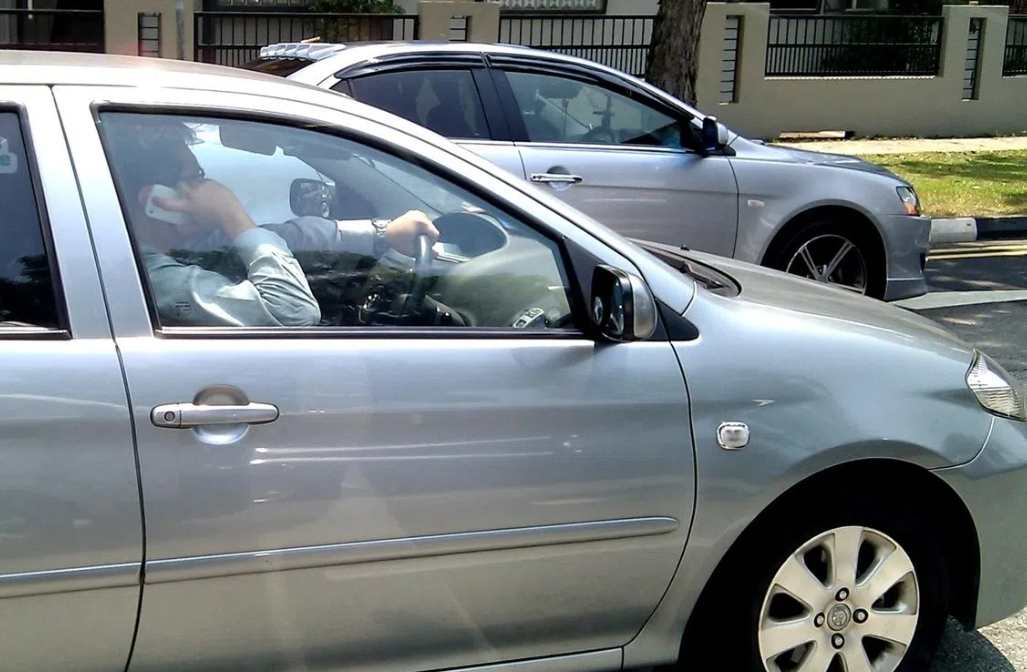
Singapore's government is moving to dramatically expand what constitutes a traffic offence, proposing legislation that would criminalise the simple act of holding a smartphone while driving—even if the device is not being used. The Road Traffic (Miscellaneous Amendments) Bill, tabled by the Ministry of Home Affairs on Tuesday, July 7, represents a significant hardening of the city-state's approach to road safety amid alarming increases in both fatal collisions and traffic violations.
The legislation responds to a worsening safety crisis on Singapore's roads. Between 2021 and 2025, traffic fatalities surged approximately 24 per cent, while traffic violations climbed roughly 38 per cent. Most starkly, 149 people died in traffic incidents in 2025, the highest toll in a decade, compared with 141 deaths in 2016 and 142 in 2024. Injuries have similarly mounted, rising from 9,342 recorded cases in 2024 to 9,955 in 2025. These figures underscore why policymakers believe more aggressive enforcement is necessary to reverse a dangerous trend that threatens public safety.
Under current Singapore law, drivers can be prosecuted if caught actively texting or calling while holding a phone. Typically, such infractions result in 12 demerit points and a fine of $400 to $500. More serious cases proceed to court, where first-time offenders face up to six months' imprisonment and a $1,000 fine, while repeat offenders can receive up to a year in jail and a $2,000 fine. Yet this framework contains a critical enforcement gap: authorities must actually observe the driver using the device and gather sufficient evidence to prove it was being operated, a labour-intensive process that allows many violations to go unpunished.
The proposed bill removes this evidentiary burden entirely. Under the new regime, merely holding a phone while the vehicle is in motion becomes an offence in itself. The Ministry of Home Affairs argues that holding a phone—regardless of whether it is being actively used—reduces driver focus and increases accident risk. This shift will allow Traffic Police to deploy camera technology and accept photographic or video evidence submitted by members of the public, substantially expanding enforcement capacity. The change effectively lowers the bar for prosecution while modernising detection methods, making it considerably easier to catch and penalise offenders.
Importantly, the law will not prohibit the use of mounted devices secured to dashboards or air vents, nor will it prevent drivers from handling phones when their vehicles are completely stationary. This distinction preserves the functionality of GPS navigation and hands-free systems while targeting the specific hazard of handheld distraction. For Malaysian readers, this approach mirrors growing regional consensus that distracted driving represents a critical safety threat, particularly as smartphones have become ubiquitous and their use while behind the wheel increasingly normalised among drivers across Southeast Asia.
Beyond smartphone regulations, the Bill introduces a new criminal category to address an even graver concern: drivers who deliberately use their vehicles as weapons to harm others. Under existing law, such offenders cannot be prosecuted for murder or culpable homicide unless prosecutors prove beyond reasonable doubt that the driver intended to kill or knew death was likely. Consequently, they are typically charged with dangerous driving causing death, which carries a maximum eight-year sentence. The Ministry argues this framework inadequately reflects the culpability of drivers who knowingly endanger others through reckless conduct.
A 2024 case illustrates the perceived insufficiency of current penalties. Jarrett Tee Lee Kiat, who raced another vehicle on an expressway and caused the death of an 18-year-old passenger, showed no remorse yet received only five years and eight months' imprisonment after pleading guilty to dangerous driving. The government contends that purposeful endangerment resulting in death demands proportionately graver consequences. The Bill therefore creates a new offence of purposeful endangerment using a vehicle causing death or grievous hurt. Convicted offenders face up to 15 years' imprisonment, fines, caning, and lifetime driving disqualification or a minimum 10-year ban in cases with mitigating circumstances.
Another illustrative case from December 2025 highlights judicial frustration with existing maximum penalties. Yoong Kok Kai, who drove drunk from three consecutive drinking sessions and lost control at Tuas Checkpoint, injuring an auxiliary police officer so severely that the victim fell into a vegetative state, initially received three-and-a-half years' jail. The High Court subsequently increased his sentence to five years, with the presiding judge remarking that current maximum sentences may be inadequate for the worst offences and suggesting the legislature should reconsider sentencing ceilings.
Responding to such judicial commentary, the Bill raises penalties for dangerous driving causing grievous hurt. Maximum jail time increases from five to seven years for first-time offenders and from 10 to 13 years for repeat offenders. Additional penalties triggered by aggravating factors—such as concurrent drink-driving—increase from one year to 18 months of additional imprisonment. Notably, penalties for careless driving causing grievous hurt remain unchanged, suggesting the government distinguishes between reckless conduct demonstrating extreme indifference and merely negligent behaviour.
The comprehensive nature of these amendments reflects a philosophical shift in Singapore's road safety policy. Rather than relying solely on driver education and moderate penalties, authorities are employing technology-enabled enforcement, dramatically expanded definitions of prohibited conduct, and substantially harsher punishments for dangerous driving. This approach has implications beyond Singapore itself. As a wealthy, highly developed city-state with sophisticated traffic management infrastructure, Singapore often serves as a policy exemplar for more affluent Asia-Pacific jurisdictions, including parts of Malaysia. The new framework may influence how other regional governments conceptualise distracted driving enforcement and penalties for reckless conduct causing injury or death.
For Malaysian motorists and policymakers, Singapore's legislation offers both a cautionary tale and a policy template. The data underlying these reforms—particularly the 24 per cent increase in traffic fatalities over four years—demonstrates that road safety cannot be taken for granted even in nations with advanced infrastructure and relatively high living standards. Additionally, the shift toward technology-enabled enforcement and broader definitions of prohibited behaviour suggests a global trend toward stricter regulation of driver conduct. Malaysia, which has historically grappled with high traffic fatality rates relative to its vehicle population, might examine whether similar legislative reforms could address domestic road safety challenges. Simultaneously, the caning provisions and harsh sentences in Singapore's framework reflect that jurisdiction's distinct legal culture and may not be directly transferable to the Malaysian context, where legislative approaches and sentencing philosophies differ substantively.

