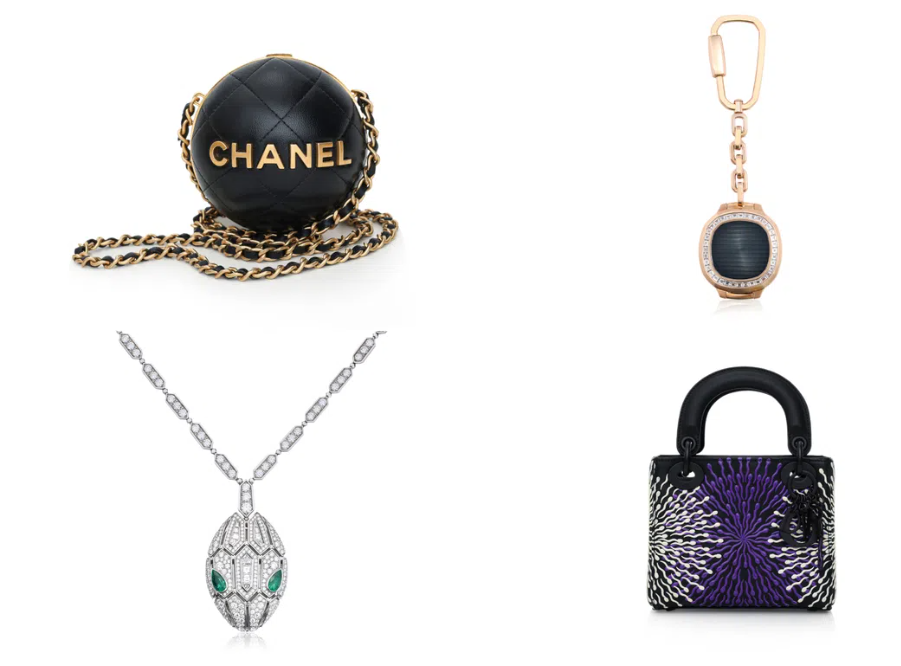
Singapore is preparing to liquidate a vast trove of confiscated luxury goods and real estate stemming from the city-state's most significant money laundering investigation to date. Beginning in September 2026, the island nation will conduct a series of online-only auctions managed by professional services firm Deloitte and local auction house Hotlotz, offering everything from Chanel handbags and Patek Philippe watches to premium properties across the island. The phased approach underscores the sheer scale of assets seized during an investigation that unravelled one of Asia's most sophisticated illicit financial networks.
The initial phase of this liquidation exercise will commence with two simultaneous auctions on September 7, 2026, focusing on jewellery and designer handbags respectively. These opening sales represent merely the tip of the iceberg—Hotlotz has scheduled 15 distinct auctions spanning from September 2026 through May 2027, with more than 1,000 individual items expected to pass through the auction block. The first tranche alone will showcase approximately 300 luxury handbags and accessories from prestigious European designers including Chanel, Louis Vuitton and Christian Dior, alongside over 250 fine jewellery pieces bearing the hallmarks of renowned houses such as Graff, Bulgari and Van Cleef & Arpels. Subsequent auctions will feature additional handbag collections, particularly Hermès pieces, along with an impressive selection of haute horlogerie timepieces from manufacturers including Rolex, Richard Mille and Patek Philippe.
The scope of confiscated assets provides striking testimony to the depth of this criminal enterprise. Police seized or assumed control of approximately S$1.25 billion in non-cash assets during their investigation, encompassing 207 properties, 77 vehicles, 483 luxury bags, 169 branded watches, 580 jewellery pieces, 68 gold bars, thousands of bottles of premium liquor and wine, and cryptocurrency valued at over S$38 million. To this may be added S$1.45 billion frozen in bank accounts and an additional S$76 million in cash reserves across multiple currencies. The investigation was triggered by an islandwide enforcement operation on August 15, 2023, which led to the arrest of 10 foreign nationals. All have since been convicted and deported from Singapore, though the investigation itself continues to unearth the hidden assets these individuals accumulated through their illicit activities.
The auction structure has been designed to ensure global participation whilst maintaining rigorous oversight and authenticity verification. Prospective bidders must complete mandatory online registration and identity verification procedures before participating in any sale. The auctions will operate on a timed, digital platform accessible to participants worldwide, with the first two auctions opening for bidding at 10 am Singapore time on September 7 and closing at 4 pm on September 20. For buyers seeking to inspect items before purchasing—particularly crucial given the value of luxury goods and fine jewellery involved—Hotlotz has arranged physical viewing appointments at Le Freeport, a state-of-the-art secure storage facility located in Changi. Digital catalogues will be published simultaneously with the auction opening, providing potential bidders with comprehensive documentation and imagery of each lot.
Matthew Elton, chief executive of Hotlotz, has emphasised the commitment to transparent and equitable sale processes. The auction house, which previously gained prominence by selling a silver Montblanc fountain pen once owned by founding Prime Minister Lee Kuan Yew for S$461,500, will employ professional cataloguing and marketing strategies to ensure each item achieves fair market valuation. Beyond traditional auctions, Deloitte has indicated that selected assets may be realised through alternative mechanisms including limited tenders, expressions of interest or direct sales to qualified buyers. This flexibility acknowledges that certain high-value or specialised items—particularly the real estate portfolio—may find their optimal buyers through tailored sales approaches rather than open auction processes.
The real estate component of this liquidation represents a significant portion of the total value. More than 80 properties tied to the money laundering network will be progressively offered for sale, with management entrusted to established Singapore realtors including SRI, Edmund Tie & Company (SEA) and Knight Frank. Selected properties will be marketed through expression of interest processes coordinated by List International Realty. Authorities have been careful to warn the public that all asset sales should occur exclusively through officially appointed agencies and approved auction processes, reflecting concerns about potential fraudulent schemes or private sales that might circumvent proper legal channels and asset tracing.
The financial recovery from this liquidation effort represents only one component of broader state asset recovery efforts. According to police statements, approximately S$1.4 billion has already been transferred to Singapore's Consolidated Fund as of the close of the 2025 financial year. This sum comprises S$1.45 billion in seized bank account funds and proceeds from earlier asset sales. The entire proceeds from the ongoing auction programme will similarly flow into the Consolidated Fund, meaning that ultimately the state recovers the full value of criminally derived assets. This approach aligns with international best practices in asset recovery and demonstrates the government's commitment to ensuring that proceeds of crime do not remain in private hands.
For regional observers and authorities, Singapore's systematic dismantling of this massive money laundering operation carries broader implications for Southeast Asian financial security. The investigation revealed vulnerabilities in cross-border financial controls and the sophisticated methods employed by international criminal networks to launder illicit proceeds through luxury goods acquisition and real estate investment. The auction of these assets serves as both a practical necessity and a symbolic statement—that the fruits of financial crime will not endure, and that law enforcement agencies possess the determination and resources to pursue perpetrators and recover stolen assets across multiple jurisdictions. The multi-year liquidation timeline reflects the complexity of valuing and selling such diverse holdings whilst ensuring transparency and proper legal procedures.
The unprecedented scale of this asset recovery also underscores Singapore's position as both a target for money laundering activities and as a jurisdiction with sophisticated investigative and asset recovery capabilities. The August 15, 2023 enforcement operation represented one of the largest single actions against money laundering in the city-state's history. That the authorities have since systematically traced, catalogued and arranged for the sale of such an extensive portfolio demonstrates institutional capacity that few Southeast Asian nations can match. For Malaysian policymakers and financial regulators, the Singapore case serves as both a cautionary tale about vulnerabilities to exploitation by international criminal networks and as a benchmark for aspiring standards in cross-border financial crime investigation and asset recovery procedures.

