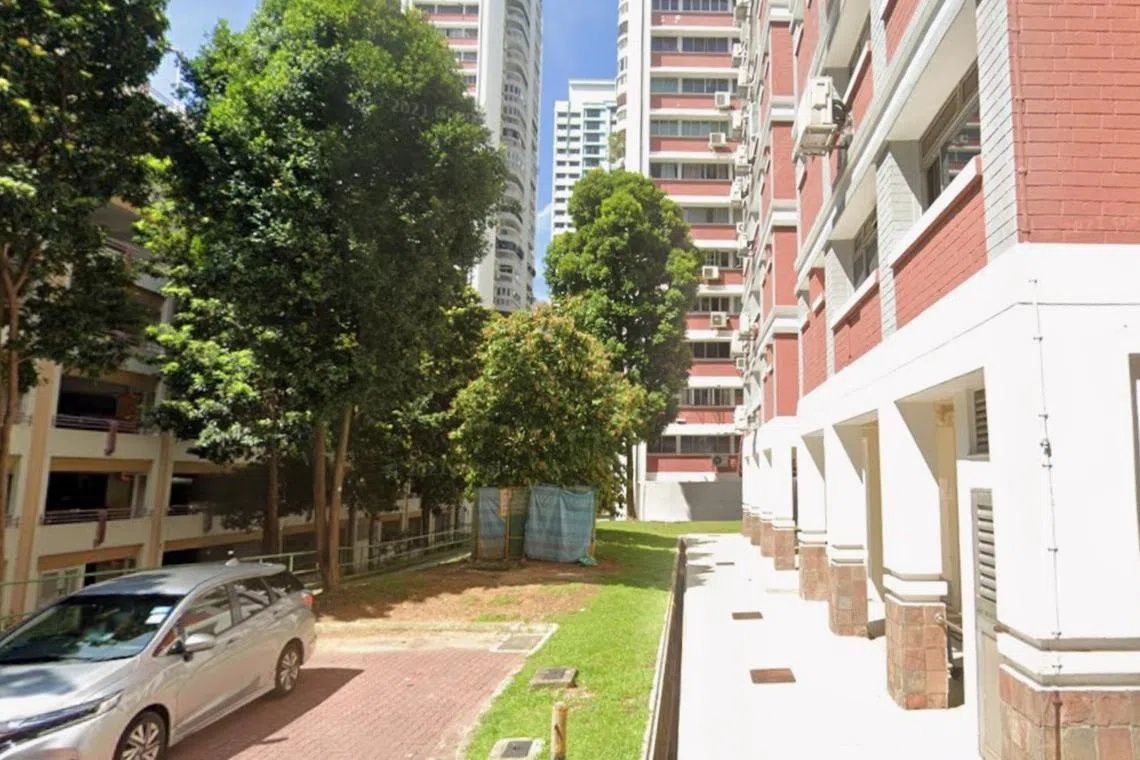
Singapore authorities responded to a violent incident at a residential block in the Bukit Merah district on Saturday evening, resulting in the arrest of a 46-year-old woman on suspicion of attacking an acquaintance with a knife. Police received a distress call at approximately 7.40pm requesting assistance at 7 Kim Tian Place, where officers subsequently discovered evidence of a serious assault involving a bladed weapon.
The alleged attack targeted a 43-year-old woman, who sustained injuries during the confrontation at the Housing Board block. The victim remained conscious throughout the incident and was promptly transported to Singapore General Hospital for medical evaluation and treatment. The nature and severity of her injuries were not immediately disclosed by authorities, though the incident was classified as a serious criminal matter warranting hospitalisation.
Police swiftly apprehended the 46-year-old suspect at the scene and formally charged her with causing grievous hurt with a weapon—a significant offence under Singapore's Penal Code that carries substantial penalties upon conviction. Officers recovered the knife used in the assault, which was seized as evidence to support the ongoing investigation. The recovery of the weapon strengthens the prosecution's case and provides crucial forensic material for examination.
Witnesses and residents of the void deck area at 7 Kim Tian Place reported observing bloodstains at the scene, according to reports from Shin Min Daily News, indicating the violence had occurred in a common area of the HDB block accessible to other residents. The presence of blood evidence at the void deck—typically a gathering space in Singapore's public housing blocks—underscores the public nature of the incident and raises concerns about safety in residential areas.
The relationship between the suspect and victim appears to have been pre-existing, with police confirming they were acquainted with one another rather than strangers. This detail suggests the attack may have stemmed from a dispute or prior conflict between the two women, though investigators have not yet disclosed the circumstances or motivations behind the violent confrontation. Understanding the genesis of their dispute will likely prove central to the police investigation.
Singapore's response to such violent crime reflects the city-state's commitment to maintaining public safety and order within residential communities. The swift police response and arrest demonstrate the effectiveness of the emergency reporting system and rapid deployment protocols. The incident highlights the persistent challenge of domestic and interpersonal violence within housing estates, where disputes between residents occasionally escalate into physical altercations.
Bukit Merah, a mature Housing Board precinct in Singapore's central region, is home to thousands of residents living in close proximity. Such incidents in residential blocks can generate anxiety among neighbours and raise awareness about personal safety, even though serious violent crimes remain relatively uncommon in Singapore compared to other regional and international urban centres. The void deck, typically a communal space where residents gather, became the site of a traumatic event that will likely resonate throughout the block.
For Malaysian observers, this incident serves as a reminder of how rapidly personal conflicts can escalate into violence, regardless of the development level or relative safety of a jurisdiction. Singapore, renowned for its low crime rates and strict law enforcement, demonstrates that no community is entirely insulated from such incidents. The efficiency of Singapore's police response and prosecution frameworks provides a contrast to approaches in other regional jurisdictions, offering insights into investigative procedures and victim support mechanisms.
Police investigations remain active, with detectives likely pursuing additional evidence gathering, witness statements, and forensic analysis of the seized weapon. The case will proceed through Singapore's criminal justice system, which maintains rigorous evidentiary standards and provides defendants with comprehensive legal representation. The outcome of this case will ultimately depend on the findings of investigators and the legal proceedings that follow formal charges.
The incident underscores the importance of conflict resolution mechanisms and community support services designed to de-escalate tensions before they manifest as violence. Neighbour disputes, personality clashes, and unresolved grievances can fester within close residential quarters, making intervention programmes and counselling services valuable preventive measures. Both Singapore and other regional jurisdictions continue refining approaches to early intervention in family and interpersonal disputes to prevent escalation to violence.

