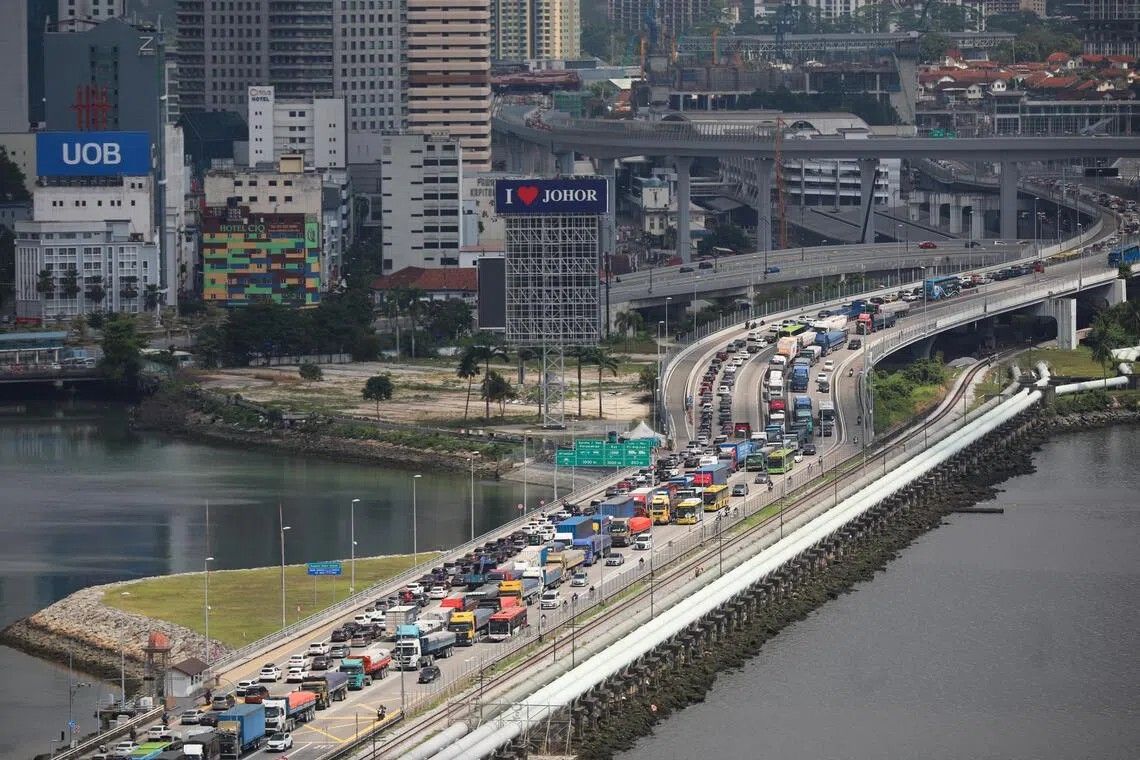
Singapore's Immigration and Checkpoints Authority has issued a cautionary advisory ahead of the National Day long weekend, anticipating substantial traffic volumes at both the Woodlands and Tuas land checkpoints between August 7 and 10. The authority's warning reflects the scale of cross-border movement that typically characterises extended public holidays in the region, when thousands of residents and visitors traverse the causeways connecting Singapore and Malaysia.
Travellers planning journeys during this period are being strongly encouraged to adopt flexible timing strategies, with authorities specifically recommending departure during off-peak windows such as the early morning hours before dawn and the late evening periods after traditional rush hours conclude. This staggered approach aims to distribute traffic flow more evenly across the checkpoint infrastructure and reduce the concentrated pressure during conventional travel times when demand reaches its zenith.
The advisory further emphasises that motorists should undertake preliminary reconnaissance of traffic conditions before setting out, enabling them to make informed decisions about departure timing or potentially adjust their route choices. This proactive information-gathering represents a straightforward but often overlooked step that can substantially mitigate frustration and delays for individual travellers navigating the busy corridors.
Recent cross-border traffic data illustrates the magnitude of movement that these checkpoints handle during holiday periods. Between late May and late June, encompassing the Hari Raya Haji festivities, Vesak Day observances, and the mid-year school holidays, the two checkpoints processed more than 18 million individual travellers. This volume underscores the critical role these facilities play in facilitating regional mobility and the economic connections between Singapore and Malaysia.
Peak daily clearance figures have reached unprecedented levels in recent years. On June 19, the checkpoints processed more than 598,000 travellers, surpassing the previous single-day record of 589,000 set in December 2025. During the busiest hours, passengers travelling by private vehicle have encountered immigration clearance delays extending to three hours, exacerbated by traffic congestion originating from the Malaysian side of the border.
Security protocols have been substantially reinforced since late February, responding to the evolving global threat landscape and regional instability, particularly developments in the Middle East. These heightened measures necessarily extend processing times at immigration, compounding the natural congestion that arises from sheer volume during peak travel periods. The balance between maintaining rigorous security standards and facilitating efficient cross-border movement remains a persistent challenge for border authorities across Southeast Asia.
To accelerate processing, the authority is actively promoting digital solutions already available to travellers. The MyICA mobile application generates QR codes that substantially expedite immigration clearance procedures, allowing users to progress through checkpoints more swiftly than those following traditional document-based processes. For motorcycle riders and pillion passengers, facial recognition technology integrated into the New Clearance Concept has delivered measurable efficiency gains, with clearance rates improving by more than 35 per cent—representing an additional 7,600 travellers per hour during peak departure periods compared with pre-pandemic 2019 levels.
Cooperation from motorists themselves remains essential to maintaining orderly traffic flow and preventing unnecessary delays. The authority has issued explicit guidance requiring drivers to maintain proper lane discipline, adhere to traffic regulations, and crucially, refrain from queue-cutting behaviour. Such breaches disrupt the carefully managed flow of vehicles and impose downstream delays on law-abiding travellers attempting to cross the border legitimately.
Enforcement of traffic regulations has intensified accordingly. During the recent holiday period encompassing Hari Raya Haji, Vesak Day, and the June school holidays, 52 motorists were detained for traffic-related violations and dangerous driving conduct. Consequences for offenders have included formal referral to Traffic Police for investigation and potential prosecution, mandatory repositioning to the rear of queues, and in serious cases, prohibition from entering Singapore altogether.
For Malaysian and regional readers, these traffic challenges have particular resonance. Cross-border shopping, business travel, and family visits constitute significant components of bilateral traffic, with many Malaysians regularly commuting to Singapore for employment or leisure activities. Understanding checkpoint dynamics and compliance with border protocols affects not only individual convenience but also the broader efficiency of trade and people movement that underpins the Singapore-Malaysia economic relationship.
The checkpoint infrastructure at Woodlands and Tuas represents critical nodes in a larger regional transportation network. When congestion occurs at these points, the effects ripple through broader Malaysian transportation corridors, affecting both domestic traffic patterns and movement throughout the southern Johor region. Coordinated advisory campaigns across both jurisdictions remain essential for distributing traffic pressure effectively and minimising systemic disruption.
Travellers should recognise that advance planning, adoption of available digital tools, and adherence to traffic regulations collectively contribute to smoother cross-border experiences. The information provided by authorities is not merely advisory suggestion but reflects operational realities derived from recent experience managing unprecedented traveller volumes. Those who adjust expectations and adopt recommended strategies will likely find their journeys considerably less arduous than those who attempt to cross during peak periods without preparation.

