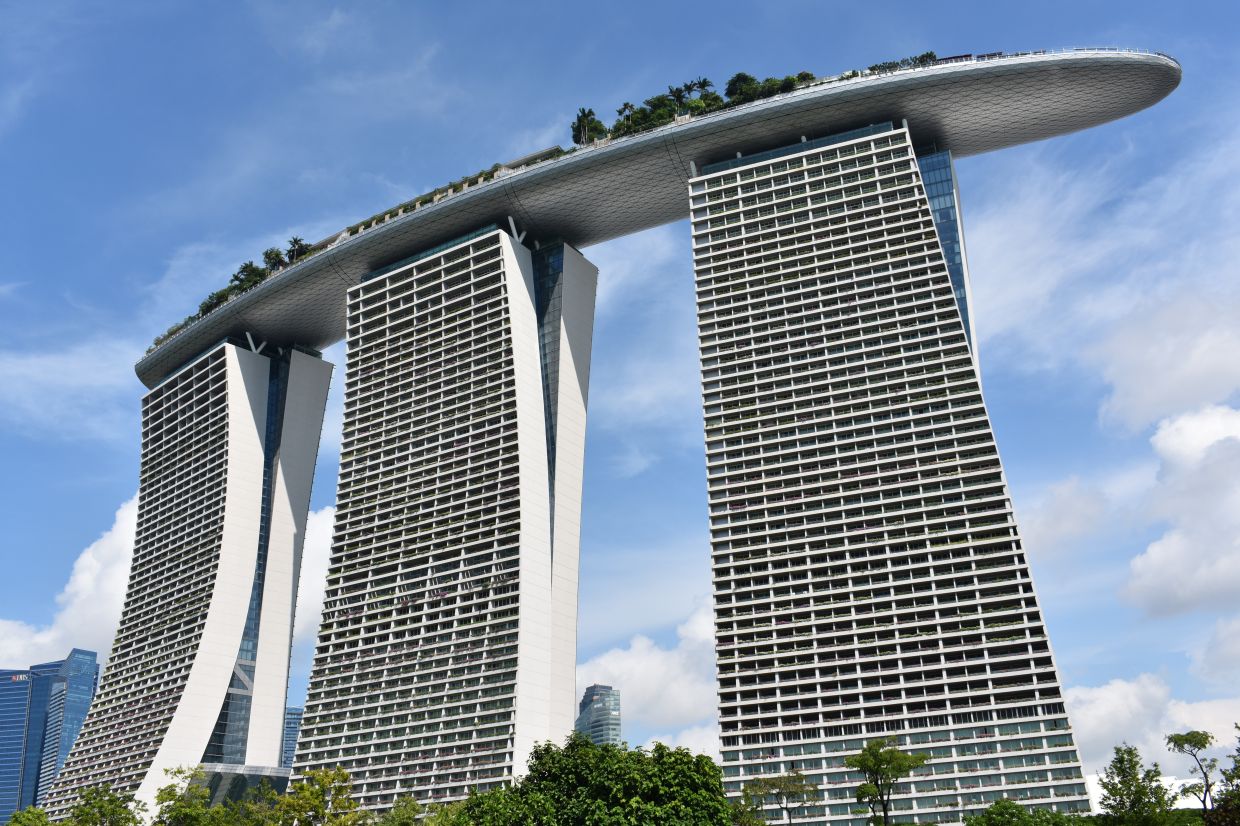
The competitive chasm separating Singapore's two major casinos widened dramatically when Marina Bay Sands offered a luxury Mercedes-Benz CLA 200 as its top Lunar New Year prize for elite gamblers, while Resorts World Sentosa on nearby Sentosa island distributed bottles of Martell Cognac. This seemingly trivial marketing disparity encapsulates a much deeper crisis: the restructuring of Singapore's gaming industry around a clear winner and a struggling challenger as wealth and high-roller traffic increasingly concentrate at one property.
The financial gap between the operators has become staggering. During the first half of 2026, Marina Bay Sands—operated by Las Vegas Sands Corp.—generated casino revenues exceeding $2.1 billion, while Resorts World Sentosa managed less than one-third of that figure. This dramatic imbalance reflects fundamental shifts in how premium gamblers choose between the two integrated resorts, signalling that Genting Singapore Ltd., which operates the Sentosa venue, faces existential challenges in an industry where high-roller spending disproportionately drives profitability.
Regulatory authorities have recognized the deteriorating performance at Sentosa and responded with measures designed to prompt improvement. In November 2024, Singapore's Gambling Regulatory Authority formally described the resort's tourism performance as "unsatisfactory," a stark departure from routine license administration. Rather than grant the customary three-year renewal, regulators issued a truncated two-year license effective February 2025, creating pressure through uncertainty. The authority is now assessing the current renewal application, with a decision promised before the February 2027 expiration date. This conditional approach functions as what industry observers characterize as a "soft threat"—regulatory leverage intended to galvanize operational transformation without immediate revocation.
Singapore's exceptional post-pandemic recovery in tourism and gaming demand has paradoxically benefited only one casino operator. The wealthy city-state has attracted escalating numbers of affluent visitors from neighbouring countries and mainland China, particularly those drawn by Singapore's visa-free entry policy and reputation for discretion. Chinese high rollers, increasingly concerned that gambling activities in Macau could expose them to unwanted scrutiny by Beijing authorities, have migrated to Singapore as a privacy-conscious alternative. Simultaneously, Chinese government crackdowns on casino junket networks and illicit money-exchange operations in Macau have redirected gambling capital toward Southeast Asia. Marina Bay Sands has captured the lion's share of this capital reallocation.
The VIP gambler concentration reveals the most acute problem. Resorts World Sentosa's share of the VIP market collapsed from a leading position in 2023 to approximately 20 percent in the first quarter of 2026, though it subsequently recovered to 36 percent—a trajectory suggesting structural challenges rather than temporary fluctuation. These high-rollers, who typically deposit or spend minimum thresholds of S$100,000 to qualify for membership, generate outsized revenue contributions relative to casual mass-market gamblers. Marina Bay Sands' VIP clubs now dwarf those at Sentosa in both membership and activity levels, according to individuals familiar with both operations. This divergence has profound implications for casino profitability, as the spending patterns of elite customers overwhelmingly determine operating margins and returns.
Marketplace feedback indicates that Resorts World Sentosa's operational shortcomings have become increasingly apparent to its most valuable clientele. VIP club members have lodged complaints regarding what they characterize as aging infrastructure, slow responsiveness to customer concerns, and inefficient processes for currency and chip transactions. Marina Bay Sands, by contrast, differentiates its VIP experience through butler-serviced suite accommodations, complimentary tickets to theatrical productions, dining credits, and an environment fundamentally positioned as premium and contemporary. The parent property's broader ecosystem—including three iconic 57-story hotel towers with an acclaimed rooftop installation, fine art museum, and luxury shopping—reinforces positioning as a comprehensive high-end destination, whereas Sentosa's aging components create an impression of decline.
Genting Singapore has initiated a substantial remediation effort, announcing a S$6.8 billion capital programme to rehabilitate and expand the resort through 2030. This initiative encompasses construction of an all-suite luxury hotel, expansion of the oceanarium, and integration of Super Nintendo World into the existing Universal Studios Singapore precinct. However, this long-term modernization timeline offers little immediate relief. Marina Bay Sands has simultaneously commenced its own $8 billion transformation, incorporating an additional 55-story hotel tower and live entertainment complex. Given the extended construction horizons and competing investments, the catch-up challenge for Sentosa appears formidable—any renovation advantage dissipates when competitors simultaneously upgrade infrastructure.
The structural advantages favouring Marina Bay Sands extend beyond physical plant. That property benefits from demonstrable brand momentum, proven customer loyalty among high-rollers, and the psychological perception of being Singapore's premier gaming destination. Recent quarterly performance data showed Marina Bay Sands experiencing temporarily weaker VIP revenues during the World Cup period, when some international gamblers redirected spending toward sports entertainment—a minor setback that Resorts World Sentosa partially exploited. Yet such marginal opportunities underscore the fundamental problem: Sentosa gains ground only when the market leader experiences external disruptions, not through competitive superiority.
For Malaysian observers, this Singapore casino rivalry carries notable implications. Genting Singapore Ltd. is majority-owned by Malaysia's Genting Group, a diversified leisure, real estate, and hospitality conglomerate with extensive regional operations. The struggling performance of its Singapore flagship casino operations reflects not merely local market dynamics but broader competitive pressures affecting the Malaysian parent company's gaming portfolio. As affluent Asian gamblers increasingly concentrate their activity at premium Singapore properties rather than distributing spending across regional venues, Malaysian gaming operations face headwinds in the high-roller segment—the most profitable market segment. This dynamic reinforces the concentration of gaming revenue within Singapore's carefully regulated, premium-positioned market.
Industry consultants privately acknowledge the probability of continued market share deterioration for Resorts World Sentosa absent dramatic operational transformation. Ben Lee, managing director at Macau-based gaming consultancy IGamiX, assesses that Sentosa has fundamentally failed to match Marina Bay Sands' carefully cultivated luxury positioning and experiential offerings to elite clientele. The integrated resort's inability to replicate the "luxuriate experience" that defines Marina Bay Sands creates an asymmetrical competition where one player perpetually trails. Regulatory pressure through conditional licensing, though uncomfortable for Genting Singapore, may ultimately prove insufficient to reverse market dynamics driven by customer preference, property superiority, and accumulated brand reputation.
Looking forward, Singapore's casino regulatory environment will function as a critical variable. The Gambling Regulatory Authority's decision on the February 2027 license renewal will signal whether current performance improvements justify restoration of standard three-year terms or whether additional pressure mechanisms remain necessary. This regulatory process creates strategic uncertainty that compounds Sentosa's competitive disadvantage. Meanwhile, Marina Bay Sands' March 2025 three-year license renewal provided clear regulatory affirmation of superior performance. The divergent treatment—shortened terms for one operator, standard terms for the other—crystallizes official judgment about relative merit and competitive positioning, potentially accelerating high-roller migration as sophisticated gamblers interpret regulatory messaging as predictive of future investment and property quality.

