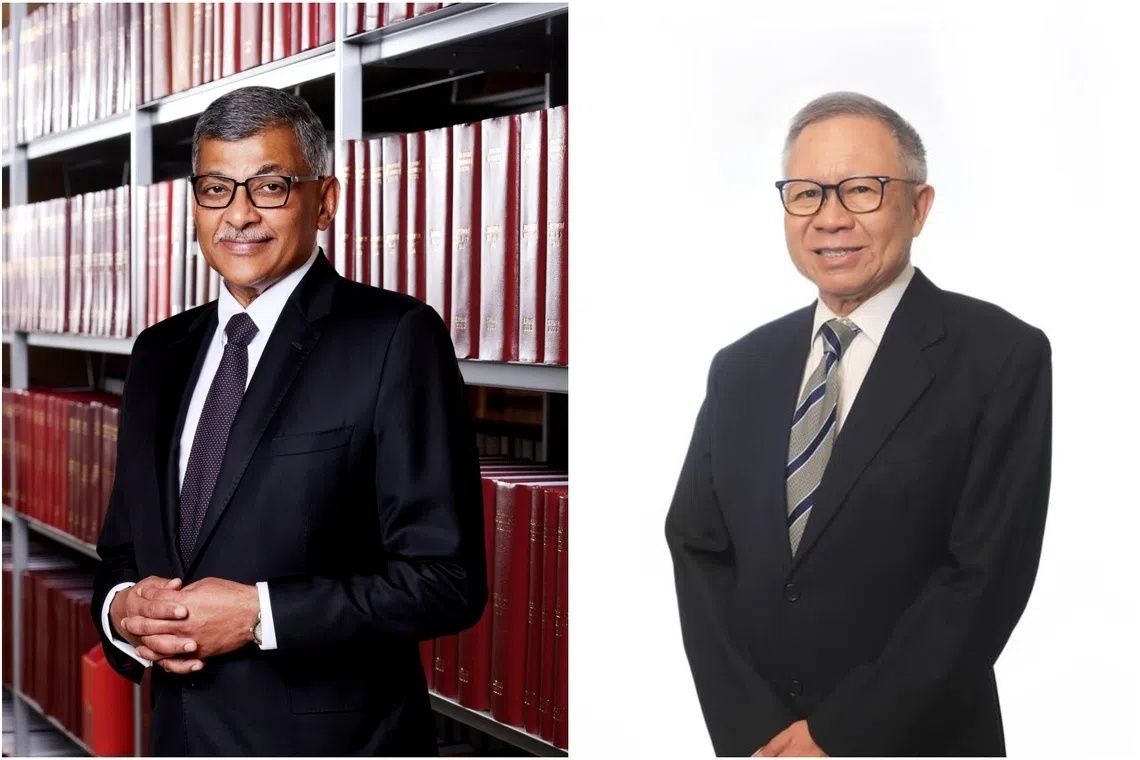
Chief Justice Sundaresh Menon and Eddie Teo, the former chairman of Singapore's Council of Presidential Advisers, have been elevated to the nation's most prestigious civilian honour—the Order of Temasek (With Distinction)—at this year's National Day Awards ceremony. The recognition comes as part of a broader honours programme that will see 7,491 individuals recognised for their service to the republic in 2026.
Menon, who is 62 years old, will formally step down from his position as head of the judiciary on February 26, 2027, concluding a 14-year tenure that began in November 2012. His leadership has been marked by extensive modernisation of Singapore's legal infrastructure and a fundamental reimagining of how the courts serve the public. The judiciary he has overseen has implemented sweeping digital transformation, created new institutional frameworks, and successfully enhanced public trust in the administration of justice.
Throughout his time leading the judiciary, Menon has stewarded several landmark initiatives that have positioned Singapore's legal system among Asia's most advanced. The establishment of the Appellate Division within the High Court and the creation of the Singapore International Commercial Court reflect his strategic vision for broadening the jurisdiction and capacity of Singapore's courts. These institutions have strengthened the nation's position as a regional legal hub, attracting international arbitration and commercial disputes. Additionally, the introduction of therapeutic justice methodologies in both the Family Justice Courts and Youth Courts represents a philosophical shift toward rehabilitation and healing rather than purely punitive approaches to criminal justice.
Menon's investment in judicial excellence has extended to the establishment of the Singapore Judicial College, an institution dedicated to continuous professional development for judges and legal professionals. This institution underscores his belief that judicial independence and competence are foundational to the rule of law. In his statement following the announcement, Menon emphasised that Singapore's commitment to the rule of law has been central to its governance framework since independence, and that the development of a world-class legal system is a collective endeavour involving judges, court staff, and members of the legal profession.
The timing of Menon's honour carries symbolic significance, as it coincides with the bicentennial of Singapore's legal and judicial system. The recognition therefore honours not only his personal contributions but also the broader institutional achievements of the judiciary during his leadership. Menon framed the award as recognition of the collective work that has sustained public confidence in justice administration over two centuries.
Teo, aged 79, brings a different but equally substantial trajectory of public service. He retired in 2018 as chief of the Public Service Commission, culminating close to five decades of continuous service to the government. His career trajectory reflects the meritocratic pathways that characterised Singapore's civil service during its developmental years. Teo began his career in 1970 with the Ministry of Defence's Security and Intelligence Division and rose to become its director at the remarkably young age of 31, a position he held from 1979 to 1994. He subsequently served as permanent secretary for defence between 1994 and 2000, and held the prominent role of permanent secretary in the Prime Minister's Office from 1998 to 2005.
During his stewardship of the Public Service Commission from 2008 to 2018, Teo deliberately broadened the diversity of the institution's board membership, bringing together individuals from academia, law, and social work. This effort to diversify the commission's composition reflected contemporary thinking about the importance of varied perspectives in institutional leadership. Following his retirement from the PSC, Teo was appointed to the Council of Presidential Advisers and served as its chairman until June 2026, positions that kept him engaged in shaping high-level policy discussions.
Teo's most personally formative experiences came during his first two decades in government, when he worked directly under Singapore's founding leaders and pioneers. His collaboration with Lee Kuan Yew, Goh Keng Swee, and former President S. R. Nathan provided him with mentorship and inspiration that animated his entire career. Reflecting on these relationships, Teo noted that his senior leaders demonstrated the possibilities of dedicated public service and instilled in him a commitment to excellence and integrity that persisted across his five-decade career.
One episode that Teo highlighted as particularly significant occurred during his tenure at the Council of Presidential Advisers in the midst of the Covid-19 pandemic. When the Government proposed drawing approximately S$40 billion (US$31.3 billion) from Singapore's accumulated reserves—the largest such withdrawal in the nation's history—the Council engaged in thorough deliberation before approving the proposal. This episode, occurring under then-President Halimah Yacob's watch, allowed Singapore to implement substantial economic stimulus measures without accumulating public debt, thereby protecting businesses and employment during a global crisis. Teo's role in facilitating this critical decision underscores the importance of the institutional checks and balances embodied in the Council of Presidential Advisers.
Both Menon and Teo, in their respective statements, have emphasised the importance of public service as a worthwhile and meaningful career path. Menon's reflection on his 14 years leading the judiciary frames it as the greatest privilege of his professional life, while Teo explicitly addressed prospective civil servants, noting that government service offers intrinsic rewards and intellectual challenges that rival, if not exceed, those available in the private sector. This messaging carries particular importance given contemporary competition for talent, as Singapore's public institutions seek to attract and retain capable leaders.
The honours programme extends beyond Menon and Teo to recognise other senior figures who have made substantial contributions across multiple sectors. The Distinguished Service Order, the second-highest honour, was awarded to five individuals, including Land Transport Authority chairman Alan Chan, who has led significant infrastructure advances since 2016. Under Chan's leadership, rail reliability metrics have improved dramatically, from 393,000 mean kilometres between failures in 2017 to two million in 2026, while major projects including the Thomson-East Coast Line and Singapore Rail Test Centre have been delivered. Former Civil Aviation Authority of Singapore chairman Edmund Cheng was similarly recognised for his multifaceted contributions spanning aviation, rehabilitation of ex-offenders, and support for the arts.
The breadth of this year's honours—recognising over 7,400 individuals across diverse sectors—reflects the structural complexity of modern Singapore and the sustained contributions required to maintain its competitive position in Southeast Asia. For Malaysian and regional observers, the honours system offers insight into how Singapore institutionalises meritocracy and recognises leadership across both government and wider society. The recognition of judicial leadership, civil service excellence, and sectoral innovation in transport and aviation reflects the nation's strategic priorities and its commitment to institutional quality as a foundation for sustained development.

