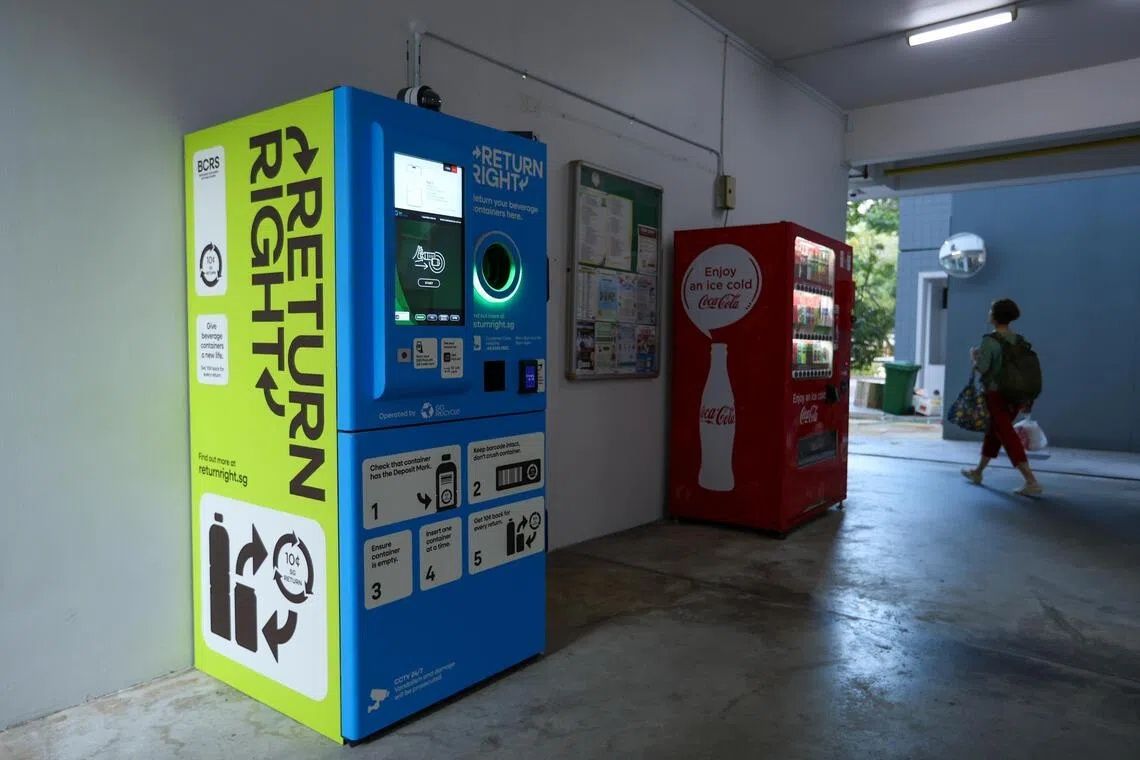
Singapore's National Environment Agency has moved swiftly to address escalating concerns about the integrity of its Beverage Container Return Scheme, issuing a public statement on August 15 to counter allegations of misappropriation and corruption that have gained traction in online discussions. The agency's response underscores the sensitivity surrounding public-sector management of environmental initiatives, particularly when substantial sums of consumer deposits are involved, and reflects broader challenges facing governments across Southeast Asia as they introduce deposit return systems to combat plastic waste.
The controversy centres on a communication gap that emerged following remarks made by Senior Minister of State for Sustainability and the Environment Janil Puthucheary in Parliament on August 5. When the minister disclosed that the scheme had processed just over one million successful refund transactions across 5.5 million beverage containers returned between April and July, a significant portion of online commentators interpreted this statistic through a troubling lens. Many observers concluded that only one million containers had been refunded, suggesting that the deposits on approximately 4.5 million returned containers—roughly equivalent to S$450,000—had somehow vanished from the system without explanation.
This misunderstanding illustrates how statistical data can be weaponised in the digital sphere when presented without sufficient granularity. The National Environment Agency's clarification reveals that the parliamentary statement, while accurate, lacked the contextual detail necessary to prevent misinterpretation. Consumers utilising the reverse vending machines typically return multiple containers in a single transaction rather than processing them individually, meaning that the 5.5 million containers were collected across 1.05 million distinct machine interactions. This distinction, though mathematically straightforward, proved crucial in undermining the corruption narrative that had begun circulating online.
Calculations provided by the agency demonstrate that the average consumer returned approximately 5.5 containers per transaction. Since each beverage container carries a mandatory 10-cent deposit under the scheme's framework, the total amount refunded across the April-to-July period reached approximately S$550,000, equivalent to roughly US$429,822. This figure aligns precisely with what would be expected given the volume of containers processed, leaving no unaccounted funds and effectively eliminating the mathematical foundation upon which conspiracy theories had been constructed. The agency's willingness to provide granular financial data serves as a reminder that transparency in environmental governance can be a powerful antidote to speculation.
The Beverage Container Return Scheme itself, which commenced operations on April 1, represents Singapore's ambitious attempt to incentivise recycling through economic means. Customers pay an additional 10 cents when purchasing canned or bottled beverages, with the expectation that this deposit will be recovered when the empty containers are deposited into reverse vending machines located at supermarkets and other retail points. The mechanism is relatively simple but requires significant infrastructure investment and operational reliability to function effectively. Singapore's early experience with the scheme offers valuable lessons for other Southeast Asian nations contemplating similar deposit return systems, particularly regarding the importance of getting the communication strategy right from the outset.
The scheme has not been without operational friction since its launch. During the initial months, some users reported technical failures at the machines that prevented them from receiving their refunds immediately, requiring them to submit email complaints to the scheme operator to recover their deposits. Other customers encountered systematic rejections of their container returns, creating frustration and eroding confidence in the system's fairness. These technical issues, though apparently limited in scale, created the conditions in which broader accusations of mismanagement could flourish. Senior Minister Janil acknowledged these problems in his August 5 parliamentary statement, noting that while the vast majority of transactions had proceeded smoothly, the scheme operator had worked to resolve the handful of issues that had arisen.
The operational structure of the Beverage Container Return Scheme incorporates built-in accountability mechanisms designed to prevent precisely the kind of financial malfeasance that online commentators had alleged. The operator, known as BCRS, is required to submit annual financial reports to the National Environment Agency, providing detailed accounts of its finances and the disposition of all collected deposits. This regulatory framework is theoretically robust enough to detect even sophisticated attempts at misappropriation, though its effectiveness depends on the competence and independence of the oversight body. The fact that such oversight exists, however, provided the National Environment Agency with a powerful counter-argument to the allegations.
For Malaysian readers and policymakers contemplating the introduction of similar extended producer responsibility and deposit return mechanisms, Singapore's experience offers several instructive takeaways. First, the political and reputational stakes surrounding environmental schemes can be surprisingly high, particularly when they involve the collection and return of public money. Second, clear communication of operating metrics from the outset is essential; allowing statistical ambiguity to persist creates space for malicious or mistaken interpretation. Third, technical reliability is not merely an operational concern but a political necessity, as machine failures generate the very frustrations that fuel broader accusations of system failure.
The broader context for this dispute extends beyond Singapore's borders. Across Southeast Asia, governments are increasingly introducing environmental levies and deposit schemes to combat escalating waste problems, particularly plastic waste accumulation in urban areas and marine environments. These initiatives, while well-intentioned, introduce new opportunities for public misunderstanding and occasionally for genuine malfeasance. As more countries in the region implement similar schemes, they will face comparable challenges in ensuring both actual integrity and public confidence in their administration. Singapore's relatively transparent response to these allegations, despite their stinging implication, contrasts with more opaque approaches that might be adopted elsewhere and may establish a regional standard for environmental governance accountability.
The National Environment Agency's assertion that accusations of misappropriation or corruption are "misplaced" carries weight precisely because it is accompanied by verifiable data and an explanation grounded in operational reality rather than defensive rhetoric. The agency's willingness to engage with online criticism directly, rather than dismissing it as the work of troublemakers, demonstrates an understanding that public buy-in is essential to the long-term success of voluntary environmental programmes. As consumers in Singapore and other Southeast Asian nations become more accustomed to deposit return schemes and extended producer responsibility initiatives, the willingness of implementing agencies to communicate clearly and address concerns head-on will likely become a decisive factor in determining whether these programmes achieve their environmental objectives or instead become mired in political controversy.

