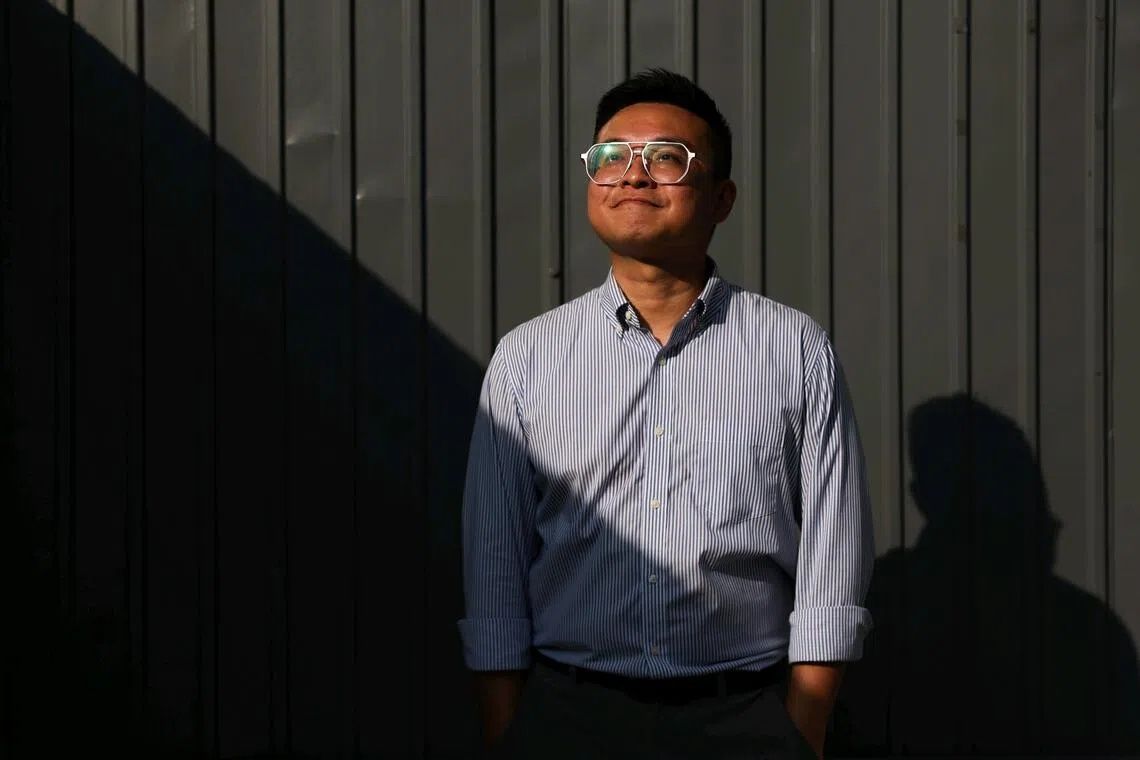
The carefully curated success story unravelled quietly for Cornelyus Tan, whose career in marketing masked a deepening dependence on methamphetamine that would eventually land him in Changi Prison's Drug Rehabilitation Centre for six months in 2022. His experience revealed an uncomfortable truth about Singapore's educated elite: professional achievement and academic credentials offer no immunity against addiction. Reflecting on his time in detention surrounded by teachers, lawyers, bankers and other accomplished individuals wrestling with similar demons, Tan articulated the paradox at the heart of this phenomenon. "On paper, we look well. We are all very successful. But at the core of it, we had a common problem – the heart," the 37-year-old observed, speaking publicly about his ordeal for the first time.
Statistical evidence underscores the scale of this challenge in Singapore's affluent society. The Drug Rehabilitation Centre housed 293 inmates with tertiary education or higher qualifications in 2025, nearly a 44 per cent increase from 204 such inmates in 2021 according to Singapore Prison Service records. These newly admitted inmates with advanced education represented approximately one in ten admissions in 2025, an uptick from 8.8 per cent four years earlier. The educational credentials ranged across a broad spectrum, encompassing polytechnic diplomas, university degrees, and advanced doctorates. While the Central Narcotics Bureau attributes some of this growth to Singapore's overall population becoming more educated—the proportion of residents aged 25 and above with at least tertiary education expanding from 42.9 per cent to 54.5 per cent over the past decade—officials acknowledge that tertiary-qualified individuals remain statistically underrepresented in the DRC inmate population relative to their share of the broader community.
Yet the involvement of highly educated professionals continues to generate public surprise, as demonstrated by the recent conviction of a medical doctor for drug use. This phenomenon challenges deeply embedded assumptions about who becomes vulnerable to substance abuse. Counsellors working directly with drug offenders consistently observe that addiction operates independently of educational attainment or professional status. Gopal Mahey, a senior counsellor at the Centre for Psychotherapy, emphasises that drug use has thoroughly penetrated all demographic strata of Singapore's society. The expansion of the global drug market, coupled with the proliferation of synthetic drugs designed to evade detection and regulation, has fundamentally altered the landscape of substance availability. Technological innovation, rather than serving purely protective functions, has paradoxically democratised access to illicit substances across all segments of the population.
The digital revolution has particularly transformed how drugs reach educated professionals who might previously have remained isolated from the underground economy. We Care Community Services' executive director Tham Yuen Han notes a fundamental shift in distribution mechanisms. Historically, individuals typically encountered illicit drugs through established social networks—family members, friends with addiction histories, or neighbourhood drug dealers operating through conventional channels. The contemporary reality differs markedly: social media platforms and messaging applications like Telegram have become virtual marketplaces where drugs arrive unsolicited into the digital spaces of potential users. This technological accessibility eliminates traditional barriers that once protected those with privileged backgrounds and stable employment from drug exposure.
Multiple reinforcing factors explain why educated professionals increasingly turn to substance abuse. The Central Narcotics Bureau identifies peer influence, social media promotion, and cultural messaging that glamorises drug use or minimises its dangers as significant contributors. Exposure to more permissive drug attitudes encountered during overseas experiences or educational pursuits abroad cultivates a different perspective on substance consumption compared to Singapore's strict regulatory environment. For many accomplished professionals, drugs initially present not as destructive forces but as solutions to manageable problems. Substances promise enhanced productivity, stress relief, and social connection—outcomes that feel particularly valuable to individuals accustomed to high performance and achievement.
Tan's introduction to methamphetamine at a house party in 2014, when he was 25 years old, an aspiring fashion photographer, and an arts college student, exemplified this dynamic. Methamphetamine, locally known as Ice, has become one of the most frequently abused substances among tertiary-educated individuals arrested in 2025, competing for prevalence with cannabis, Ecstasy, and heroin. The drug delivered what Tan describes as a "Superman effect"—an overwhelming rush of adrenaline and sustained efficiency that felt transformative. "I was able to think creatively. There were many good comments about my work," he recalled. "Everything that I found (was like) 'Wow, it's an inspiration'." This perception of enhancement rather than impairment proved particularly seductive, with a news outlet profiling him in 2015 as a promising emerging photographer, a validation that seemed to confirm the drug's facilitative properties.
Tan eventually ceased using methamphetamine after observing its physical toll—noticeable weight loss and constant perspiration—but remained vulnerable to relapse. In 2020, when professional pressures intensified as a regional marketing manager for an e-commerce firm, the psychological pull returned. The internal dialogue resumed: why not use drugs when he understood their potential benefits? The pattern repeated until his 2022 arrest. His approach involved carefully managed cycles of use followed by enforced abstinence periods, creating the illusion of controlled consumption even as dependency deepened. A former junior college teacher identified only as John employed similar strategies, concealing his addiction for approximately six months while continuing classroom duties after encountering methamphetamine at a social gathering in 2015. He initially framed drug use as merely an attempt to connect with peers, yet gradually the substances and an abusive relationship extracted mounting tolls, causing him to miss teaching commitments. When his reporting officer became suspicious, he constructed elaborate excuses to maintain the facade.
Experts including Samuel Chua, principal counsellor at the Institute of Mental Health's National Addictions Management Service, argue that educated professionals experience addiction's underlying mechanics identically to other affected populations—the fundamental human desire to escape pain, distress, and emotional discomfort drives substance use across all educational and socioeconomic backgrounds. However, education and professional success can paradoxically complicate recognition and treatment of addiction. Individuals accustomed to solving problems through intelligence and capability often harbour confidence that they can moderate their drug consumption through willpower and rational management. This perceived control becomes a psychological trap, allowing continued use under the false assurance that they differ fundamentally from stereotypical addicts. The shame and cognitive dissonance created by addiction contradicting their self-image as successful and capable individuals frequently prevents timely help-seeking, allowing substance dependence to progress further before intervention occurs.
The implications of this trend extend beyond individual tragedy into broader social and public health considerations. If substance abuse no longer correlates predictably with socioeconomic disadvantage, education levels, or employment status, Singapore's prevention and treatment frameworks require recalibration to reach populations previously assumed to be naturally protected by their circumstances. The assumption that success and achievement provide inherent buffers against addiction has proven dangerously misleading. Workplace screening programmes, community education initiatives, and healthcare provider training must recognise that colleagues, supervisors, and friends may harbour hidden dependencies regardless of their apparent prosperity and professional accomplishment. The visible success that masks internal struggles demands a more sophisticated, empathetic approach to recognising addiction and removing stigma that prevents help-seeking behaviour.
For Malaysian observers, Singapore's experience offers instructive cautionary lessons as digital commerce and social media connectivity expand across the region. The mechanisms enabling drug access in Singapore—social platforms, encrypted messaging applications, and online transactions—operate identically in Malaysia, Thailand, and other Southeast Asian nations. Rising education levels and middle-class expansion throughout the region create similar populations of accomplished young professionals potentially vulnerable to the same pressures and temptations that ensnared individuals like Tan. Without deliberate preventive efforts, investment in mental health support, and honest public discourse about addiction's capacity to affect anyone regardless of background, Malaysia and neighbouring countries may experience their own versions of this troubling phenomenon. Understanding that drug addiction represents not a personal moral failing confined to society's margins but rather a health condition affecting educated, accomplished individuals from all backgrounds should reshape how policymakers, employers, healthcare providers, and communities approach prevention, treatment, and recovery throughout Southeast Asia.

