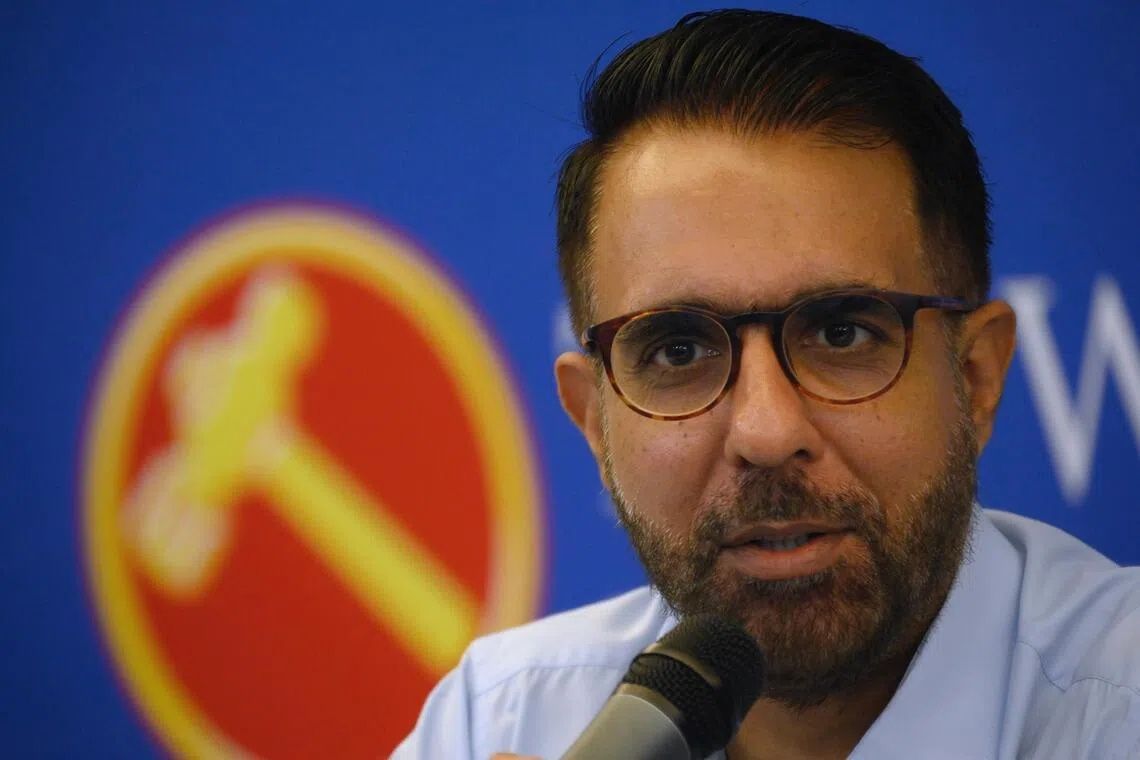
The Singapore Workers' Party is heading toward an unprecedented internal contest that could reshape the opposition's leadership landscape. Discontent within the party's core membership has crystallized around Pritam Singh following a December 2025 High Court decision that upheld his conviction for providing false testimony to a parliamentary committee. Around 25 cadres have formally requested a special general meeting scheduled for June 28, signaling the most serious challenge to Singh's position since he assumed the secretary-general role eight years ago.
The grievances driving this movement extend beyond the legal conviction itself. Party insiders reveal that the real tension centers on how Singh managed the earlier crisis involving former Sengkang GRC MP Raeesah Khan, who admitted in late 2021 to fabricating a parliamentary anecdote. The discontented faction argues that Singh failed to promptly ask Khan to clarify the falsehood when it first emerged in August 2021, instead allowing nearly three months to pass before the admission. This delayed response, they contend, compromised the party's foundational brand as an integrity-focused opposition alternative.
Internally, potential challengers are being identified and canvassed, though none have publicly declared their intentions. Names circulating among party cadres include Aljunied GRC MP Gerald Giam and Hougang MP Dennis Tan, alongside Sengkang MPs He Ting Ru and Jamus Lim. The latter pair carry particular significance as members of the three-person disciplinary panel that found Singh violated party constitutional provisions. However, the fluid nature of party politics means the final slate of candidates remains uncertain even as the election date approaches.
A critical wildcard in this contest is former party chief Low Thia Khiang, who led the Workers' Party from 2001 to 2018 and remains a central executive committee member with substantial influence among cadres. Intelligence from within the party suggests that Low may have voted against Singh during recent disciplinary proceedings, potentially signaling a shift in the mentorship relationship between the two men. If Low formally endorses a challenger, party insiders estimate that approximately 30 votes could align with such a candidate, potentially sufficient to unseat Singh who requires only a simple majority to retain his position.
The psychological weight of Low's potential defection cannot be understated in Singapore's tightly-knit opposition circles. Low achieved historic breakthroughs for the Workers' Party, including securing the first opposition Group Representation Constituency win in 2011. His 2016 re-election campaign faced a challenge from former Aljunied MP Chen Show Mao, backed by the same veteran cadres now seeking Singh's removal, establishing a pattern of factional maneuvering within the party hierarchy.
Beyond personality and principle, broader strategic questions have animated discontent. The party's performance at the 2025 general election disappointed many members who believed the caliber of candidates warranted territorial gains. Singh's decision to withdraw from Marine Parade-Braddell Heights GRC on nomination day has drawn particular criticism, with some cadres questioning the tactical calculation. Additionally, Singh's loss of the Leader of the Opposition title—surrendered to the government in January 2026 after the conviction—represented a visible diminishment of the party's parliamentary standing, though the Workers' Party declined Prime Minister Lawrence Wong's invitation to nominate another MP for the position, instead maintaining solidarity with Singh.
The procedural architecture of the June 28 elections adds layers of complexity to the unfolding drama. The meeting will comprise two distinct proceedings: first, a special conference where Singh must account for his actions and face potential calls for resignation; and second, the regularly scheduled biennial cadres' conference to elect party leadership. The 100-plus cadre members who constitute the party's inner circle possess exclusive voting rights. Singh faces no explicit restrictions on contesting re-election despite the formal reprimand he received two months prior.
Party insiders emphasize that outcomes at the first meeting could shape whether a challenger emerges at the second. A decisive Singh victory or his voluntary resignation would alter the tactical calculus entirely, whereas a narrow victory or forced removal could encourage a challenger to step forward. The secrecy provisions available under party rules—which allow for closed ballots should Singh refuse to resign voluntarily—add another dimension to how events might unfold.
For Malaysian and regional observers, the Workers' Party's internal upheaval carries implications beyond Singapore's borders. The party represents the region's most electorally competitive opposition force in a developed democracy, and questions about institutional integrity and leadership accountability resonate across Southeast Asia. The tension between Singh's personal political survival and the broader credibility of the opposition project illustrates how individual missteps in leadership can cascade into organizational crises, particularly when the founding narrative centers on ethical differentiation from the ruling establishment.
The conviction itself derived from Singh's testimony before Parliament's Committee of Privileges regarding his knowledge of Khan's fabricated anecdote. Rather than immediately encouraging correction, he allegedly helped maintain the narrative, constituting misleading conduct before a parliamentary body. This directly undermines the Workers' Party's decades-long positioning as the principled alternative, a positioning that resonates with voters fatigued by perceived governmental arrogance.
Cadres have articulated this concern with striking clarity, noting that public trust in the party depends fundamentally on demonstrable moral differentiation. One anonymous party member captured the sentiment plainly: the Workers' Party commands voter support precisely because citizens believe it operates to genuinely different standards than the ruling government. A convicted leader, regardless of mitigation, threatens that carefully constructed distinction. The party risks appearing to protect its own leadership through the same opacity and self-interested maneuvering that citizens criticize in the establishment.
Ultimately, the June 28 elections will test whether Singapore's opposition party can enforce institutional accountability on its own leadership. The outcome will likely determine not only Singh's personal political trajectory but also the Workers' Party's capacity to argue credibly that it represents systemic change. The involvement of party elder Low Thia Khiang and the demonstrated willingness of a substantial cadre faction to challenge entrenched leadership suggest that this contest will not be predetermined, marking a significant moment for Singapore's democratic culture and regional opposition politics.

