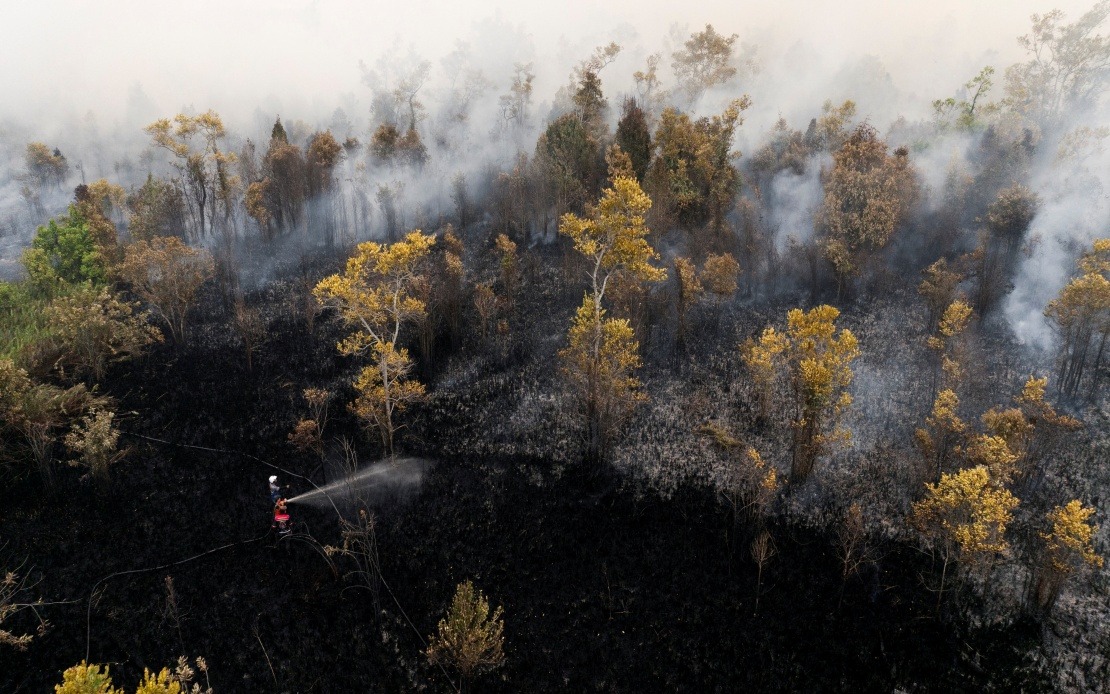
Singkawang Airport in Indonesia's West Kalimantan province announced a complete shutdown of flight operations on Saturday, citing hazardous atmospheric conditions created by widespread forest and land fires engulfing the Kalimantan region. The suspension affects all domestic services operating from the facility, which sits approximately 145 kilometres north of provincial capital Pontianak on the western side of Borneo. Airport management advised passengers to reach out directly to their airlines for rebooking and compensation information, emphasizing that the decision prioritized passenger and crew safety above operational schedules.
The decision underscores mounting concerns about the seasonal fire crisis that has repeatedly disrupted commercial aviation across Southeast Asia. Indonesian authorities, including the Transport Ministry's Directorate General of Civil Aviation, have implemented stringent protocols requiring immediate operational adjustments whenever atmospheric visibility deteriorates beyond safe thresholds for landing and takeoff procedures. This cautious approach reflects aviation safety standards that treat reduced visibility as a fundamental threat to aircraft operations, necessitating cancellations or diversions even when runways remain physically accessible.
Director-General Lukman F. Laisa emphasized that visibility remains the paramount consideration in aviation safety decisions, with operators obligated to modify schedules whenever conditions fall short of regulatory minimums. The official statement noted that the Transport Ministry maintains continuous coordination with airport operators, meteorological agencies, and other stakeholders to assess conditions and implement necessary restrictions. This collaborative monitoring approach has become standard practice during peak fire seasons when multiple airports across Kalimantan face potential disruption simultaneously.
Satellite monitoring conducted by NASA's Terra and Aqua systems revealed the geographical extent of the fire problem as of Friday evening. Surveillance data identified 56 confirmed hotspots in Central Kalimantan, 51 in West Kalimantan, and 19 in South Kalimantan, totalling 126 active fire signatures across the three provinces. The Meteorology, Climatology and Geophysics Agency (BMKG) simultaneously reported that portions of West and Central Kalimantan were experiencing air quality levels classified as hazardous, suggesting widespread smoke penetration throughout the region beyond immediate fire locations.
Response efforts have mobilized multiple intervention strategies. Ground-based firefighting teams and aerial operations, including water-bombing missions, continued around the clock as of the ministry's latest update. Additionally, authorities prepared weather modification protocols—commonly known as cloud-seeding operations—to accelerate precipitation when atmospheric conditions permitted. These interventions represent Indonesia's established playbook for managing seasonal fire crises, though their effectiveness often depends on cooperation from meteorological conditions and adequate resource allocation.
The enforcement dimension of the government's response extends beyond firefighting operations. Central Kalimantan police had identified approximately twelve suspects in forest and land fire cases by mid-August, according to Inspector-General Iwan Kurniawan. All fires across the province are undergoing investigation to establish causal factors and assign criminal responsibility. This investigative push suggests authorities are attempting to distinguish between natural fire ignition and deliberate arson, with particular attention to identifying corporate or individual actors responsible for illegal land clearing operations.
For Malaysian readers, the Singkawang disruption carries immediate relevance given regional aviation connectivity and cross-border air travel patterns. Malaysian airlines operating routes through Kalimantan face potential scheduling complications and passenger rerouting challenges whenever Indonesian airports implement safety-driven closures. Additionally, air quality monitoring in Malaysian Borneo states including Sarawak has historically shown correlation with fire activity in adjacent Indonesian provinces, meaning developments in Kalimantan often foreshadow potential haze episodes affecting Malaysia's eastern regions.
The recurrence of such disruptions reflects broader environmental challenges affecting Southeast Asia's aviation sector. Kalimantan's fire cycles have become increasingly predictable seasonal phenomena, occurring during dry months when moisture content in vegetation and soil decreases significantly. This pattern suggests that long-term solutions require addressing underlying land-use practices and enforcement of existing regulations against illegal clearing operations that create fuel loads vulnerable to ignition during dry periods.
The coordination required to manage airport closures across a region demonstrates how environmental crises transcend single-airport problems. When visibility deteriorates at Singkawang, potential congestion at alternative airports in Pontianak or other regional hubs creates cascading disruptions affecting multiple operators and hundreds of passengers. This interconnected impact underscores why regional cooperation on fire prevention and air quality monitoring has become essential infrastructure for Southeast Asian aviation and economic activity.
Indonesia's multifaceted response combining firefighting operations, weather modification preparations, and criminal investigations reflects acknowledgment that fire management requires simultaneous tactical and strategic approaches. Immediate firefighting addresses current threats to aviation safety, while investigations targeting responsible parties aim to establish accountability and potentially deter future illegal clearing operations. However, the recurring nature of these disruptions suggests that sustained results require long-term commitments to enforcement and land-use planning extending beyond individual fire seasons.

