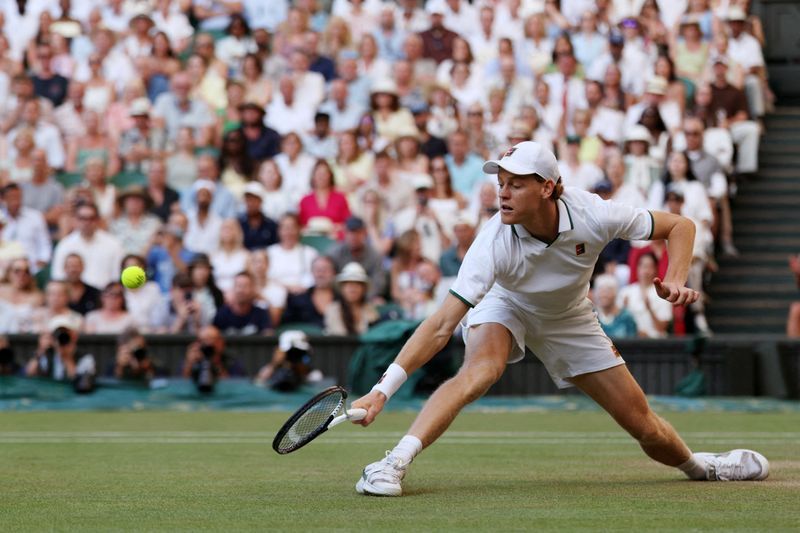
The tennis calendar has suffered a significant blow with the withdrawal of Jannik Sinner from the US Open, the season's final Grand Slam tournament. The Italian world number one cited a persistent right knee problem as the reason for his absence from the competition scheduled to run from August 23 to September 13 at Flushing Meadows. At just 24 years old, Sinner represents one of the sport's most formidable talents, having recently captured his fifth major championship at Wimbledon last month. His absence transforms the landscape of what was expected to be a fiercely competitive tournament.
The injury has proven more troublesome than initially anticipated, preventing the Italian from returning to competitive action for several weeks. Since sustaining the damage earlier this month, Sinner has remained sidelined, with no competitive matches played during this period. His medical team and coaching staff worked intensively to assess whether recovery within the tight timeframe before the US Open would be feasible. However, their collective assessment concluded that pushing forward would risk further damage to his career trajectory at a crucial stage of his development.
Sinner's withdrawal extends beyond the US Open itself, having already pulled out of two crucial hard-court preparatory tournaments that typically serve as essential building blocks before the American Grand Slam. The Cincinnati Masters and Canadian Open represent the premier warm-up events for the US Open, offering players optimal conditions to fine-tune their games on the surface they will encounter in New York. By missing both of these tournaments, Sinner deprived himself of valuable match practice and the opportunity to test his fitness in competitive situations before facing the season's most important American competition.
The decision crystallised during recent training sessions in Monte Carlo, where Sinner's team conducted thorough assessments of his physical condition. Despite weeks of intensive rehabilitation work with his medical staff, these evaluations revealed that adequate recovery remained elusive. The complexity of knee injuries in professional tennis cannot be understated—the repeated explosive movements, directional changes, and ground impact that characterise modern play place extraordinary demands on the joint. Sinner's team recognised that returning prematurely risked transforming a manageable injury into a chronic problem that could undermine his long-term competitive prospects.
This withdrawal arrives at a particularly consequential moment in the tournament's competitive structure. The absence of the world's top-ranked player significantly alters the strategic calculus for other contenders and dramatically reshapes expectations regarding who might ultimately claim the trophy. For Malaysian and Southeast Asian tennis followers, Sinner's injury raises questions about the increasing physical toll that professional tennis exacts on players, even those at the peak of their careers with access to world-class medical resources and facilities.
Carlos Alcaraz, the Spanish second-ranked player, confirmed just the day before Sinner's withdrawal that he would indeed compete at Flushing Meadows. Alcaraz arrives in New York following an extended four-month layoff from competitive tennis due to his own injury concerns, yet he possesses formidable credentials at this particular tournament. The Spaniard triumphed at the US Open the previous year, defeating Sinner in the final, demonstrating his mastery of both the hard court surface and the unique pressures of Grand Slam competition. With Sinner now absent, Alcaraz enters as the highest-ranked competitor, a distinction that carries both prestige and amplified pressure.
Alcaraz's removal of his top rival materially improves his position as he pursues his eighth Grand Slam crown. The psychological advantage of facing a draw without the world's most dominant recent player cannot be discounted in elite tennis competition. Having already proven he can defeat Sinner in high-pressure circumstances, Alcaraz now confronts a tournament where his main competitors include players against whom his record is considerably more favourable. This repositioning elevates his status from recovery-phase contender to genuine favourite for the title, a transformation that would have seemed less certain had Sinner remained healthy.
The timing of these developments unfolds against the broader context of tennis's physical demands on the human body. Professional players at the highest level undertake gruelling schedules that span nearly the entire calendar year, with barely any respite between tournaments at different locations across the globe. The hard court season, in particular, tests players' joints and muscular systems through the combination of unforgiving playing surfaces and rapid-fire scheduling. Sinner's injury, despite his youth and exceptional physical conditioning, underscores how even the sport's most talented athletes remain vulnerable to the cumulative stresses of elite competition.
For the tournament itself, Sinner's withdrawal diminishes the star power and competitive intrigue that his presence would have generated. The US Open has traditionally served as a platform where younger players challenge established champions, and Sinner exemplified this emerging cohort of talents reshaping professional tennis. His absence eliminates one of the most compelling potential narratives—whether the reigning Wimbledon champion could overcome adversity to triumph at another Grand Slam venue. Instead, the tournament proceeds without one of its most compelling figures, though other exceptional talents remain positioned to deliver compelling competitions and memorable performances across the two weeks of play.

