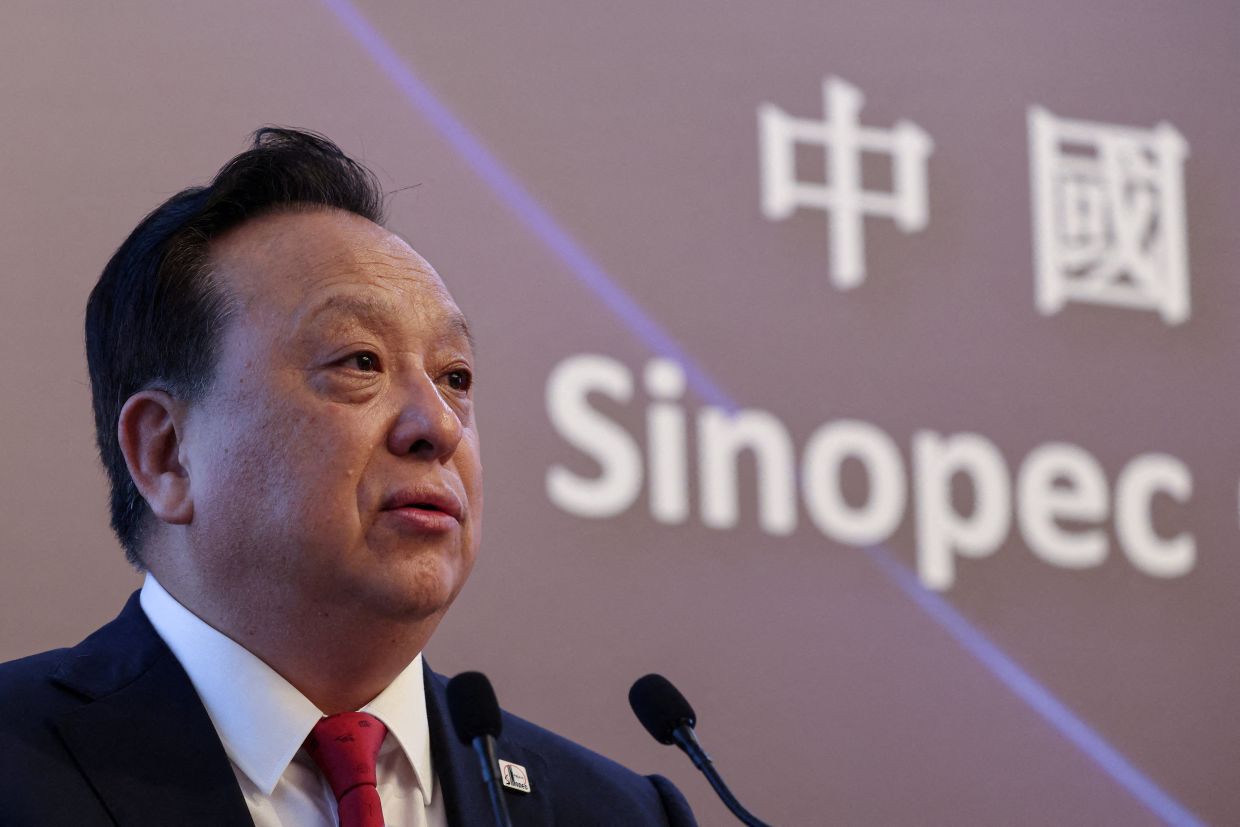
Hou Qijun, who took the helm of Sinopec a year ago, is pursuing a sweeping transformation of the world's largest refiner at a time when most executives in similar positions would be coasting toward retirement. The 60-year-old chief faces mounting pressure from collapsing fuel demand, gluts in petrochemical production, and a broader energy crisis that threatens the traditional business model of China's oil majors. Unlike many state enterprise leaders who prefer incremental adjustment, Hou has signalled a fundamental reset, splitting Sinopec into four autonomous profit centres—oil, gas and new energy; refining and chemicals; finance and strategic ventures; and global trading with marketing operations.
The rationale for such aggressive restructuring became clear when Hou spoke with unusual frankness about the company's predicament in a government publication in July. He identified the core problem not as technological or resource-based, but rather as organisational paralysis. Sinopec's massive scale, he explained, had eroded its ability to respond swiftly to market shifts, a phenomenon he termed the "big company syndrome." This candid diagnosis, issued through China's State-owned Assets Supervision and Administration Commission (SASAC), represented a striking departure from the typical muted communication style of senior state enterprise executives. Institutional inertia, not capital constraints, had become the chief obstacle to adaptation.
The company's financial performance masks deeper vulnerabilities. Although Sinopec reported a 19 percent rise in net profit for the first half of 2026 despite exposure to the Iran war's oil supply disruptions and government restrictions on price pass-throughs, this headline figure obscures troubling operational trends. Fuel sales have retreated to 2017 levels, and the company faces what SASAC's internal assessment characterised as an "uphill battle" to defend domestic market share. The company moved approximately 3.6 million barrels per day of petrol and diesel last year, almost entirely domestically, a volume that increasingly represents a liability rather than an asset.
The existential challenge stems from the accelerating substitution of combustion engines with electric vehicles. At an earnings briefing in Hong Kong, Hou posed a rhetorical question that encapsulated the strategic dilemma: if half of all new cars no longer require fuel, how can a producer justify continued growth in gasoline and diesel output? The question reframes what has traditionally been an expansion problem into a contraction problem. Rather than pursue volume growth in increasingly obsolete products, Hou is redirecting resources toward higher-margin petrochemicals, where plastic resins and synthetic fibres retain long-term demand prospects independent of the transport sector's transformation.
This pivot toward chemicals is ambitious but not without risk. Sinopec enters a crowded competitive landscape where government-backed rivals such as Wanhua Chemical and privately-managed Satellite Chemical have already established strong positions. Overcapacity in ethylene, a fundamental feedstock for plastics and synthetic fabrics, means that new entrants face sustained price pressure and thin margins. Nevertheless, Hou appears convinced that the shift from hydrocarbon refining to chemical synthesis is non-negotiable, and that scale and integration give Sinopec advantages competitors lack. Over the 2026-2030 period, the company plans to direct approximately 20 percent of capital expenditure—more than 30 billion yuan annually—toward new energy and advanced materials development.
Beyond petrochemicals, Hou's strategy encompasses a long-term transition away from hydrocarbon production altogether. He articulated a vision of progressive decarbonisation, moving from high-carbon through low-carbon pathways to ultimately zero-carbon energy systems. Upstream oil and gas operations, in this framework, are not indefinitely durable businesses but transitional holdings requiring active management of reserve depletion and profitability decline. This perspective, remarkable for a geologist and career oil industry executive, reflects the reality that Chinese policymakers and investors increasingly regard fossil fuels as economically stranded. Hou's proposed new energy initiatives—including sustainable aviation fuels, hydrogen production, and carbon capture technologies—position Sinopec to benefit from government support and directed financing for these commercially challenging but strategically mandated transitions.
Hou's credentials for steering such a transformation rest on a distinguished technical and managerial background. Before his appointment at Sinopec in June 2025, he served as general manager of CNPC, Asia's largest integrated oil and gas producer, and prior to that spent his career ascending through China's flagship Daqing oilfield, one of the world's largest and most operationally complex production systems. He also demonstrated restructuring ability as architect and first chairman of PipeChina, the state firm created by consolidating the pipeline assets of China's three oil majors between 2019 and 2021. That experience gave him intimate familiarity with the entire energy value chain and the relationships between upstream production, midstream infrastructure, and downstream marketing.
Colleagues and analysts describe Hou as unusually decisive and intellectually engaged for a state enterprise leader. One company official portrayed him as a workaholic willing to speak at length about strategic vision with conviction and logical consistency, departing from the guarded communication typical of senior executives at state firms. His technical background as a geologist, combined with high-level operational experience at CNPC and strategic restructuring roles, positions him to capitalise on government backing for commercially marginal but politically important investments such as hydrogen, carbon capture, and sustainable aviation fuels.
The Shandong-native executive faces formidable obstacles, however. As Michal Maiden, director of the China program at Oxford Institute for Energy Studies, observed, the fundamental question remains whether Sinopec and its state-owned peers can successfully compete against emerging private and international actors in new energy sectors. State enterprises typically operate under implicit mandates to support government policy and social stability, constraints that private competitors lack. Additionally, Sinopec's historical expertise lies in fossil fuel extraction and refining; developing competitive positions in battery materials, solar manufacturing, or hydrogen electrolysis requires fundamentally different technical competencies and business cultures.
The investor perspective on Hou's transformation efforts is cautiously optimistic. An executive at a Chinese institutional investor holding Sinopec shares characterised Hou as exceptional among state enterprise leaders for displaying genuine strategic ambition despite being close to mandatory retirement age—Chinese SOE executives typically step down at 63. Rather than managing decline, Hou appears motivated to "salvage Sinopec" from what this investor described as a persistently difficult competitive position. His appointment itself signals that Beijing's leadership recognises the urgency of fundamental adaptation rather than incremental adjustment.
Sinopec's plans include over 30 specific projects targeted for completion by 2030, ranging from reserve replacement through shale oil development to sustainable aviation fuel production and refining cost reduction programmes. The Jiyang trough, part of the company's major Shengli oilfield where conventional reserves are depleting rapidly, represents a flagship commitment to shale technology. Hou positioned himself as personal project commander for this commercially challenging initiative, signalling that its success would be central to his legacy and mandate. The symbolic significance of the Shengli project—one of Asia's largest and most productive oilfields—underscores how Sinopec must simultaneously manage legacy asset decline while constructing new revenue foundations.
Regional implications of Sinopec's transformation extend beyond China's borders. The refiner supplied markets across Southeast Asia, and any significant shift in its production mix or volume would reverberate through regional energy markets and supply chains. A more chemical-focused Sinopec could become a more formidable competitor to Southeast Asian petrochemical producers and traders. Conversely, reduced fuel output might create opportunities for alternative suppliers to regional markets. For Malaysian and other ASEAN energy stakeholders, Hou's transformation strategy signals that Chinese state oil majors are moving toward long-term structural decline in fossil fuel production and export availability, a reality that should inform regional energy security and economic diversification planning.
The success or failure of Hou's ambitious programme will illuminate broader questions about whether Chinese state enterprises can genuinely adapt to energy transitions or whether institutional rigidity ultimately constrains transformation. His willingness to acknowledge "big company syndrome" and institutional inertia suggests at least honest diagnosis of the problem. Whether radical decentralisation into profit centres, capital reallocation toward new energy, and leadership by a decisive individual will prove sufficient to overcome decades of organisational momentum remains an open question that markets and policymakers throughout Asia will closely monitor.

