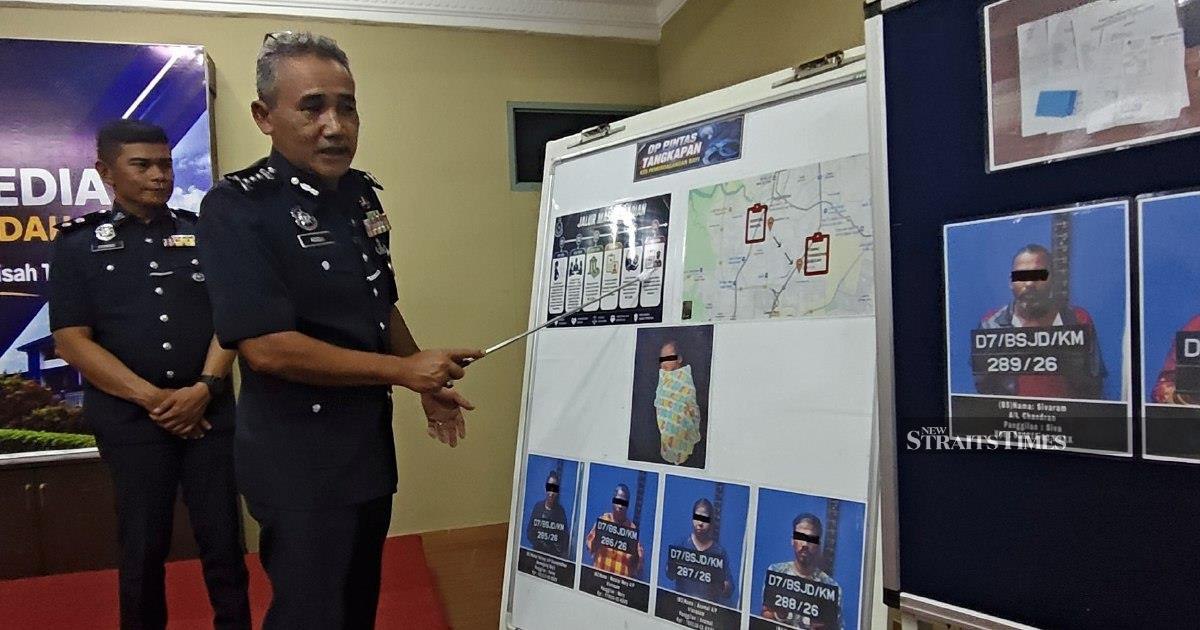
Police in Kuala Muda have made six arrests in connection with an alleged baby trafficking operation, marking another troubling case in a persistent criminal enterprise that exploits vulnerable women and newborns across Malaysia. Among those detained was a mother who had given birth merely five days before her apprehension, underscoring the predatory nature of the suspected scheme and the desperation of those recruited into such networks.
The investigation, centred in the Kulim area of Kedah, represents yet another instance of authorities confronting the illicit trade in infants—a deeply entrenched problem that has periodically surfaced in Malaysian criminal investigations over the past decade. Such operations typically target economically disadvantaged women, particularly those without family support systems or facing social stigma, offering cash payments or promises of care in exchange for surrendering their newborns immediately after birth. The involvement of a recently postpartum mother in the alleged scheme suggests perpetrators were operating with minimal regard for the physical and psychological vulnerability of women in the immediate postpartum period.
The mechanics of baby trafficking in Malaysia frequently involve networks of intermediaries—ranging from individuals in healthcare settings to unregistered facilitators—who identify potential mothers and broker arrangements between biological parents and prospective adoptive families operating outside formal legal channels. These networks thrive partly because Malaysia's adoption regulations, while comprehensive, remain inadequately enforced in certain communities, and awareness of legitimate adoption processes remains low among marginalised populations. The involvement of six individuals implies a structured operation rather than an isolated incident, suggesting coordination across multiple roles within the suspected trafficking chain.
From a Malaysian law enforcement perspective, the Kuala Muda investigation reflects growing police capability in identifying and disrupting such networks through improved inter-agency coordination and community reporting. However, the continued emergence of these cases also indicates that prevention mechanisms remain insufficient. The arrest of a newly postpartum mother raises particular concerns about her potential coercion or desperation—factors that blur the line between victim and accused in trafficking contexts. Malaysian authorities and NGOs have long grappled with determining appropriate responses to women who surrender babies, as many are themselves victims of economic duress or social pressure rather than willing traffickers.
The demographic profile of regions like Kuala Muda—characterised by lower urban development, agricultural-based economies, and significant lower-income populations—has historically correlated with vulnerability to trafficking networks. Economic instability and limited access to social welfare services in such areas create environments where traffickers can more easily identify and recruit targets. The presence of informal settlement areas and communities with weaker institutional oversight further facilitates operational concealment.
Baby trafficking generates profound harms extending far beyond the immediate parties involved. Infants transferred through illicit channels frequently lack legal documentation, nationality verification, or medical records, placing them at lifelong disadvantage regarding educational access, healthcare entitlements, and citizenship rights. In Malaysia's context, where nationality and legal status carry significant administrative and social consequences, children entering the system without proper documentation face compounded vulnerability. Additionally, unregulated adoptive arrangements offer no safeguards against abuse or exploitation of the transferred children.
For biological mothers, participation in such schemes—whether coerced or seemingly voluntary—carries lasting psychological and medical consequences. Women who surrender infants outside formal legal frameworks lack counselling, medical follow-up, or social support typically available through licensed adoption services. The criminalisation of their involvement, while sometimes necessary, can further isolate them and discourage future engagement with legitimate healthcare or social services.
The Kuala Muda case arrives amid international scrutiny of Southeast Asian nations' effectiveness in combating human trafficking generally. While Malaysia has invested significantly in anti-trafficking infrastructure and victim protection frameworks, baby trafficking remains a distinct challenge requiring specialised investigative and prosecutorial approaches that differ from broader human trafficking interventions. The specificity of offences, victim vulnerability, and the involvement of healthcare systems demand tailored policy responses.
Moving forward, Malaysian authorities face multifaceted challenges in addressing this problem. Enhanced training for healthcare workers to identify trafficking indicators, strengthened coordination between police and social welfare agencies, and community education regarding legitimate adoption pathways represent critical frontiers. Additionally, addressing underlying economic desperation and expanding social support services for pregnant women in vulnerable circumstances would address root causes rather than solely responding to symptoms through criminal prosecution.
The six arrests in Kuala Muda signal renewed enforcement attention, but sustainable reduction of baby trafficking requires systemic approaches addressing poverty, strengthening formal adoption infrastructure, and protecting both infants and vulnerable mothers from exploitation. Regional cooperation across Southeast Asia would amplify effectiveness, given evidence suggesting transnational dimensions to certain trafficking networks. Until such comprehensive strategies materialise, Malaysia will likely continue encountering cases where infants and desperate mothers become commodities in criminal enterprises that thrive in gaps between vulnerable populations and institutional capacity.

