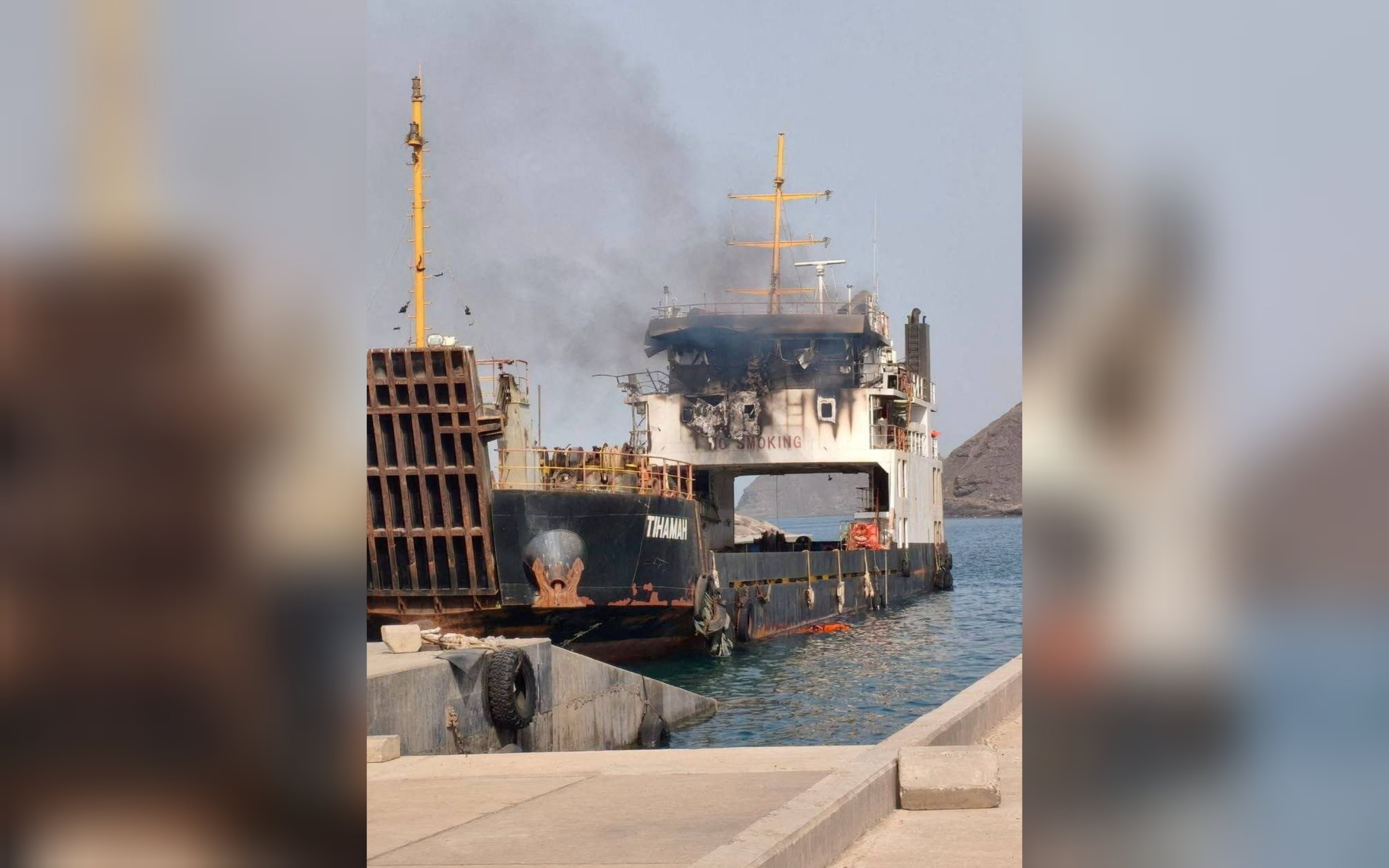
A commercial vessel carrying food supplies was struck by Houthi ballistic missiles in the Bab al-Mandeb Strait on Tuesday, resulting in six deaths and ten injuries, according to Yemen's Coast Guard. The attack on the Yemeni-flagged Tihamah represents another escalation in the armed group's campaign against maritime traffic transiting one of the world's most strategic waterways, a chokepoint through which millions of barrels of oil and countless containers of goods pass daily.
The fatalities included four crew members—three Pakistani nationals and one Indonesian—alongside two fighters from Yemen's armed forces' 2nd Naval Brigade. Seven additional crew members, two coast guard personnel, and another member of the 2nd Naval Brigade sustained injuries. The incident also saw the successful rescue of eleven Pakistani and Indonesian sailors, though rescue operations themselves came under attack when Houthi forces fired a further missile as teams attempted to reach survivors.
Yemen's Transportation Ministry characterized the assault as a deliberate targeting of civilian infrastructure, noting that the vessel absorbed three direct hits from ballistic missiles before catching fire. The ministry condemned the attack as a "terrorist crime" and emphasized that the hostile action extended beyond the initial strikes—the subsequent missile fired at rescue teams demonstrated an intent to maximize casualties and obstruction of humanitarian response efforts. This pattern reflects a deliberate strategy to terrorize shipping and discourage maritime commerce through the region.
The broader context reveals a systematic campaign by Houthi forces against commercial navigation and civilian economic targets. The ministry's statement underscored that recent attacks have targeted not only vessels but also ports and civilian infrastructure across government-controlled territories, creating a pervasive threat to the supply chains sustaining Yemen's fragmented population. The group's focus on food supply shipments is particularly significant given Yemen's severe humanitarian crisis, where millions depend on imports for basic sustenance.
The implications of such attacks extend far beyond Yemen's borders, affecting Southeast Asian nations with significant maritime interests and seafaring workforces. Malaysian shipping companies, along with those from Indonesia, Thailand, and other regional states, operate vessels through the Red Sea corridor. The presence of Pakistani and Indonesian sailors among both the casualties and rescued personnel highlights how these incidents directly imperil workers from across Asia, creating both humanitarian and diplomatic dimensions to what might otherwise appear as a purely regional conflict.
Bab al-Mandeb, the narrow waterway connecting the Arabian Sea to the Red Sea, serves as a critical artery for global commerce. Approximately 12 percent of world trade transits through this strait, making it strategically comparable to the Strait of Hormuz on the Arabian Peninsula's opposite flank. Disruptions here reverberate through international supply chains, affecting fuel prices, shipping costs, and the availability of goods across Asia-Pacific markets. Malaysian importers and exporters relying on Red Sea routes face mounting insurance premiums and the prospect of longer, costlier alternative passages around the African continent.
The Houthi group has intensified attacks on commercial shipping since escalations in the broader Middle Eastern conflict, framing their actions as solidarity with Palestinian causes. However, the indiscriminate nature of these assaults—targeting food shipments destined for civilian consumption—raises questions about the humanitarian cost of such tactics. Yemen's own population, already fractured by years of civil war, faces severe food insecurity; paradoxically, the Houthis' attacks undermine the supply of provisions to areas under their own control as well as government-held regions.
No immediate statement emerged from Houthi representatives regarding Tuesday's attack, consistent with their pattern of providing limited transparency regarding specific incidents. This silence contrasts with their broader rhetoric justifying maritime operations as part of regional resistance efforts. The absence of accountability mechanisms or proportionality assessments in their targeting decisions distinguishes these attacks from conventional military operations governed by international humanitarian law.
The incident underscores the fragility of maritime security in a region where state institutions remain weakened and non-state actors wield substantial military capabilities. Yemen's Coast Guard and armed forces, despite efforts to maintain operations, lack the resources and reach necessary to effectively protect commercial traffic across the strategic waterway. International naval coalitions have attempted to counter Houthi attacks, yet the group's access to increasingly sophisticated weapons systems—including ballistic missiles—has enabled them to strike vessels at greater distances and with more destructive force.
For Malaysia and Southeast Asian nations, the mounting risks in Red Sea transit demand urgent strategic consideration. Maritime insurers are already adjusting premiums to reflect heightened danger; re-routing cargo around the Cape of Good Hope adds weeks to transit times and significantly increases operational costs. These economic pressures may ultimately translate into higher consumer prices and reduced competitiveness for regional exporters reliant on efficient shipping corridors.
The humanitarian dimension remains particularly acute. The Tihamah's cargo of food supplies represented potential relief for civilian populations facing acute hunger. The destruction of such shipments, whether directly through missile strikes or indirectly through the deterrent effect on future supply runs, exacerbates Yemen's catastrophic food security situation. Aid organizations warn that disrupted maritime access could trigger widespread malnutrition and food-related mortality, extending the humanitarian toll of Yemen's protracted instability.
International responses have emphasized the need for freedom of navigation protections and accountability for attacks on civilian vessels. However, translating diplomatic statements into effective maritime security measures remains challenging given the complex geopolitical dimensions of Yemen's conflict. Regional powers, while expressing concern about maritime safety, maintain competing interests that complicate unified response mechanisms.
The incident on Tuesday serves as a reminder that the consequences of Middle Eastern instability radiate outward, affecting maritime commerce, food security, and the safety of seafarers from across Asia and beyond. For Southeast Asian policymakers and business communities, developments in Red Sea security represent not distant regional concerns but direct threats to prosperity, supply chain stability, and the wellbeing of regional citizens working aboard commercial vessels.

